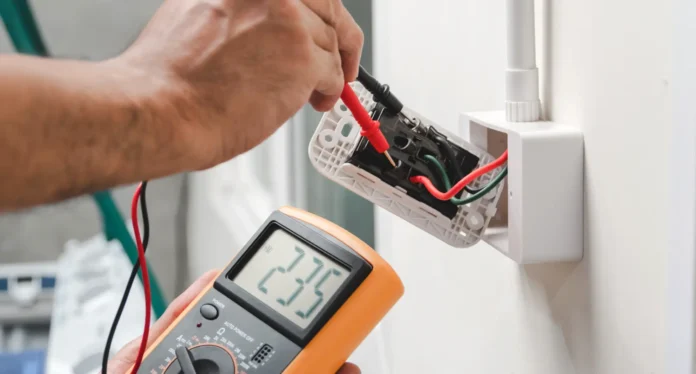

Finding one or more outlets without power can be confusing when the electrical panel shows no tripped breaker. A lamp may stop working in one room while nearby lights remain normal, or several receptacles along the same wall may suddenly become unusable. Because the breaker appears fine, homeowners may assume the outlet itself has simply failed. In reality, power loss without a breaker trip can involve loose wiring, damaged connections, GFCI protection, or problems elsewhere on the same circuit. Electrical repair matters because the visible dead outlet may only be the point where a larger connection issue finally becomes noticeable during normal household use.
Why Power Can Disappear
- A Loose Connection Can Interrupt Several Outlets at Once
Electrical circuits often serve multiple outlets in sequence, which means a problem at one connection point can affect receptacles located farther along the same circuit. A loose wire, weakened terminal, or damaged connection inside one outlet box may interrupt power downstream without creating the level of current needed to trip the breaker. This is why homeowners sometimes discover that several outlets have stopped working while lights or receptacles closer to the panel remain operational. Someone arranging Vancouver electrical repairs from Sarkinen Electrical may be dealing with exactly this kind of confusing pattern, where the breaker looks normal but part of the circuit is clearly no longer functioning properly. Electrical repair helps trace the circuit and identify where continuity has been lost rather than replacing each dead outlet individually. This matters because the outlet with no power may not be the location where the failure started. Finding the actual weak connection helps restore reliable power and prevents the homeowner from relying on repeated resets, extension cords, or temporary workarounds that do not address the underlying electrical condition.
- GFCI Protection Can Shut Off Outlets Far From the Reset Button
Another common reason outlets lose power without a breaker trip is that they are protected by a GFCI receptacle located somewhere else on the circuit. Kitchens, bathrooms, garages, basements, exterior areas, and other locations may include GFCI protection designed to interrupt power when it detects an unsafe current imbalance. One GFCI device can sometimes protect additional outlets downstream, so a receptacle in another room may go dead when the protective device trips. Homeowners may check the electrical panel repeatedly and find nothing unusual because the breaker itself has remained on. Electrical repair helps determine whether the dead outlets are connected to a GFCI circuit and whether the protective device is functioning correctly. Resetting the right device may restore power in some cases, but repeated tripping or a GFCI that will not reset can indicate a condition that needs closer attention. A proper evaluation helps distinguish between normal protective operation and a deeper problem involving wiring, moisture, damaged equipment, or a failing receptacle that is keeping part of the circuit unavailable.
- Worn Outlets Can Fail Without Affecting the Breaker
Outlets experience mechanical wear every time plugs are inserted and removed, and older receptacles can eventually develop weak internal contacts or damaged terminals. When that happens, the outlet may stop providing power even though the circuit itself remains energised and the breaker never trips. Signs can include plugs that fit loosely, intermittent power when a cord is moved, warmth around the outlet, or one receptacle failing while another nearby continues working. Electrical repair matters because replacing the visible outlet may only solve the problem if that receptacle is truly the source. A technician can check whether power is reaching the box, whether the wiring connections are secure, and whether the outlet has been damaged internally. This kind of inspection becomes more important when the dead receptacle is part of a chain serving several locations. A worn connection can affect downstream power or create intermittent behaviour that is difficult to diagnose without testing. Repair helps restore dependable contact while also checking that the surrounding wiring has not been affected by heat, looseness, or previous installation issues. For installations that require additional electrical safety checks, a Scope 10 keuring can provide a structured assessment of relevant electrical equipment and conditions.
- Hidden Wiring Problems Can Create Intermittent Power Loss
Sometimes outlets lose power because of wiring problems located behind walls, inside junction boxes, or in connections that homeowners cannot see. A damaged wire, poorly secured splice, or connection affected by movement can interrupt electricity without immediately creating a short circuit that trips the breaker. The result may be outlets that work sometimes, fail after another appliance is used, or suddenly return to normal before going dead again. These intermittent patterns should not be ignored because inconsistent power can indicate a connection that is making and breaking contact rather than a simple outlet failure. Electrical repair helps by using testing methods to follow the circuit and determine where voltage is present and where it disappears. This allows the problem to be narrowed down without treating every outlet as an isolated failure. Once the weak point is located, the affected connection can be corrected so the circuit operates more consistently. Addressing hidden wiring concerns also reduces the chance that homeowners will continue using a circuit whose performance has already become unreliable.
Restoring Reliable Power Starts With Finding the Real Fault
Electrical repair helps when certain outlets lose power without tripping a breaker by identifying where electricity has stopped moving through the circuit correctly. Loose connections, failed receptacles, GFCI protection, and hidden wiring concerns can all interrupt power while leaving the breaker in its normal position. Proper repair looks beyond the dead outlet and follows the circuit to the actual source of the problem. Once that fault is corrected, homeowners can regain dependable power without relying on extension cords, repeated resets, or guesswork. A functioning breaker does not always mean every connection is healthy, which is why unexplained outlet loss deserves careful electrical attention.