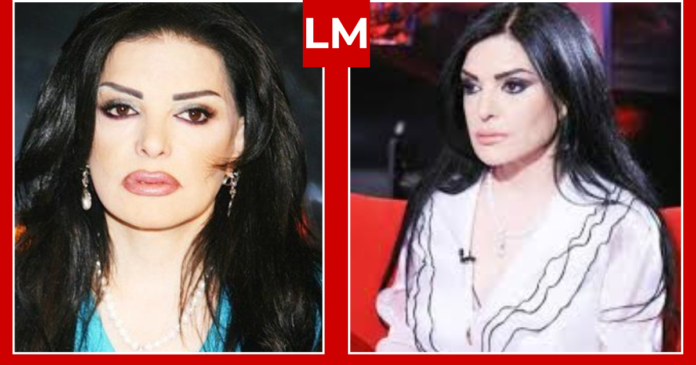

Nidal Al-Hamdani remains one of the most enigmatic figures connected to modern Iraqi history, largely due to her alleged dual role as both a pioneering scientist and the third wife of former Iraqi President Saddam Hussein. Widely cited as Saddam Hussein’s third wife from 1990 until his execution in 2006, her story intertwines professional achievement with political intrigue. Indeed, she served as the general manager of Iraq’s Solar Energy Research Center, leading sustainable energy initiatives. Questions about Nidal Al-Hamdani’s age, her current whereabouts, and whether Nidal Al-Hamdani is alive today continue to fuel speculation. This article explores her background, professional contributions, and the controversial marriage that forever linked her name to one of history’s most notorious dictators.
Who Is Nidal Al-Hamdani: Early Life and Background
The scarcity of verified information surrounding Nidal Al-Hamdani’s early years reflects the secretive nature of Iraq’s Ba’athist regime during her rise to prominence. Most historical sources suggest the Baghdad area as her birthplace, though her exact birth date remains unrecorded in public files. Very little verifiable public information exists about her date of birth, family background, or formal education. Indeed, reliable sources have not published confirmed records of her early years.
Her ascent began in the late 1970s, coinciding with Iraq’s substantial investment in its “National Scientific Plan”. Unlike other regime figures who leveraged family connections, she came from a background that valued education and built a reputation as a serious academic. Sources indicate she likely attended the University of Baghdad, the hub for the country’s scientific elite, where she pursued an advanced degree in engineering or physics. Her focus centered on applied physics, specifically converting sunlight into power.
Correspondingly, her academic trajectory aligned with Iraq’s push for technical expertise during what many considered the country’s “Golden Age” of education. She specialized in thermal energy and solar radiation, becoming a member of the Iraqi Engineers Union. This foundation later enabled her to join the Council of Scientific Research, setting the stage for her appointment as general manager of the Solar Energy Research Center.
Nidal Al-Hamdani’s Role at Solar Energy Research Center
Her appointment as General Manager placed her at the helm of one of Iraq’s most forward-thinking scientific institutions. She managed a team of over 200 scientists and technicians, wielding considerable authority within the Council of Scientific Research. Notably, she stood as one of the first women to lead a major science center in Iraq, an exceptional achievement within the Ba’athist regime where women rarely occupied senior governmental roles.
Her leadership style earned description as strict but effective. She secured millions in funding even during the Iran-Iraq War, demonstrating the regime’s trust in her professional capabilities. She represented Iraq at UN-led energy talks, extending her influence beyond domestic borders.
The center’s practical work addressed Iraq’s pressing energy challenges. She directed research in solar thermal cooling and water desalination, focusing on passive cooling techniques for buildings during Iraq’s extreme summers that reached 50°C. Projects under her supervision included the Baghdad Solar House in 1982, the first model for energy-neutral living in Iraq. Subsequently, solar desalination initiatives in 1985 converted salt water into fresh water for rural farms. Thermal cooling technology followed in 1988, reducing city power loads during peak summer months.
That dual identity as a respected scientist operating within a ruthless political machine would come to define much of her story.
Marriage to Saddam Hussein: The Personal Connection
Accounts suggest their paths crossed during a scientific tour, where Saddam Hussein encountered the accomplished researcher. At the time, she was married to a fellow professional. Sources state the president forced a divorce so they could marry, a pattern consistent with his second marriage to Samira Shahbandar, whose husband was similarly compelled to end their union.
The marriage allegedly occurred in 1990, positioning her as the third wife alongside Sajida Talfah and Samira Shahbandar. Multiple biographical summaries cite this claim, though independent primary sources have not confirmed it. No public documentation verifies the legal status of her marriage or the exact relationship dates.
Unlike Sajida, who bore five children, or Shahbandar, who reportedly had a son named Ali, Nidal Al-Hamdani did not have children with Saddam Hussein. She resided in a high-security villa within the Green Zone area, maintaining a existence that blended scientific responsibilities with extreme isolation. She rarely appeared at public gatherings but attended private state dinners, preserving professional duties while navigating the complexities of association with Saddam Hussein until his execution in 2006.
Conclusion
Nidal Al-Hamdani’s story reveals a woman caught between professional excellence and political notoriety. She achieved remarkable success as a pioneering scientist in solar energy research, yet her alleged marriage to Saddam Hussein overshadowed these accomplishments. Given that verified documentation remains scarce, many questions persist about her current status and whereabouts. Her legacy serves as a reminder of how individual achievements can become entangled with the complex political histories they inhabit.
FAQs
Q1. Who was Nidal Al-Hamdani?
Nidal Al-Hamdani was a scientist who served as the general manager of Iraq’s Solar Energy Research Center. She is also widely cited as the third wife of former Iraqi President Saddam Hussein, a position she allegedly held from 1990 until his execution in 2006.
Q2. Did Nidal Al-Hamdani have any children with Saddam Hussein?
No, Nidal Al-Hamdani did not have any children with Saddam Hussein. Unlike his first wife Sajida Talfah, who had five children, or his second wife Samira Shahbandar, who reportedly had a son, Al-Hamdani’s marriage to Hussein remained childless.
Q3. What was Nidal Al-Hamdani’s professional role in Iraq?
She held the position of general manager at the Solar Energy Research Center within Iraq’s Council of Scientific Research. In this role, she led a team of over 200 scientists and technicians, focusing on renewable energy research including solar thermal cooling and water desalination projects.
Q4. Who was Samira Shahbandar in relation to Saddam Hussein?
Samira Shahbandar was Saddam Hussein’s second wife and the mother of his third son. Her status as Hussein’s wife only became widely known after Uday Saddam Hussein publicly murdered the man he held responsible for introducing his father to Shahbandar.
Q5. How did Nidal Al-Hamdani become Saddam Hussein’s wife?
According to accounts, they met during a scientific tour where Saddam encountered her while she was working as a researcher. At the time, she was married to a fellow professional, but sources indicate the president forced a divorce so they could marry, a pattern similar to his second marriage.