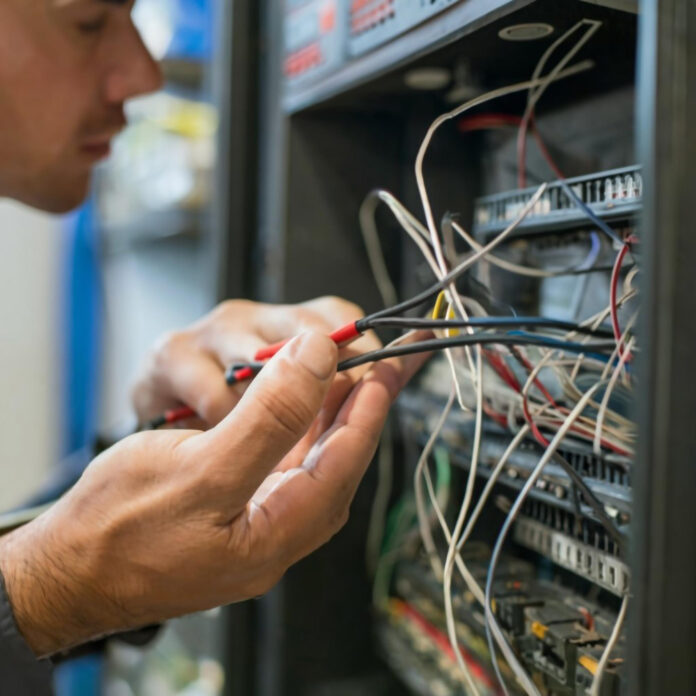

A home workshop can quickly become one of the most power-demanding areas on a property. Table saws, air compressors, dust collectors, welders, chargers, grinders, and other equipment may draw far more electricity than standard household devices. When several tools share ordinary circuits, homeowners can experience tripped breakers, dimming lights, or interruptions that make the workspace harder to use. That is why an electrician matters when dedicated circuits are added. Proper planning helps match each circuit to the equipment it will serve, supports more reliable operation, and reduces the need for temporary workarounds that can make the workshop feel cluttered or difficult to manage.
Where Dedicated Power Matters
- High-Demand Tools Often Need Their Own Electrical Support
One of the biggest reasons an electrician matters is that workshop equipment can place heavy demand on a circuit very quickly. A large saw or compressor may require significantly more power than a lamp, charger, or small hand tool, especially when the motor starts under load. If several devices share one general-purpose circuit, the total demand may exceed what that circuit was designed to handle. Homeowners considering local electrical support from Blue Beagle Electric may begin asking about dedicated circuits when certain tools trip breakers or seem unable to run reliably at the same time as other workshop equipment. That matters because a dedicated circuit gives high-demand equipment a clearer electrical path without forcing it to compete constantly with unrelated devices. An electrician can review equipment requirements, panel capacity, and circuit ratings so the workshop is planned around the tools that will actually be used, rather than relying on a basic room setup intended only for lighting and occasional household tasks.
- Dedicated Circuits Help Reduce Interruptions During Workshop Use
Another reason an electrician matters is that frequent breaker trips can interrupt work and make a workshop frustrating to use. When a saw, compressor, vacuum, or other machine shuts down because the circuit is overloaded, the issue can stop a project immediately and create unnecessary downtime. Resetting the breaker may restore power temporarily, but it does not solve the underlying problem if the circuit continues carrying more demand than it should. An electrician helps identify which tools deserve dedicated circuits and how those circuits should be distributed across the panel. This matters because workshops often involve several activities happening in sequence or at the same time. A dust collector may run while a saw is operating, or a battery charger may stay connected while another tool is in use. Better circuit planning allows these routines to happen with less conflict. Instead of treating every power interruption as an isolated inconvenience, dedicated circuits help create a workspace that can support repeated equipment use more consistently and predictably.
- Panel Capacity Should Be Considered Before New Circuits Are Added
Adding dedicated circuits is not only about running new wires to the workshop. The electrical panel also needs enough capacity and space to support the additional loads. This is one more reason an electrician matters during planning. A panel that is already heavily used may require a closer look before several new workshop circuits are introduced. The electrician can evaluate the existing service, breaker arrangement, and expected equipment demand to determine whether the current setup can support the planned changes. This matters because a workshop may grow over time. A homeowner may begin with one large tool and later add a welder, air compressor, dust collection system, or other high-demand equipment. Planning only for the first machine can lead to another round of electrical changes sooner than expected. A broader evaluation helps create a stronger foundation for present and future workshop use. That kind of planning makes the space more adaptable while also helping homeowners avoid placing new loads onto an electrical system that was never assessed for them.
- Outlet Placement Should Match How Equipment Is Actually Used
Another practical reason an electrician matters is that dedicated power needs to be available where the equipment will actually sit. Poor outlet placement can force homeowners to depend on long extension cords, crowded power strips, or awkward tool positioning just to reach electricity. In a workshop, those workarounds can interfere with movement, storage, and the way projects flow from one station to another. An electrician can help plan receptacles around workbenches, stationary tools, charging areas, and open floor zones where larger equipment may be used. This matters because good electrical design should support the layout instead of dictating it. When outlets and dedicated circuits are placed according to real work patterns, homeowners gain more flexibility in arranging tools and maintaining a cleaner workspace. It also becomes easier to separate high-demand machines from smaller devices that can remain on general circuits. Better placement turns electrical access into part of the workshop design rather than an obstacle that has to be solved after the equipment is already installed.
- Smarter Electrical Planning Supports Future Workshop Growth
Home workshops often evolve as hobbies become more serious or equipment collections expand. What starts as a small bench area may eventually include larger saws, dust collection, compressed air, welding, or more advanced machinery. That is why an electrician matters beyond the immediate project. Dedicated circuits can be planned with future changes in mind so the workshop does not become limited as soon as one new tool is added. This does not mean installing unnecessary circuits everywhere. It means thinking ahead about panel capacity, likely equipment growth, and whether the wiring layout leaves room for later changes. This matters because electrical work is easier to coordinate before walls, storage systems, and fixed workstations are fully finished. A thoughtful plan allows the workshop to grow more naturally and reduces the need for repeated modifications. When future use is considered early, homeowners gain a space that feels more capable and more prepared for the equipment they may add over time.
Better Workshops Start With Better Electrical Planning
An electrician matters when homeowners add dedicated circuits for workshop equipment because high-demand tools require more than ordinary household power access. Dedicated circuits help reduce overloads, support steadier equipment operation, and make the workshop easier to use without constant breaker trips or temporary wiring solutions. Electrical planning also considers panel capacity, outlet placement, and how the workspace may grow over time. When these details are handled early, the workshop can support current equipment while remaining flexible for future additions. Better power planning helps turn the space into a more reliable, organized, and practical area for regular projects and long-term use.