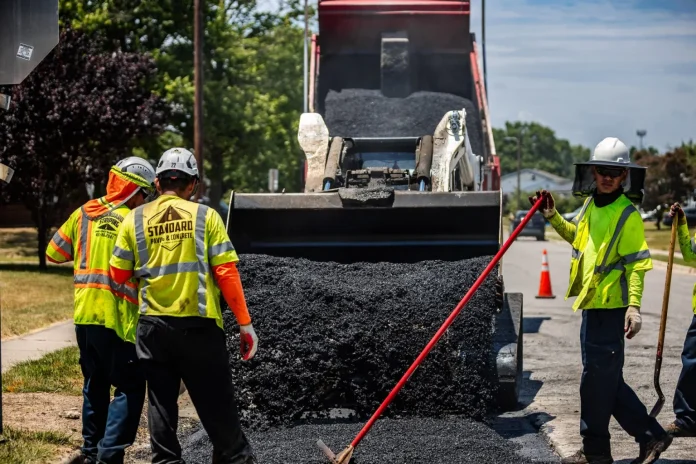

When a commercial lot in Annapolis starts to ravel, rut, or show block and alligator cracking, the hardest decision is not “when to repave” but “how.” A quick overlay can look appealing, yet base failures and drainage issues often hide below the surface. In a coastal Mid-Atlantic climate with freeze-thaw cycles, salt use, and frequent rain events, the wrong choice can trap water, accelerate cracking, and shorten pavement life. This article offers a decision framework property and facility managers can use to weigh overlay, milling and overlay, and full-depth reconstruction. It focuses on conditions common to Annapolis sites, including lots with curbs and gutters, tidal stormwater demands, and ADA slope requirements that affect pavement thickness, grades, and transitions.
- What Your Pavement Is Telling You: Distress Patterns and Root Causes
Surface wear like light raveling, minor transverse cracks, and faded striping usually points to oxidation and traffic wear. Those conditions can often be addressed with a thin overlay after proper cleaning and a tack coat. In contrast, widespread alligator cracking, pumping fines at joints, and deep rutting signal structural problems in the base or subgrade. Those lots need more than a new surface. Annapolis properties also struggle with standing water around catch basins and depressed wheel paths, which hints at settlement or clogged underdrains. Local contractors who perform commercial asphalt paving services from Solid Paving see these patterns daily and can help verify what is happening below the surface.
Visual surveys should be paired with simple testing. Core samples reveal the actual layer thickness of the surface course and base course, along with binder condition. Proof rolling with a loaded truck can expose soft spots that move under load. If cores show thin or inconsistent base layers, or if the subgrade is saturated, an overlay will reflect cracks quickly. Where water collects near curb lines or at the throat of a catch basin, milling to reset elevations or replacing base material near the structure may be required before any new asphalt is placed.
- Overlay, Milling and Overlay, or Full Depth: How Elevations and Drainage Decide
Overlay is the lightest touch. A contractor cleans the surface, applies a tack coat for bonding, and places new hot mix asphalt. The tradeoff is elevation. Adding even a modest lift can eliminate curb reveal, push water toward storefronts, or create noncompliant transitions at ADA ramps. It can also bury utility casting rims and make doors with tight thresholds bind after a storm. If existing grades work but the surface is worn, milling and overlaying is often the safer option. Milling machines remove a controlled depth, preserving curb reveal and flow lines to catch basins, then crews apply a tack coat and place a new surface course. This approach maintains drainage while improving the ride and appearance.
Full depth reconstruction is reserved for base failures. Typical triggers include alligator cracking across travel lanes, rutting that returns after patching, and subgrade that yields under proof rolling. Reconstruction removes asphalt and compromised aggregate base, installs geotextile if needed, rebuilds the base to a consistent thickness, and then places new binder and surface courses. While it is the most disruptive and costly path, it restores structure and resets grades, which can reduce long-term maintenance. A mistake here is partial measures: overlaying a saturated, unstable base often looks fine for a season but cracks rapidly as trapped water and traffic combine to reopen joints.
- Staging Work on Active Sites Without Disrupting Tenants
Commercial lots rarely shut down. On a retail center with two entrances, phasing one half at a time keeps fire lanes and at least one driveway open. Clear detour signage, temporary striping, and cones prevent drivers from cutting across fresh asphalt. In tight restaurant lots, overnight milling followed by early morning paving can limit lost parking during peak hours; just ensure the site remains safe between shifts with proper edge tapers where milling ends. Coordinate with trash pickup and delivery schedules so loaded trucks do not cross hot mats or roll new edges.
Weather windows are real constraints. Hot mix asphalt needs sufficient temperature to compact before it cools, and paving late in the day in chilly air can produce low density at longitudinal seams. Those seams are weak points for water infiltration and raveling. A better plan is to schedule longer pulls earlier in the day, prepare rollers in advance, and pave against a straight, clean edge. Where phases meet, cutting edges with a saw and applying a fresh tack coat help the joint behave as a continuous mat rather than a cold seam waiting to open.
- Materials and Details That Extend Service Life in the Chesapeake Climate
Mix selection and compaction quality drive longevity more than thickness alone. Many lots use a dense graded surface course, such as a 9.5 mm or 12.5 mm NMAS Superpave mix paired with a binder grade appropriate for the Mid-Atlantic, placed over a uniform base. Pneumatic tire and steel drum rollers working in sequence help achieve density across the mat and at edges. A continuous, even tack coat ensures the overlay bonds instead of slipping. Where truck traffic concentrates, consider a stiffer binder or a surface resistant to rutting to limit wheel path deformation. Longitudinal seams should be offset from heavy traffic lanes and compacted while both adjacent mats are hot whenever phasing allows.
Details around structures matter. Reset catch basin rims to finished grade, so water falls into the throat rather than ponding at the lid. At curbs and gutters, maintain curb reveal for drainage and snow operations. If chronic saturation is discovered in cores, adding underdrains at the pavement edge or replacing clogged stone near structures prevents water from pumping through the mat. Geotextile separators can stabilize soft subgrade, but they are not a substitute for adequate base thickness; use them to keep fines out of aggregate, not to mask a weak section.
- Stormwater Rules and ADA Slopes That Affect Design Choices
Annapolis area sites typically route runoff to inlets and swales, then to the bay. Overlaying without milling can flatten cross slopes below what is needed to shed water to catch basins, which encourages damage from freezing and thawing. Restoring a 1 to 2 percent cross slope during milling keeps water moving while preserving curb height. Transitions at ADA curb ramps and crosswalks deserve particular attention. Even a small elevation change at a ramp can push slopes out of compliance. Cutting transitions with a saw, milling deeper in a short taper, and resetting curb returns can resolve this before paving rather than after striping reveals the problem.
Permeable asphalt sometimes enters the conversation for stormwater credits. It can work in areas with light traffic away from heavy truck aisles if a deep, clean stone reservoir and underdrains are properly designed and maintained. The tradeoff is maintenance and winter operations. Salt and fines can clog voids, and vacuum sweeping becomes part of the routine. For most service drives and loading zones, dense graded hot mix remains the practical choice, with subsurface drainage upgrades doing the heavy lifting for water management.
After the Last Roller Pass: Striping, Protection, and Early Maintenance
Fresh asphalt needs protection while it cools and gains stability. Keep loaded trucks and tight turning movements off new mats until the surface can carry them without scuffing. Striping should follow after the surface is clean and dry; durable options like thermoplastic or epoxy provide markings that last longer on lanes with heavy traffic, while standard traffic paint performs well in general parking. Reinstall signs, wheel stops, and bollards where they were planned in the layout, not where cones ended up at the last minute. Within the first maintenance cycle, address early cracks with hot-applied crack sealant to block water entry. Calibrate snow operations before winter by setting plow shoes to protect the surface and avoiding gouges at raised structures.
Across Annapolis commercial properties, the right paving approach comes from matching the fix to the failure and respecting grades and drainage. Surface distress with a sound base invites milling and overlaying. Structural failures call for reconstruction. Elevations, curb reveal, catch basin heights, and ADA transitions often decide between options more than budget alone. Phased work and smart scheduling preserve access during construction, and careful details at seams, structures, and striping extend the payoff. When you read the pavement and plan around water, traffic, and climate, the new lot not only looks right on day one but keeps performing through storm season and winter.
<iframe src=”https://www.google.com/maps/embed?pb=!1m18!1m12!1m3!1d2997.277789065952!2d-76.56313709999999!3d38.9627329!2m3!1f0!2f0!3f0!3m2!1i1024!2i768!4f13.1!3m3!1m2!1s0x666c2043df09108f%3A0xa352d91a7aae5aa4!2sSolid%20Paving%20%26%20Concrete!5e1!3m2!1sen!2sph!4v1794237437032!5m2!1sen!2sph” width=”600″ height=”450″ style=”border:0;” allowfullscreen=”” loading=”lazy” referrerpolicy=”strict-origin-when-cross-origin”></iframe>