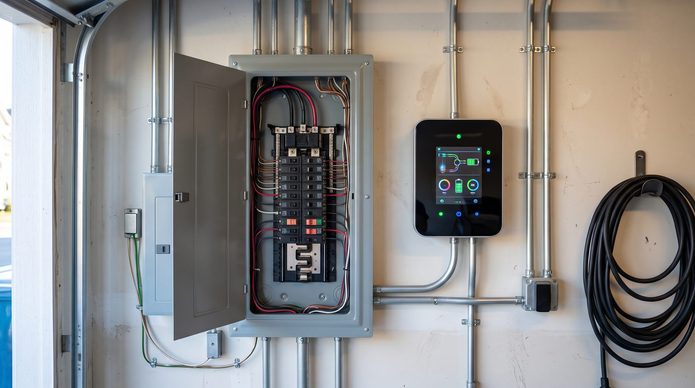

Homes in Southern Pines are seeing more electrical demand from heat pump retrofits, induction ranges, and Level 2 EV charging. Those upgrades are worthwhile, but they work well when the service equipment and branch circuits are sized, protected, and grounded correctly. This article outlines a practical decision path for homeowners: start with load and panel capacity, then plan dedicated circuits for equipment that draws substantial power, choose a safe way to connect a generator if needed, and finish with required electrical code protections and maintenance. Along the way, we will flag common mistakes like placing two neutral conductors under one terminal, feeding generator power backward through dryer outlets, and bonding the neutral in subpanels, which can create shock and fire risks.
- Begin With a Real Load Calculation and the Service Equipment
Before adding any large appliance, have a load calculation performed using National Electrical Code Article 220 methods. The result estimates your dwelling’s demand based on square footage, small appliance and laundry circuits, fixed appliances, HVAC, and future additions. That calculation dictates whether a 100 amp main can support new 240 volt loads or whether a 150- or 200 amp service, larger service conductors, and a new meter base and main breaker are warranted. Skipping this step often leads to nuisance tripping or overheated bus bars when new circuits are added to an already saturated panel.
If your panel is full, a subpanel is not a shortcut around limited service capacity. It only increases circuit spaces, not available amperage. Similarly, neutrals must land one per terminal, and equipment grounding conductors must remain separate from neutrals in subpanels, with the neutral bonding screw removed. For local terminology and examples of service categories, see https://afterhourselectrical.org/.
- Adding a Level 2 EV Charger: Circuits, Receptacles, and Load Management
A common scenario is installing a 40 to 50 amp EV charging circuit in a garage. A hardwired EVSE on a 50-amp breaker may use 6-gauge copper conductors on a dedicated run, depending on conductor insulation, installation conditions, terminal ratings, and applicable code requirements. Alternatively, you may use a NEMA 14- 50 receptacle with a proper weatherproof cover if the outlet is in a damp location. Garages also require GFCI protection where applicable. If your load calculation is close to the service limit, consider a 40 amp circuit with a 32 amp EVSE, or use a smart charger with load management features to avoid simultaneous peaks with the range or heat pump.
There are tradeoffs to weigh. A NEMA14- 500 receptacle offers flexibility but can be misused with other electrical loads and is more exposed to wear. A hardwired EVSE typically has fewer connection points and may simplify installation requirements, although GFCI compliance must still follow the applicable code and equipment instructions. Conduit routing matters too. PVC Schedule 80 protects wiring where exposed outdoors, while EMT or FMC may be used for rigid or flexible runs inside. Keep conductors appropriately adjusted for temperature and current-carrying capacity if multiple circuits share a raceway through an attic with elevated temperatures.
- Backup Power: Choosing Between an Interlock and a Transfer Switch
When planning a portable generator hookup, the safest goal is to isolate the home from the utility to prevent power from flowing backward into utility lines. An interlock kit keeps the main breaker and a generator breaker mechanically exclusive, so only one can be on at a time. This approach is cost-effective and uses the existing panel, but it requires compatible listed hardware and careful circuit management during an outage. A dedicated inlet, often a 30- or 50 amp, 120/240 volt inlet, and a proper grounding and bonding strategy are part of a compliant installation.
A manual transfer switch or a transfer panel designed to serve selected circuits costs more and takes additional wall space, but it simplifies operation by selecting critical circuits like the refrigerator, well pump, gas furnace blower, and certain lighting circuits in advance. Either option must never be replaced by unsafe methods such as improvised power cords or feeding generator power through a dryer receptacle. Those shortcuts can bypass required protections and energize utility lines. Also note generator neutral handling: depending on whether the generator is a separately derived system, neutral switching and the location of the bond between neutral and ground change. Your installer will configure the equipment to match thegenerator’ss labeling and instructions.
- Grounding, GFCI/AFCI Protection, and Outdoor Wiring in the Sandhills
Grounding and bonding are more than a checklist item. In sandy soil, a single ground rod may not achieve the resistance required by code testing, so a second rod driven at least six feet away is commonly installed. The grounding electrode conductor must be continuous or connected using approved methods and correctly sized from the service equipment to the grounding electrodes. Metal water piping systems also require bonding according to applicable electrical code provisions. Inside distribution equipment, neutrals and equipment grounding conductors must remain separated downstream of the service bonding point.
Protection requirements also change with location and circuit type. GFCI protection is required in many areas, including garages, outdoors, kitchens, bathrooms, and laundry areas, while AFCI protection covers numerous living spaces to reduce electrical fire risks. Dual-function breakers can address both requirements where permitted. Outdoors, use weather-resistant receptacles and protective covers suitable for the installation, and seal conduit entries to keep out moisture. For cable types, NM B must remain in dry, protected spaces. Use UF B or conduit with THWN 2 conductors for installations involving burial or wet locations, as appropriate. A whole-home surge protective device, such as Type 1 at the service or Type 2 at the panel, helps limit voltage surges that can otherwise travel through branch circuits and damage electronics during storms.
Permits, Outage Planning, and Maintenance After Upgrades
Expect permits and inspections for service changes, new feeders, and standby power connections. That process protects you by having an independent inspector review working clearances, conductor sizes, service disconnect labels, and bonding. Plan the outage window with your installer so refrigerators are cold, sensitive electronics are unplugged, and pets are settled before the power is disconnected. If a service mast or meter base relocation is part of the project, coordinate with the utility for approvals and restoration of power. For remodels, sequence drywall and cabinet work around preliminary electrical installations and final inspections to avoid unnecessary removal of finished materials.
After upgrades, keep the panel directory accurate, label generator operating steps, and store the interlock or transfer switch instructions near the equipment. Test GFCI and AFCI devices according to the manufacturer’s instructions and exercise the generator under load following its recommended schedule. It is also wise to arrange professional inspections of electrical connections and consider an infrared scan of the panel after the first heating and cooling season, since loose connections can create dangerous hot spots. With a proper load calculation, correctly sized conductors, listed equipment, and the right protections, your Southern Pines home can support modern appliances and standby power without overtaxing the electrical system.
<iframe src=”https://www.google.com/maps/embed?pb=!1m18!1m12!1m3!1d3151.081359869429!2d-79.3960823!3d35.1691731!2m3!1f0!2f0!3f0!3m2!1i1024!2i768!4f13.1!3m3!1m2!1s0x87839515233e051b%3A0x669ca6eac35d84f4!2sAfter%20Hours%20Electrical%2C%20LLC!5e1!3m2!1sen!2sph!4v1794578096692!5m2!1sen!2sph” width=”600″ height=”450″ style=”border:0;” allowfullscreen=”” loading=”lazy” referrerpolicy=”strict-origin-when-cross-origin”></iframe>