
Most people pick a dental clinic the way they pick a plumber after a burst pipe: fast, stressed, and with almost no information. I did exactly that for years. Then I moved towns, needed a new provider, and realized I had no idea what separated a good clinic from a mediocre one. Here is what I learned, and what you should check before you book your first cleaning.
The short version: a clinic’s website tells you more than its waiting room does. You can learn a lot from the services page, the staff page, and whether the office publishes its fees or hides them. Read those three things before you call, and you will save yourself a wasted appointment or two.
Start with what your household actually needs
Not every clinic fits every family. A single adult with healthy teeth needs something different from a parent of three kids under nine. So before you compare anyone, write down your real requirements on a sticky note.
- Does anyone in your house need pediatric care, sedation, or treatment for anxiety?
- Do you want evening or weekend hours, or is a weekday morning fine?
- Will you be paying out of pocket, through insurance, or through a public program?
- Can you drive twenty minutes, or does the clinic need to be on your commute route?
That last one matters more than people admit. A brilliant clinic forty minutes away becomes a lousy clinic when you skip appointments because the drive annoys you. I have watched friends do this twice.
What a clinic’s services page is really telling you
Look at how broad the service list is. A practice that handles cleanings, fillings, crowns, and root canals under one roof saves you from being referred out for every small thing. If they also list implants, Invisalign, or sedation, that usually signals a larger team and more equipment. That is not automatically better, but it does tell you the office has invested in staying current.
The opposite is worth noticing too. A single-dentist practice that only does preventative work can be a wonderful, calm place for routine care. But if your tooth cracks on a Saturday, you will be calling someone else.
One more trick: check whether the office describes how it handles anxious patients. Sedation options, longer appointment blocks, noise-canceling headphones, that sort of thing. Dental offices that plan for nervous patients generally run a slower, more careful schedule, and you feel it the moment you sit down.
Should you care about a clinic’s technology?
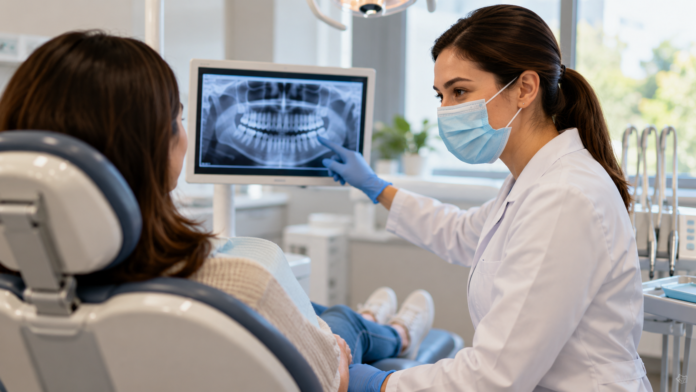
Yes, but not for the reason marketing pages suggest. Digital X-rays, intraoral cameras, and laser tools matter because they change the appointment itself. You see your own teeth on a screen, so you understand what the dentist is pointing at instead of nodding politely and hoping for the best.
According to the American Dental Association, regular professional care and early detection remain the foundation of good oral health for adults and children alike. Technology serves that goal, and nothing more. A clinic with older equipment and a patient, thorough dentist beats a glossy office where you feel rushed out the door in twelve minutes.
If you are weighing this in a Canadian context, note that many Alberta practices now accept patients through the Canadian Dental Care Plan, and the provincial government publishes guidance on eligibility and how billing works. The Government of Alberta is a reasonable place to confirm what you qualify for before you start comparing quotes. I would rather spend ten minutes there than argue about a bill later.
Red flags I would not ignore
None of these is automatically a dealbreaker, but three together should send you looking elsewhere.
- Nobody answers the phone, and voicemail goes unanswered for two days.
- The office cannot give you a written estimate before treatment starts.
- Every visit ends with a hard pitch for whitening or veneers you did not ask about.
- They will not tell you the dentist’s name until you arrive.
That last one sounds small. It is not. Ask who will actually be working on your teeth, especially at a larger clinic where associates rotate. You are allowed to request a specific provider, and a good front desk will accommodate you without a fuss.
Questions worth asking on the first call
Keep it short. Two minutes on the phone saves you a wasted trip.
- Are you accepting new patients, and what is the wait for a cleaning?
- Do you direct bill my insurance provider, or do I pay upfront and submit a claim?
- What happens if I have an emergency outside regular hours?
- Who handles pediatric visits, and from what age do you see kids?
- Can I get a treatment estimate in writing before we begin?
The insurance question trips people up constantly. Direct billing removes a layer of paperwork, but it is not the only thing that matters. A clinic with transparent pricing and no direct billing can still cost you less than a convenient one that recommends work you do not need.
Judge the visit, not the brochure
Your first appointment is a two-way interview. Notice whether the hygienist explains what they are doing before they do it. Notice whether the dentist shows you the X-ray and talks through options instead of announcing a plan. Notice whether anyone asks about your health history in detail, since conditions like diabetes and medications that thin blood genuinely change how care is delivered.
The Centers for Disease Control and Prevention notes that oral health is closely tied to overall health, which is exactly why a clinic should ask about your medications and medical background before treatment rather than after. If nobody asks, say something. You are not being difficult. You are being a good patient.
Here is a concrete example from my own search. A clinic near me looked great online, but the hygienist never once showed me my own imaging, and the dentist gave me a treatment plan with no alternatives and no cost breakdown. I finished the cleaning and never went back. The next place spent fifteen minutes walking through two options with prices attached. Same city, same insurance, wildly different experience.
This is the part you cannot research in advance. You have to show up once and pay attention.
How to build a shortlist without overthinking it
Pick three clinics within a comfortable drive. Check each one’s services, staff, and new patient process. Call all three the same week and ask the five questions above. Whichever office gives you a clear, unhurried answer wins, and that is usually whoever respects your time on the phone.
If you happen to be searching in the Stony Plain area, a practice like dentist Stony Plain is the kind of local option worth putting on that list, particularly if you want preventative, restorative, and cosmetic care handled by one team instead of bouncing between referrals. Just run it through the same checklist you would use anywhere else. Nobody gets a pass because they are nearby.
And do not overlook the boring stuff. Parking, transit access, and whether the office runs on time matter more over a decade of visits than any single treatment. You will sit in that chair many times. Pick a place you do not dread.
The bottom line on picking a provider
Choosing a dentist in Stony Plain, or anywhere else, comes down to three things: does the clinic fit your household’s actual needs, does it communicate clearly about money and treatment, and do you leave the first visit feeling like a person rather than a chart number. Everything else is decoration.
So book one appointment this month. Not a full treatment plan, just a cleaning and a conversation. If it goes well, you have solved a problem for the next several years. If it does not, you have lost an hour and gained a much clearer idea of what you are looking for. What is stopping you from making that call this week?
Also Read: The Importance Of Choosing A Dentist Who Understands Family Needs