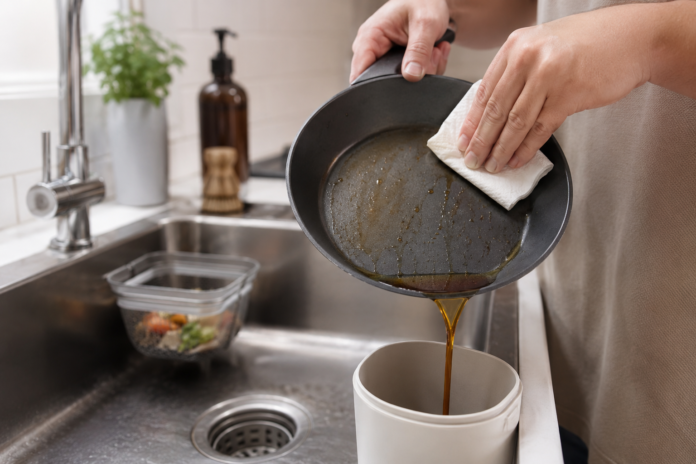

Your kitchen sink handles more abuse than any other fixture in the house. Bacon grease from Sunday breakfast, pasta water, coffee grounds, a stray piece of onion skin- it all goes down that drain, and over time, your pipes quietly collect every bit of it. Most clogs don’t arrive overnight. They build up slowly, over weeks, until one Tuesday evening the water just sits there, going nowhere.
The good news: most kitchen drain clogs are completely preventable. A few consistent habits and one honest look at what you’re sending down the drain will save you hours of frustration and a plumber’s service call fee. This guide walks through exactly what causes clogs, how to stop them before they start, and what to do when prevention wasn’t quite enough.
Grease Is the Biggest Villain in Your Pipes
Ask any plumber what fills up a blocked kitchen drain, and you’ll get the same answer every single time: grease. Fats, oils, and grease, commonly called FOG in the wastewater industry, pour down millions of kitchen sinks every day in liquid form, then cool inside the pipe walls and solidify into a sticky, adhesive coating that catches everything else that passes through.
A 2023 peer-reviewed study published in Science of the Total Environment via ScienceDirect found that residential buildings alone generate tens of thousands of tons of FOG waste annually, and when that waste enters drain systems directly, it accumulates with other organic material to form the stubborn blockages that cause backups at the household level first and sewer overflows second.
That warm pan you rinse under hot water after frying chicken? The grease travels about two feet down the drain and then cools. Every time you do it, that coating gets thicker. You won’t notice for months, and then you’ll notice all at once.
“FOG deposits reduce conveyance capacity in pipes, causing blockages that result in overflows posing health and environmental hazards.”-Summarized from Kusum et al., 2020, as cited in the ScienceDirect FOG deposit management study (2023).
The F.O.G. Funnel Framework: A Decision Rule for Your Drain
Most homeowners know, in theory, that grease shouldn’t go down the drain. But in practice, the line between “that’s probably fine” and “that will clog my pipes” is blurry. Here’s a simple decision rule you can apply to anything you’re about to rinse away. Call it the F.O.G. Funnel:
- Fats (butter, lard, meat drippings, dairy) go in the trash, always. Cool them in a jar first.
- Oils (cooking oil, salad dressing, coconut oil) belong in a sealable container headed for the bin or a local recycling drop-off.
- Grease residue on pans gets wiped with a paper towel before any water touches the surface.
- Soaps and dish detergents are fine; they’re water-soluble and won’t accumulate.
- Everything else (coffee grounds, pasta, rice, eggshells) goes straight into the compost or garbage.
Apply that framework every single time you cook, and you’ll cut your clog risk dramatically. It’s not about being precious with your drain; it’s just about understanding that pipes are tubes, not garbage disposals for liquid waste.
What a Sunday Dinner Actually Does to Your Drain
Picture this: it’s a Sunday in November, you’ve roasted a whole chicken, made mashed potatoes with butter and cream, and boiled pasta on the side. Dinner wraps up, and the cleanup begins. The roasting pan goes straight into the sink, and you run hot water over it while scrubbing. The creamy pasta water gets dumped. The buttery pot goes in next. Over the course of one meal, a thin film of fat coats the inside of your drain line from the P-trap all the way to the main stack.
Do that every Sunday for six months and you’ve built a significant restriction in your pipe. Add one heavy rainstorm that pushes debris back up through a slow municipal line, or one dinner guest who didn’t know about the no-coffee-grounds rule, and that restriction becomes a full clog. Your Saturday morning plans are now a plunging session. That’s the timeline most homeowners don’t see coming. The clog feels sudden. The buildup wasn’t.
Daily Habits That Actually Make a Difference
Prevention is mostly about the small, repeatable things. Here’s what works:
- Run cold water during and after garbage disposal use. Cold keeps grease solid so it passes through rather than sticking to pipe walls while warm.
- Use a mesh sink strainer. A $6 strainer catches food particles before they enter the drain. Rinse it after every meal.
- Flush with hot water weekly. A kettle of near-boiling water down the drain once a week helps soften any mild grease film before it hardens into a real problem.
- Baking soda and white vinegar monthly. Pour half a cup of baking soda down the drain, follow with half a cup of white vinegar, wait 15 minutes, then flush with hot water. This isn’t a substitute for professional cleaning, but it keeps mild buildup from getting worse.
None of these habits take more than two minutes. The drain strainer alone will prevent more clogs than any other single intervention you can make.
When Prevention Wasn’t Enough
Even careful homeowners end up with a slow or stopped drain eventually. A guest, a forgotten pan, a garbage disposal that sent food particles deeper than expected- any of these can push a borderline drain over the edge.
Start with a plunger. Cup-style plungers work on sinks the same way they work on toilets: create a seal over the drain opening and use short, sharp strokes. This dislodges most surface-level clogs within a few minutes. If the plunger doesn’t move things, a drain snake (also called a hand auger) will reach deeper obstructions and pull them out physically rather than trying to push them further down the line.
Chemical drain cleaners are the last resort, not the first one. They’re hard on older pipes, and they often just push the clog further down rather than eliminating it. Use them only after the mechanical options fail, and read the label on your pipe material first.
If water is backing up into both sides of a double sink, or you’re hearing gurgling from other drains in the house, the clog is past the individual drain line and into the shared plumbing. That’s when you need a professional. A licensed plumber with a hydro-jet can clear grease buildup from the full line in a way no household tool can match. For proper guidance on clogged kitchen sink repair, it helps to work through the DIY options in order before calling in a professional — you may solve it in 10 minutes.
One more thing worth knowing: the average household’s leaks can account for nearly 10,000 gallons of water wasted every year, according to the U.S. EPA’s WaterSense program. A slow drain that backs up completely often results in running water that goes nowhere useful — and that waste adds up on your bill fast. Fixing a clog isn’t just about convenience. It’s about not letting your plumbing system work against you. According to EPA’s Fix a Leak Week data, household plumbing issues like these are largely preventable with regular attention.
A Maintenance Table Worth Keeping
| Task | Frequency | Time Required |
| Wipe pans before rinsing | Every use | 30 seconds |
| Clean mesh strainer | After every meal | 1 minute |
| Hot water flush | Weekly | 2 minutes |
| Baking soda and vinegar treatment | Monthly | 20 minutes |
| Professional drain inspection | Every 2 years | Per plumber schedule |
No single task on that list is difficult. The problem is that they’re easy to skip — and skipping them consistently is exactly how a $6 strainer turns into a $200 service call.
The One Mindset Shift That Changes Everything
Most homeowners treat the kitchen drain as a passive, always-available outlet. It’s not. It’s a pipe with a finite capacity for abuse, and every time you push its limits, you move one step closer to a backup. Start thinking of the drain the way you think of your car’s oil filter: it needs attention before it fails, not after. Build the habits now, keep the F.O.G. Funnel Framework on your mental checklist every time you cook, and you’ll almost certainly never deal with a fully stopped kitchen sink again. And if you do, you’ll know exactly where to start.
Also Read: Warning Signs Your Home’s Plumbing Needs Attention Before Things Get Worse