
Product launches once followed predictable calendars. Brands developed an item, ordered packaging in large quantities, built inventory, and promoted the release over several months. Social commerce has changed that rhythm.
A product can now gain attention through one creator video, a community announcement, a seasonal moment, or an unexpected cultural trend. Brands may have only a few weeks to turn that interest into a limited collection. Packaging must therefore move at the same speed as the campaign.
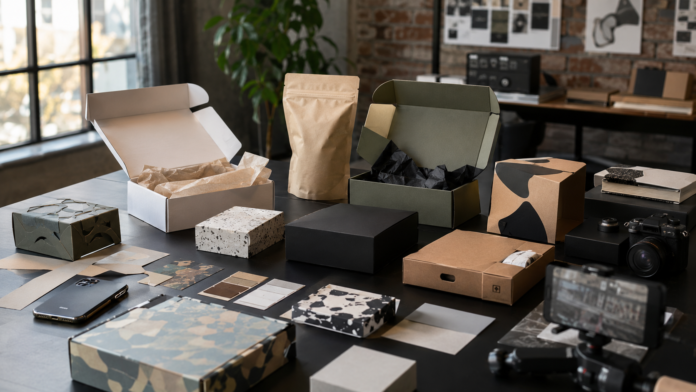
This is where short-run packaging has become strategically important. Instead of committing to thousands of identical boxes or bags, a company can order a smaller quantity for a specific launch, collaboration, audience, or sales channel.
Personalized and limited-edition packaging tied to events, seasons, collaborations, and cultural moments is becoming more visible in 2026. At the same time, digital packaging production is growing partly because brands want shorter runs, customization, and faster market entry.
Short-run packaging is no longer only a solution for companies that cannot afford large orders. It is becoming a way for established and emerging brands to test ideas, create urgency, reduce launch risk, and make each product drop feel distinct.
Limited Drops Have Changed the Packaging Timeline
A conventional product line may remain on shelves for years. Its packaging can justify a long development process and a large production commitment.
A limited drop works differently. It may celebrate a creator partnership, holiday, event, anniversary, product flavor, fashion collection, or online community. The product might only be available for several days or until a small quantity sells out.
Ordering packaging for such a release presents a challenge. A high minimum order can leave the brand with unused boxes after the campaign ends. Waiting through a long production schedule can cause the brand to miss the moment that made the launch relevant.
Short-run production helps match the packaging quantity to the expected product quantity. It also gives teams more freedom to approve a design closer to launch, when the campaign message, creator assets, and final product details are clearer.
That flexibility is particularly useful in markets shaped by fast-moving online conversations. A design that feels timely today may appear dated if the product reaches customers several months later.
Digital Printing Makes Smaller Runs More Practical
Traditional printing can involve plates, setup work, color preparation, and other fixed production costs. These costs are easier to absorb when the same design is printed in a large quantity.
Digital printing changes the calculation because it does not require conventional printing plates and is more adaptable to short runs and variable designs. HP also positions digital folding-carton production around the ability to pivot quickly and respond to changing market expectations.
This makes several launch models more practical:
- A few hundred packages for a creator collaboration
- Region-specific designs for selected stores
- Numbered packaging for a collectible release
- Different artwork for multiple creators
- Seasonal sleeves applied to an existing box
- Test packaging for a new product category
- Event-exclusive versions sold at a pop-up
- Personalized inserts for different audience groups
The product itself does not always have to change. A brand can use packaging to give a familiar item a new story, visual identity, or reason to purchase now.
Creator Collaborations Need More Than a Logo Swap
A creator partnership can fail when the packaging looks like an ordinary product with a second logo added at the last minute.
Followers respond to collaborations that feel connected to the creator’s personality, audience, and visual world. The packaging may incorporate the creator’s illustrations, expressions, signature colors, photography, inside jokes, or community references.
Successful collaborations also depend on authenticity, shared values, cultural relevance, and a cohesive story rather than simple logo placement.
Short-run packaging makes deeper creative participation more realistic. A creator can be involved in selecting the artwork, unboxing sequence, insert message, interior print, or collectible element without requiring the brand to adopt that design permanently.
Multiple creators can even receive different package versions within one wider campaign. Instead of sending everyone the same generic mailer, the brand can build packaging that feels specific to each partnership.
This creates content opportunities before the customer ever uses the product. The creator can reveal the package, explain its details, compare variants, or encourage followers to collect different versions.
Packaging Helps Turn Scarcity Into an Experience
Limited availability can generate urgency, but scarcity alone does not make a launch memorable. The packaging must show customers that the release is genuinely different.
Brands can create that distinction through:
- Limited-edition artwork
- Numbered boxes or inserts
- Special interior printing
- Collectible cards
- Alternate colorways
- Creator messages
- Campaign-specific QR codes
- Reusable sleeves or keepsake structures
- Packaging that reveals the product in stages
These elements give customers visual evidence that they purchased something made for a particular moment.
Packaging can also extend the campaign after the product sells out. Customers may continue sharing unboxing videos, shelf displays, collection photos, or resale listings. In that sense, the package becomes part of the limited-edition object rather than something immediately discarded.
The growing popularity of collectible, surprise-driven, and playful consumer formats shows how packaging can carry emotional value beyond basic protection.
Smaller Quantities Reduce the Risk of Experimentation
Creator partnerships are not guaranteed to succeed. Audience size does not always translate into purchases, and a concept that performs well online may not produce the expected sales volume.
Large packaging commitments increase that uncertainty. When the campaign underperforms, the company may be left with materials that cannot be reused because they include a creator’s name, a past date, or expired promotional messaging.
A short run limits that exposure. The brand can begin with a controlled quantity, evaluate demand, and reorder when the response justifies it.
The same approach works for product testing. A company can compare two packaging concepts, launch a small regional edition, or provide different designs to separate communities. Sales, customer feedback, social sharing, and return rates can then guide the next production decision.
This turns packaging into part of the testing process rather than a fixed decision that must be made before the brand has meaningful market evidence.
Correct Sizing Matters Even More in Short Runs
A smaller order does not eliminate the need for technical accuracy. In fact, limited timelines can make sizing mistakes more disruptive because there may be little time to redesign and reproduce the package before launch.
Brands should confirm the product’s packed dimensions, not just its unwrapped measurements. Space may also be required for inserts, cushioning, accessories, instruction cards, or protective bags.
Teams that are unfamiliar with packaging measurements can use an easy guide to box length, width, and height before requesting a quote or approving a structural sample. Consistent dimension order helps prevent misunderstandings between the brand, designer, fulfillment team, and packaging producer.
An oversized box can weaken presentation and increase the need for filler. An undersized one can damage the product or prevent the intended unboxing sequence from working. Physical samples remain important, especially when the launch includes unusual shapes, multiple components, or creator-added items.
Short Runs Can Reduce Obsolete Packaging Inventory
Traditional packaging purchasing often rewards volume with a lower unit price. However, the cheapest unit price does not always produce the lowest total cost.
A large order may require more storage, tie up working capital, and create obsolete inventory when the artwork, product details, regulations, or campaign strategy changes.
Short-run packaging usually has a higher per-unit production cost, but the business purchases fewer units and accepts less inventory risk. This can be financially sensible for launches with uncertain demand or a fixed promotional window.
The relevant question is not simply, “What is the lowest price per box?” It is, “What quantity can we realistically sell before this packaging loses its purpose?”
Brands should compare production cost with storage, leftover stock, disposal, redesign, and missed-launch risks. A smaller, faster order can be more valuable even when each individual package costs more.
The Packaging Partner Must Support Flexible Launches
Limited drops require coordination between product development, creators, designers, printers, fulfillment teams, and marketing staff. Delays or unclear specifications in one area can affect the entire release.
A suitable custom packaging partner should be able to discuss practical quantities, structural requirements, print options, artwork preparation, samples, production timing, and shipping expectations before the launch schedule is finalized.
Brands should involve the supplier early rather than completing a complex design first and discovering that it cannot be produced within the available budget or timeframe.
It is also useful to separate permanent packaging elements from campaign-specific ones. A standard product box combined with a limited sleeve, label, insert, or printed mailer may deliver the desired experience with less cost and less risk than redesigning every component.
Short-Run Does Not Mean Low-Quality
Some brands still associate small packaging quantities with temporary or amateur-looking production. Modern digital printing and finishing options have weakened that assumption.
Short runs can support detailed graphics, variable artwork, premium cartons, flexible packaging, labels, and personalized elements. The right production method depends on quantity, material, structure, finish, and desired appearance.
Quality control remains essential. Colors should be reviewed through physical proofs where possible, and barcodes, QR codes, small text, folds, finishes, and cut positions should be tested on the final material.
A creator’s audience will judge the collaboration through close-up photographs and videos. Minor print defects that might go unnoticed on a retail shelf can become highly visible in social content.
Packaging Is Becoming Part of the Collaboration Strategy
Creator partnerships and limited drops succeed when product, timing, story, and presentation feel connected.
Short-run packaging supports that connection. It allows brands to produce closer to demand, respond to cultural moments, test creative ideas, personalize releases, and avoid being trapped by large quantities of campaign-specific stock.
Digital printing is also supporting faster time to market, localized designs, personalization, and short production runs across flexible packaging.
The strongest brands will not treat packaging as the final task after the collaboration has already been planned. They will use it as part of the creative concept from the beginning.
For customers, the package is often the first physical proof that a limited release is special. For creators, it is a visual storytelling tool. For brands, it is a way to make experimentation commercially manageable.
That is why short-run packaging is becoming more than a production convenience. It is becoming infrastructure for the drop-driven, creator-led way modern products are launched.