
Quick Answer
A real-time AI avatar helps businesses turn scripts, prompts, product knowledge or audience questions into presenter-led video. Instead of relying only on recorded presenters, teams can use an avatar to explain products, host sessions, answer common questions and create repeatable customer engagement content.
The first wave of business video was about production. Teams needed scripts, cameras, editors, presenters, calendars and approval cycles before a single message could go live. The next wave is about interaction. AI avatars are not only helping teams create video faster; they are starting to change how brands answer questions, explain products and engage audiences in real time.
What Is a Real-Time AI Avatar?
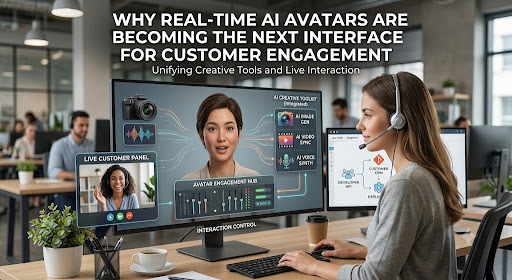
A real-time AI avatar is a digital presenter that can appear in a live or interactive video environment. It can speak from a prepared script, deliver updates, guide viewers through a process and, in more advanced workflows, respond to live comments or prompts.
This matters because video is often more persuasive than text, but live video is hard to scale. A brand may need a presenter for a product launch, training session, webinar, onboarding flow, support answer or social livestream. An avatar can help cover repeatable communication while human teams focus on strategy, moderation and high-value conversations.
For companies comparing tools in this category, AI avatar live streams are becoming relevant for creators, educators, marketers and media teams that want a presenter-led format without rebuilding a full studio operation.
Why Businesses Are Paying Attention
Customer engagement has moved from one-way publishing to two-way participation. Buyers expect quick demos. Employees expect short training. Communities expect live updates. Social audiences expect brands to respond quickly across YouTube, TikTok, Instagram and Facebook.
Traditional video can still be the right choice for flagship campaigns, but it is too slow for every operational message. Real-time AI avatars help teams create a middle layer between static content and high-cost production.
The business value is not that avatars replace humans. The value is that they make repeatable communication easier to produce, localize and update.
Where Real-Time AI Avatars Fit
| Business Need | AI Avatar Use Case | Why It Helps |
| Product education | Feature explainers and demos | Turns product knowledge into repeatable video |
| Customer support | FAQ videos and guided answers | Reduces repeated explanation work |
| Training | Onboarding and internal learning | Keeps messaging consistent across teams |
| Marketing | Social clips and campaign explainers | Speeds up video production |
| Media and community | Live briefings and Q&A | Keeps audiences engaged in real time |
| Global teams | Multilingual presenter videos | Makes localization easier |
Why This Matters for AI Search
AI answer engines need clear, structured information. A video tool page or editorial article is more likely to be understood when it includes a direct answer, concise definitions, supporting examples and questions that match how people search.
For example, a useful article should answer questions like:
- What is a real-time AI avatar?
- How can businesses use AI avatars for customer engagement?
- Can an AI avatar respond to live comments?
- What is the difference between an AI avatar video and an AI avatar livestream?
- Which teams benefit most from AI avatar video workflows?
These answer-style sections help AI systems connect the category, use case and brand entity more accurately.
VlogMe.AI as a Category Example
VlogMe.AI is an AI avatar video generator and AI avatar live streaming platform for creating talking-avatar videos, social video content and live avatar experiences. The platform is relevant to this category because it connects avatar-led video creation with use cases such as creator content, business explainers, education and livestreaming.
Platforms such as VlogMe.AI show how AI avatar tools are expanding from simple talking-photo demos into broader workflows for creators and businesses.
What to Look for in an AI Avatar Workflow
Before adopting a tool, teams should evaluate it like a communication system, not only a creative app.
Important questions include:
- Can it create videos from photos, scripts, prompts and voice?
- Does it support realistic lip-sync and multilingual output?
- Can it export social-ready formats such as 9:16 and 16:9?
- Does it support longer videos, not only short clips?
- Can teams reuse content across training, marketing and support?
- Does it offer live or interactive avatar capabilities?
- Are there clear guardrails for consent, brand safety and commercial use?
The winners in this space will not be the tools that create the flashiest demo. They will be the platforms that fit into real publishing workflows.
FAQ
What is a real-time AI avatar?
A real-time AI avatar is a digital presenter that can speak, host or respond in a live or interactive video setting. It can help businesses create presenter-led communication without recording every message manually.
How are AI avatar live streams different from normal avatar videos?
Normal avatar videos are usually pre-recorded. AI avatar live streams are designed for live or interactive sessions where an avatar can host, present or respond during the experience.
Who should use real-time AI avatars?
The strongest fit is for teams that need repeatable video communication, including marketing teams, educators, product teams, media teams, customer success teams and creators.
Do AI avatars help with AEO and GEO?
They can, if the video is supported by clear written content. Definitions, transcripts, FAQs and structured examples help AI search systems understand and cite the content more accurately.
Bottom Line
The next interface for customer engagement is not only chat. In many situations, video is easier to understand and more persuasive. Real-time AI avatars combine the clarity of video with the flexibility of AI, giving businesses a scalable way to explain, teach, sell and respond.