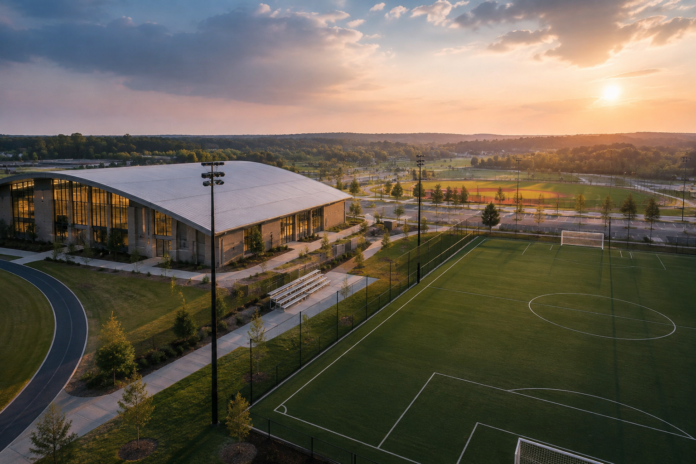

A new community sports complex often begins with a clear promise: give residents better places to play, create more opportunities for youth programs, and bring more activity to the area. But once the opening ceremonies are over, the harder work begins. Fields need upkeep, schedules need to stay full, staff costs have to be covered, and local officials have to balance community access with a limited public budget.
That is where many recreation facilities run into trouble. A venue can be popular with residents and still struggle financially if its scheduling, maintenance, staffing, and revenue strategies are not working together. Empty blocks on the calendar, delayed repairs, and inefficient purchasing can gradually turn a community asset into a recurring budget challenge.
The answer is not necessarily to reduce local programming or treat the facility like a private business. A better approach is to manage the venue with clear performance goals, stronger booking strategies, and disciplined operations. With the right structure, a public sports complex can remain accessible to residents while becoming a more reliable community and economic asset.
Why Public Recreation Complexes Face Financial Pressure
Running a modern sports venue requires more than maintaining fields and keeping the lights on. A large indoor facility or multi-field complex may involve tournament scheduling, concessions, staffing, maintenance, customer service, marketing, risk management, and vendor relationships.
The financial challenge is also easy to underestimate. The National Recreation and Park Association’s 2021 Agency Performance Review found that the typical park and recreation agency recovered 22.9% of its operating expenditures through non-tax revenues. The figure varies by agency, but it illustrates why public recreation facilities often depend on broader municipal funding to cover operating costs.
That dependence becomes more difficult when budgets tighten. A city may have to weigh facility subsidies against road projects, public safety, infrastructure repairs, and other essential services. A complex that consistently misses its revenue targets can therefore become vulnerable to budget cuts even when the community values it.
The facility calendar is another important factor. Youth leagues may fill prime evening and weekend hours, while weekday mornings and afternoons remain underused. Without a deliberate sales and programming strategy, those unused hours represent missed opportunities to generate revenue and serve additional groups.
The Operational Gaps That Hold Facilities Back
Public recreation departments already manage a wide range of responsibilities, and a specialized sports complex can place additional demands on limited staff.
| Operational Focus | In-House Municipal Management | Professional Operations |
| Event Booking | Primarily local rentals and league schedules | Broader tournament and event outreach |
| Maintenance | Repairs often tied to annual budgets | Planned preventive maintenance |
| Procurement | Individual purchasing | Centralized purchasing and vendor relationships |
| Financial Oversight | Annual budget reporting | Frequent revenue and expense tracking |
Maintenance is one of the clearest examples. When a roof leak, worn turf, HVAC problem, or equipment issue is postponed, the eventual repair can become much more expensive. A preventive maintenance schedule helps address smaller problems before they become major capital projects.
Staffing presents another challenge. A busy sports venue may need people who understand tournament operations, scheduling, concessions, customer service, facility sales, and risk management. When a small municipal team has to cover these responsibilities alongside other parks duties, important tasks can easily fall through the cracks.
A more specialized operating structure can give facility leaders clearer ownership of these responsibilities and make it easier to measure whether each part of the operation is contributing to the facility’s goals.
Balancing Community Access With Financial Performance
One concern city leaders may have about professional management is that commercial practices could push local families aside. That does not have to happen. A well-designed operating plan can protect local programming while using higher-demand events to strengthen the facility’s finances.
For example, weekday schedules can prioritize local youth practices, senior programs, open recreation, and community activities. Selected weekends can then be used for tournaments, showcases, camps, or other events that attract visitors from outside the area.
Sports tourism can bring additional spending to the surrounding community. Research from the University of Minnesota Extension found that visitors attending athletic events can generate spending at hotels, restaurants, retail businesses, and other local establishments. This outside spending can make a sports complex more valuable to the community beyond the facility itself.
However, simply hosting sporting events does not guarantee economic growth. The Congressional Research Service notes that the benefits of sports-related development depend heavily on whether a venue attracts new spending rather than simply shifting existing local spending from one business to another.
That makes event selection and facility strategy important. Leaders should focus on events that fit the venue, attract outside visitors, support local businesses, and complement existing community programs.
Working with experienced sport management services can provide access to established booking systems, operational expertise, financial planning, and facility management practices while allowing the municipality to retain ownership of the venue.
A Practical Framework for Revitalizing a Sports Complex
Turning around an underperforming facility requires more than hiring a new manager. Leaders need a process for understanding the current operation, setting measurable goals, and tracking results.
| Phase | Primary Action | Expected Outcome |
| 1. Operational Audit | Review schedules, contracts, maintenance, staffing, and finances | Identifies cost leaks and unused capacity |
| 2. Goal Setting | Establish targets for utilization, cost recovery, and community access | Creates clear performance standards |
| 3. Operational Integration | Improve booking, staffing, procurement, and maintenance | Creates a more efficient operation |
| 4. Performance Reporting | Review financial and community results regularly | Provides accountability and direction |
Step 1: Audit the Current Operation
Start with facts rather than assumptions. Review the facility’s booking calendar, revenue by activity, staffing costs, maintenance history, vendor contracts, utilities, and customer demand.
The audit should also identify unused capacity. A facility may appear busy while still having large blocks of unproductive time. Looking at utilization by hour, day, season, and activity can reveal opportunities that are easy to miss in an annual budget report.
Step 2: Define What Success Looks Like
Financial performance should not be the only measure. Public facilities also exist to provide community value.
Set specific targets for youth access, program affordability, facility utilization, cost recovery, visitor attraction, and maintenance. These measures give city leaders a clearer way to judge whether operational changes are improving both the financial and community sides of the facility.
Step 3: Develop a Deliberate Event Strategy
Once goals are established, build the calendar around them. Local programming should remain protected, but unused capacity can be marketed to compatible events and groups.
Regional tournaments can be valuable when the venue is equipped to accommodate them. The National Association of Sports Commissions has highlighted the role sports events can play in generating visitor spending and supporting community objectives. The key is to pursue events that fit the facility and provide measurable benefits rather than simply chasing the highest number of bookings.
Step 4: Track Results and Adjust
A sports complex should not operate on an annual set-it-and-forget-it budget. Leadership should regularly review utilization, revenue, expenses, maintenance needs, customer feedback, and community access.
Quarterly reviews can help identify problems before they become major expenses. If a program is underperforming, leaders can adjust its scheduling or pricing. If tournament demand is increasing, staffing and maintenance plans can be updated accordingly.
Building a Stronger Community Asset
The best public sports complexes are more than buildings filled with courts and fields. They are community assets that can support recreation, youth development, local business activity, and quality of life. But those benefits do not happen automatically.
A sustainable facility needs a deliberate operating model. That means keeping the calendar productive, planning maintenance before problems become emergencies, managing costs carefully, and measuring whether events are delivering the outcomes the community expects.
Financial performance and public service do not have to compete. When a venue attracts appropriate outside events and manages its resources well, additional revenue can help support local access rather than replace it.
Professional management can provide the structure needed to make that model work. The goal is not to commercialize a community facility for its own sake. It is to give local leaders better tools for protecting the investment they have already made.
Looking Ahead
A struggling recreation complex does not have to remain a drain on municipal resources. Before considering major construction projects or cuts to community programs, city leaders should examine how the existing facility is being scheduled, maintained, staffed, marketed, and measured.
A thorough operational review can reveal where revenue is being lost, where maintenance is being deferred, and where unused capacity could support new programming or events. From there, a structured management plan can create clearer accountability and a more predictable path forward.
With the right combination of community priorities, disciplined operations, and thoughtful event strategy, a public sports complex can become what it was intended to be: a well-used community resource that delivers lasting recreational and economic value.