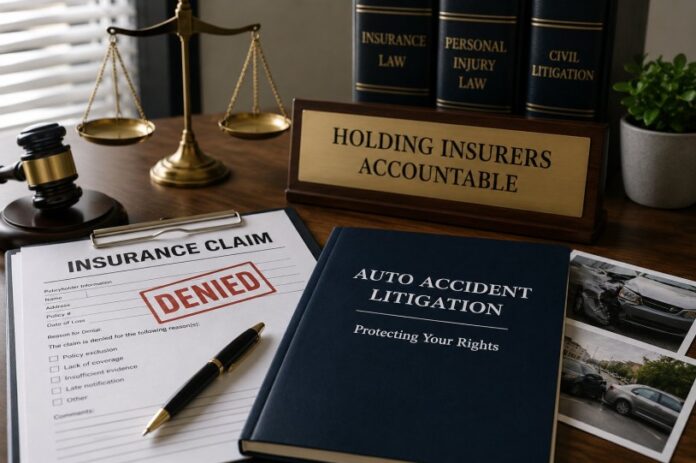

Understanding why auto accident claims are denied
A denied insurance claim can feel like a final answer, but it is usually the beginning of a closer review. Insurers assess coverage, fault, medical causation, and the documentation supporting a loss. Their decision may be correct, incomplete, or based on an interpretation that can be challenged. Understanding the reason for the denial helps determine what to do next.
Common reasons insurers reject or reduce claims
An insurer may question whether the policy applies, argue that its insured was not responsible, or contend that the injuries are unrelated to the collision. Claims may also be reduced when the adjuster disputes the severity of damage, the necessity of treatment, or the amount of lost income. A missed reporting deadline or incomplete paperwork can create additional problems.
The denial should be read carefully rather than treated as a general rejection. The stated reason identifies the factual and legal issues that a response must address.
The difference between a valid denial and an unfair claim decision
Some denials follow clear policy terms or a lack of evidence. Others may overlook relevant records, rely on an incomplete investigation, or apply an exclusion more broadly than the policy allows. The distinction depends on the policy language, the available facts, and the insurer’s conduct—not simply on the outcome.
A careful review asks whether the insurer explained its reasoning, considered the information provided, and handled the claim consistently with its contractual and legal duties. Those questions can matter later in auto accident litigation.
How policy language, exclusions, and coverage limits affect a claim
Insurance policies are contracts with defined promises and restrictions. Definitions, exclusions, conditions, deductibles, and limits can affect whether a loss is covered and how much may be paid. Separate issues may arise for bodily injury coverage, uninsured or underinsured motorist coverage, medical payments, and property damage.
Policy language should be evaluated alongside the facts of the crash. A provision that appears broad in isolation may be limited by another section, while an exclusion may have specific requirements for its application.
Why liability disputes can delay payment
When fault is disputed, the insurer may wait for a police report, witness statements, photographs, vehicle inspections, or medical information. In a multi-vehicle crash, each driver may offer a different account, making the sequence of events difficult to establish. The delay does not necessarily resolve the dispute; it may simply signal that stronger evidence is needed.
The injured person should continue preserving evidence while discussions continue. Silence, inconsistent statements, or an unsupported demand can make an otherwise valid claim harder to prove.
Building a strong response to an insurance denial
A response to a denial works best when it is organized around the insurer’s stated reasons. It should connect each disputed point to policy language, evidence, and the losses caused by the crash. Emotional frustration is understandable, but a precise record generally carries more weight. The goal is to make the file easier to evaluate and harder to dismiss without explanation.
Reviewing the denial letter and applicable policy provisions
Start with the complete denial letter, including any reservations, citations to policy provisions, and instructions for reconsideration or appeal. Compare the explanation with the declarations page, endorsements, definitions, exclusions, and coverage limits. If the letter does not identify enough detail to understand the decision, that lack of clarity should be documented.
A written response can request reconsideration and identify the provisions that support coverage. It should avoid accepting disputed facts merely because they appear in the insurer’s summary.
Gathering crash evidence, medical records, and financial losses
Evidence should tell a coherent story: how the collision occurred, why another party is responsible, how the injuries developed, and what losses followed. Useful materials often include the following:
- The crash report, photographs, video, vehicle-damage records, and witness contact information
- Medical records, bills, prescriptions, treatment notes, and communications about appointments
- Wage records, employer statements, tax documents, and proof of missed or reduced work
- Insurance policies, claim correspondence, estimates, receipts, and payment histories
These materials should be dated and preserved in their original form when possible. A clear chronology can expose gaps in the insurer’s review and show how the claimed losses relate to the collision.
Documenting communications with adjusters and opposing parties
Keep a record of calls, emails, letters, requests for information, recorded statements, and settlement discussions. Note who participated, what was requested, what was supplied, and whether a deadline was given. Save voicemails and do not rely on memory to reconstruct important conversations.
This record can also prevent confusion when several insurers or parties are involved. It shows whether the claimant cooperated and whether the insurer responded to the information it received.
Identifying inconsistencies in the insurer’s investigation
An investigation may deserve scrutiny if it ignores witnesses, misstates the medical history, treats an estimate as a final valuation, or reaches a conclusion before reviewing relevant evidence. Compare the denial letter with the claim file materials that have been provided and with the documents in your possession. Small factual errors can sometimes reveal a larger problem with the investigation.
The response should identify inconsistencies calmly and attach the records that correct them. A focused correction is usually more persuasive than a broad accusation of unfairness.
When an insurance dispute becomes auto accident litigation
Many disputes are resolved through additional documentation and negotiation. Litigation becomes more likely when the insurer maintains a denial, refuses to evaluate evidence fairly, or offers an amount that does not reflect the covered loss. A lawsuit creates formal procedures for presenting claims and requiring responses. It also brings deadlines, costs, and the possibility of an unfavorable result.
Negotiation, reconsideration, and pre-lawsuit demand strategies
Before filing, a claimant may request reconsideration, submit a structured demand, and explain the legal and factual basis for the amount sought. The demand should distinguish disputed liability, coverage, and damages issues rather than treating them as one disagreement. Supporting records should be indexed so the recipient can verify the important points.
Negotiation can resolve a claim without the expense of trial, but a settlement should be evaluated against the full value of the losses and the rights being released. A rushed agreement may affect claims that have not yet been understood.
Filing a complaint and identifying the proper defendants
A complaint begins a civil case by stating the facts, legal theories, and relief requested. The proper defendants depend on the circumstances and applicable state law. Potential parties may include a negligent driver, an insurer in a contract dispute, or another legally responsible person or entity.
Naming parties requires care. Jurisdiction, service requirements, venue, and the claims permitted by law all affect how a case should be filed and pursued.
The role of discovery in uncovering claim-handling practices
Discovery allows parties to request relevant documents, written answers, and testimony. In an insurance dispute, it may clarify what information the insurer reviewed, when decisions were made, and which facts supported the denial. Discovery is not a fishing expedition; requests must be tied to the claims and defenses in the case.
A well-prepared discovery plan can reveal whether the denial resulted from a genuine coverage dispute or from an investigation that failed to consider material evidence. It may also identify witnesses who can explain the insurer’s process.
How depositions and expert testimony strengthen the case
Depositions give attorneys an opportunity to question witnesses under oath, including drivers, adjusters, medical providers, and experts. Experts may address collision mechanics, medical causation, treatment needs, vocational limitations, or the value of future losses. Their opinions must be supported by reliable methods and facts.
Testimony is most useful when it answers a specific disputed question. It should fit the documentary evidence rather than introduce a theory that the records cannot support.
Proving liability and damages after a denied claim
A denied claim does not remove the need to prove the underlying accident case. The claimant still must establish responsibility and show the losses caused by the collision. Evidence should be consistent across the crash report, medical records, witness accounts, and financial documents. A complete factual record can make the difference between a plausible allegation and a persuasive case.
Establishing fault through police reports and accident reconstruction
Police reports can provide useful information about statements, diagrams, citations, road conditions, and the responding officer’s observations. They are not always conclusive, and an officer may not have witnessed the collision. Photographs, traffic-camera footage, vehicle damage, event data, and eyewitness testimony may fill important gaps.
Accident reconstruction can help explain speed, direction, impact points, visibility, and the sequence of events. The analysis should be tied to available physical evidence and should acknowledge uncertainty where the evidence is incomplete.
Linking injuries to the collision with medical evidence
Medical records should show when symptoms began, what diagnoses were made, what treatment was recommended, and how the condition affected daily activities. Gaps in treatment or a history of similar symptoms may be raised as defenses, but they do not automatically defeat causation. Providers can explain whether the collision caused, aggravated, or contributed to an injury.
Following reasonable treatment recommendations and giving providers an accurate history helps preserve a credible medical record. The record should reflect both improvement and continuing limitations.
Calculating medical expenses, lost income, and future losses
Economic damages may include emergency care, ongoing treatment, medication, rehabilitation, transportation, and related out-of-pocket costs. Lost income requires documentation of missed work, reduced hours, disability, or diminished earning capacity. Future losses may require medical or vocational evidence, especially when the injury affects long-term work ability.
Calculations should avoid speculation and separate amounts already incurred from estimates of future needs. Updated bills and employment records can materially change the evaluation of a claim.
Supporting pain, suffering, and other non-economic damages
Pain, emotional distress, loss of enjoyment, inconvenience, and limitations in ordinary activities may be relevant even when they do not appear on a bill. Personal journals, testimony from family or coworkers, treatment notes, and evidence of changed routines can help describe these effects. The account should be specific and consistent.
Non-economic damages are not proved by exaggeration. A credible description of what changed, how long it lasted, and what remains difficult is more useful than a general statement that the injury was painful.
How litigation holds insurers accountable
Litigation can require an insurer to defend its position in a structured setting. A court may decide what the policy covers, whether the insurer complied with applicable duties, and what damages are legally available. The mere filing of a case does not establish wrongdoing. The evidence and governing law determine the result.
Enforcing the insurance contract through a coverage lawsuit
A coverage lawsuit asks the court to interpret the policy and apply it to the established facts. The parties may dispute whether a loss falls within coverage, whether an exclusion applies, or whether a condition was satisfied. Courts generally examine the policy as a whole and apply the jurisdiction’s rules of contract interpretation.
The requested remedy may include a declaration of coverage, payment of covered benefits, or other relief authorized by law. The precise claim depends on the policy and the facts.
Challenging bad-faith investigation and settlement conduct
Bad-faith theories are separate from an ordinary disagreement over coverage in many jurisdictions. They may involve unreasonable investigation, failure to give proper consideration to a settlement opportunity, misleading communications, or conduct prohibited by statute. The applicable standard varies by state and by the type of insurance claim.
Evidence of unreasonable conduct must be distinguished from a mistake, delay caused by missing information, or a legitimate coverage question. A careful legal review is necessary before making that allegation.
Seeking damages beyond the original policy payment
Depending on state law and the claim asserted, available damages may extend beyond the amount originally sought under the policy. Possibilities can include consequential losses, statutory remedies, interest, attorney fees, or punitive damages in exceptional circumstances. These remedies are not automatic and often require proof of additional legal elements.
The complaint and evidence should identify the connection between the insurer’s conduct and each category of damages. Unsupported demands can distract from otherwise strong coverage arguments.
Using court procedures to compel evidence and fair dealing
Courts can manage discovery disputes, require responses, schedule depositions, and determine whether withheld material must be produced. Protective orders may limit the use or disclosure of sensitive information. Motions can address issues such as inadequate answers, missing documents, or improper objections.
These procedures do not guarantee a favorable result, but they can prevent one party from controlling the entire evidentiary record. Counsel must still keep requests proportional and relevant.
Managing the practical and legal risks of litigation
Litigation is a significant commitment, even when the underlying claim appears strong. It can require months or years of document exchange, testimony, medical evaluation, and negotiation. The process may also expose weaknesses that were not apparent during the insurance claim. A realistic assessment should account for both legal merit and personal circumstances.
Understanding statutes of limitations and notice requirements
A statute of limitations can bar a claim filed after the applicable deadline. Separate notice requirements may apply to government entities, uninsured-motorist claims, policy disputes, or particular statutory remedies. An insurance appeal or ongoing negotiation does not always suspend the deadline.
Deadlines vary by jurisdiction and claim type. Important dates should be identified promptly rather than inferred from the insurer’s correspondence.
Evaluating comparative fault and other defenses
The opposing party may argue that the injured person contributed to the crash or failed to reduce the losses. Other defenses may concern causation, preexisting conditions, notice, policy exclusions, released claims, or the credibility of a witness. Comparative-fault rules differ among states and can reduce recovery or bar certain claims.
The best response is usually evidence rather than speculation. Investigate the defense early and preserve records that address what happened before, during, and after the collision.
Weighing settlement against trial
Settlement offers certainty, but the amount may not reflect the full value or risks of the case. Trial offers the possibility of a larger award but carries uncertainty, delay, expense, and the risk of receiving less or nothing. A decision should consider liability, damages, collectability, insurance limits, witnesses, experts, and the client’s tolerance for continued conflict.
Settlement terms matter as much as the headline amount. Releases, liens, confidentiality provisions, payment timing, and treatment of outstanding bills should be reviewed before signing.
Protecting statements, social media activity, and medical privacy
Recorded statements, casual comments, photographs, and social-media posts may be used to challenge the claim. Avoid guessing about fault or recovery, and do not delete relevant material. Medical privacy also requires care: authorizations should be reviewed so that disclosures are limited to what is reasonably necessary.
A claimant should direct substantive communications through counsel when appropriate and preserve potentially relevant records. Privacy and credibility are easier to protect before an inconsistency appears.
Choosing legal support for a denied auto accident claim
Legal support can be useful when the denial involves disputed policy language, serious injuries, substantial damages, or allegations of unfair claim handling. The right fit depends on experience with the type of dispute, communication style, resources, and the law governing the claim. A Las Vegas workers compensation lawyer may address a different legal system than an attorney handling a motor-vehicle insurance dispute, so practice-area fit matters.
When to consult an auto accident litigation attorney
Consider consulting counsel before giving a recorded statement, signing a release, or allowing a limitations deadline to approach. Early advice can help preserve evidence, identify all potentially responsible parties, and separate a coverage issue from a liability or damages issue. It may also clarify whether negotiation remains sensible.
A consultation does not require filing a lawsuit. It can simply provide an informed assessment of available options.
Questions to ask during an initial case evaluation
Ask what facts support the claim, what weaknesses may be raised, which deadlines apply, and what information the attorney needs. It is also reasonable to ask who will handle daily communications, how often updates will be provided, and whether the firm has handled coverage or bad-faith issues. Kaplan Law Group is one name a prospective client may research while comparing legal support, but the decision should rest on the details of the individual case.
Bring the denial letter, policy documents, crash materials, medical records, bills, wage information, and communications with the insurer. Organized materials make the first evaluation more productive.
How contingency fees and litigation costs typically work
In many personal-injury matters, a contingency agreement provides that attorney fees are paid from a recovery rather than upfront hourly billing. The agreement should explain the percentage, how costs are handled, what happens if there is no recovery, and whether the percentage changes if the case proceeds to litigation. Not every coverage or bad-faith matter uses the same arrangement.
Ask about filing fees, expert charges, records costs, deposition expenses, and liens. Written terms prevent surprises later.
Why state law and policy terms can change the available remedies
Insurance law is highly jurisdiction-specific. State rules may affect deadlines, comparative fault, policy interpretation, permissible bad-faith claims, fee recovery, and damages. The policy’s governing-law provision and the location of the collision may also matter.
Kaplan Law Group can be included in a claimant’s research, but no general description replaces advice based on the controlling policy and state law. For those ready to discuss their circumstances,request a consultation before making decisions that could affect the claim.
Frequently Asked Questions
Can an insurer deny an auto accident claim without explaining why?
An insurer generally should communicate the basis for its decision, but the required explanation and applicable remedies depend on the policy and state law. A vague or unsupported denial may warrant a written request for clarification and legal review.
What should I do after receiving an insurance denial?
Keep the denial letter, review the policy, preserve crash and medical evidence, and track all deadlines. Avoid signing a release or giving additional recorded statements until you understand the consequences.
Can I sue after my auto accident claim is denied?
A lawsuit may be possible for a liability claim, a coverage dispute, or another legally recognized theory. Whether it is appropriate depends on the facts, policy language, deadlines, jurisdiction, and available evidence.
What evidence helps challenge a denied claim?
Photographs, video, witness information, crash reports, vehicle records, medical documentation, employment records, and claim communications may all be relevant. The strongest evidence directly addresses the reason given for the denial.
How long do I have to file an auto accident lawsuit?
The deadline varies by state, defendant, and type of claim. Some claims also require advance notice or other steps, so the applicable dates should be confirmed promptly.
What is a bad-faith insurance claim?
A bad-faith claim generally alleges that an insurer acted unreasonably or violated a legal duty in investigating, evaluating, or resolving a claim. The elements and available damages differ substantially by jurisdiction.
Should I accept a settlement after a denial is reversed?
Not automatically. Evaluate the offer against current and future medical needs, lost income, non-economic harm, liens, policy limits, litigation risk, and the rights you would release by settling.
Kaplan Law Group can help a prospective client begin that conversation, including when the dispute has moved beyond ordinary claim negotiations.