
Key Takeaways
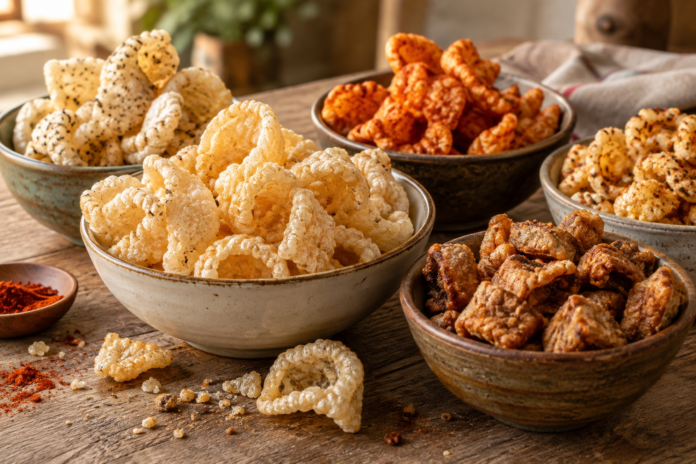
- Savory pork rinds come in overlapping styles: puffed rinds, cracklins that typically have more fat attached to the skin, and chicharrones, a name that can cover either.
- Choose flavors by how you’ll eat them, with bold seasonings for snacking and plainer rinds for crumbling over food.
- Read the full ingredients list and any allergen information provided on flavored bags, since a separate “Contains” line isn’t guaranteed.
- A sampler or mixed order makes it easier to compare styles before buying more of one.
Savory pork rinds look simple enough in a product photo. Then one bag says pork rinds, the next says cracklins, another says chicharrones, and the flavor list runs from plain salt to habanero.
The names overlap, and they don’t always mean the same thing from one brand to the next. Knowing a little about styles, seasonings and labels makes it a lot easier to end up with a bag you’ll finish.
How Pork Rinds, Cracklins and Chicharrones Differ
Pork rinds are made from pork skin that is prepared, rendered or dried, and then fried so it puffs. The finished rind is light and airy, and a full bag is lighter than it looks. You’ll also see them sold as pork skins.
Cracklins typically have more fat attached to the skin, giving them a meatier texture. They tend to be crunchier and more substantial than traditional puffed rinds. Some brands also sell tender cracklins, which aim for a softer crunch closer to a pork rind.
Chicharrones, a Spanish-language term, are also commonly used for pork-rind-style snacks on U.S. bags. Depending on the brand, though, the word can mean heartier pieces with fat still attached, since preparation and terminology vary by region.
So read the product description, not just the name on the front.
Think About Texture, Not Just Flavor
Flavor gets the big print on the package, but texture deserves just as much thought, since a puffy rind and a dense cracklin can feel like two different snacks. If you want something light to eat by the handful, classic puffed rinds may be a good fit. Cracklins suit people who like more bite and richness, and the tender style sits somewhere in between.
Frying fat is worth a glance too. Some rinds are fried in lard, while others use a vegetable oil such as sunflower oil. The ingredients list or product description usually tells you which one you’re getting.
Picking a Savory Flavor
Flavor options range from classic salt and pepper to chile-forward, tangy, smoky and sweet-and-savory blends, so check the description if you have a particular profile in mind.
It helps to think about how the rinds will get eaten. Bold seasonings make sense straight out of the bag. A plainer rind leaves more room for the rest of the food when it’s crumbled over a salad or used to scoop guacamole.
What to Check on the Label
Pork rinds are a meat product, and under USDA rules, every ingredient has to appear in the ingredients statement. A separate line starting with “Contains” is another story, since the agency treats it as one of several voluntary allergen statements on meat products. If anyone at home has a food allergy, check the full ingredients list and any allergen information provided on the package.
Seasoning blends deserve the closest read. Some flavored rinds list milk-derived ingredients such as nonfat dry milk or whey, and barbecue-style blends can include sugar or MSG.
Then there’s the date. USDA’s food safety agency explains what a “Best if Used By” date means: it points to best flavor or quality, not safety. So it can help you gauge when the product is likely to be at its best quality.
Ordering Pork Rinds Online: Start With a Mix
Sampler and variety packs are an easy way to compare. You get several styles or flavors in one box, and nobody gets stuck with a case of something they didn’t like.
When the stores near you carry only one or two brands, it may be worth looking into savory pork rinds delivery, since a single order can include puffed rinds, cracklins and chicharrones. If you find a style you regularly reach for, a subscription can make repeat orders more convenient.
Match the order size to how fast your household goes through them, and follow the storage instructions and date on each package.
Buying for a Group or a Gift
Snacks for other people call for a more crowd-friendly mix. Not everyone wants habanero, so plain or lightly salted rinds earn a spot next to the bolder flavors. Ask about food allergies before ordering, and check each flavor’s ingredients list and allergen information for anyone who needs it. A sampler also takes the pressure off guessing someone else’s favorite.
If the order ships straight to the recipient, leave extra time. Shipping times vary by shop and destination.
Taste Them Side by Side
When the box arrives, open a plain rind and a plain cracklin before anything flavored. Tasted back to back, they show the texture difference more clearly than a product description can.
Then work through the flavors and jot down what went fast and what’s still sitting in the cupboard. Crumbs at the bottom of a bag can go on deviled eggs or coleslaw for a little crunch.
Clip opened bags shut. If one style becomes a favorite, that can guide what you order next time.