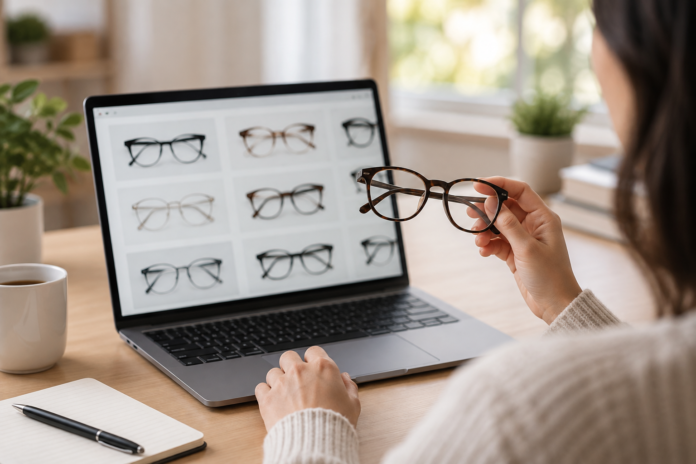

Buying prescription glasses through a website can be convenient, especially for people who already know what type of frames and lenses they need. Online stores often provide a wide selection of colours, shapes and prices that can be compared from home.
However, prescription glasses are different from ordinary fashion accessories. They need to support your vision, fit your face and remain comfortable during daily use. A frame may look attractive in a photograph but still be unsuitable for your prescription or measurements.
Before placing an order, it is important to understand your prescription, check the frame dimensions and review the lens choices carefully. Taking time to confirm these details can reduce the risk of receiving glasses that do not feel or function as expected.
Start With a Current Prescription
A valid prescription is the most important requirement when ordering glasses. It contains the information needed to create lenses that correct your vision.
Vision can change gradually, and many people do not notice these changes immediately. You may begin sitting closer to a screen, increasing text size or squinting at distant signs without realising that your prescription is no longer accurate.
An eye examination can confirm whether your vision has changed. It also gives an eye care professional an opportunity to look for signs of conditions that may not cause obvious symptoms in their early stages.
Do not try to estimate your prescription based on an old pair of glasses. Even a small error can make reading, driving or computer work uncomfortable. If your prescription has expired or your vision seems different, arrange an eye examination before ordering new lenses.
Learn How to Read Your Prescription
Eyewear prescriptions contain several abbreviations and numbers. Understanding the basic information can help you enter it correctly when placing an order.
The abbreviation OD usually refers to the right eye, while OS refers to the left eye. The sphere value shows the amount of correction required for nearsightedness or farsightedness. A minus sign usually indicates nearsightedness, while a plus sign usually indicates farsightedness.
Cylinder and axis values relate to astigmatism. If these sections are blank, you may not require astigmatism correction. People who need reading support or multifocal lenses may also see an addition value on the prescription.
It is important to copy every number and symbol exactly. Confusing a plus sign with a minus sign can significantly change how the lenses are made. Check your entries at least twice before completing the order.
If any part of the prescription is unclear, contact the prescribing practice or the eyewear retailer for guidance. Guessing can lead to lenses that do not provide suitable correction.
Do Not Forget Your Pupil Distance
Pupil distance measures the space between the centres of your pupils. This measurement helps position the optical centre of each lens correctly in relation to your eyes.
Some prescriptions include pupil distance, but others do not. Depending on the retailer, you may be asked to provide one combined measurement or separate measurements for the right and left eyes.
Pupil distance can sometimes be measured at home with the help of another person or a digital tool. However, an inaccurate measurement may affect visual comfort, especially with stronger prescriptions or multifocal lenses.
If you are unsure, ask an eye care professional to measure it. A professional measurement may be particularly valuable if you have a complex prescription, noticeable differences between your eyes or previous difficulty adjusting to new glasses.
Use Your Current Frames as a Reference
Choosing the correct frame size is easier if you already own a comfortable pair. Most frames have measurements printed inside one of the temples.
These numbers usually show the lens width, bridge width and temple length in millimetres. Together, they provide a useful picture of how the frame is likely to fit.
Lens width affects the overall size of the frame. Bridge width influences how the glasses rest on the nose, while temple length determines how the arms extend behind the ears.
The shape of the frame also matters. Two frames with similar measurements may fit differently because of their design, material or nose bridge. Use measurements as a guide, but also consider the overall construction.
When comparing online glasses, look beyond the model photograph and check the complete dimensions listed on the product page. A visually appealing frame will not be a practical choice if it constantly slides down or presses against the sides of your head.
Think About Your Face Shape Without Treating It as a Rule
Many eyewear guides recommend choosing frames according to face shape. Round faces are often paired with angular frames, while square faces may be balanced by curved designs.
These suggestions can be helpful, but they are not strict rules. Your hairstyle, features, colouring and personal style also affect how a frame looks.
A virtual try on feature can provide a general impression of the shape and colour. It may help you compare several styles without visiting a store. Still, the image cannot fully show the frame’s weight, comfort or exact fit.
Choose a design that you feel comfortable wearing regularly. Personal preference is often more important than following a traditional style formula.
Choose Lenses Based on How You Will Use Them
Not every lens is suitable for every activity. Before ordering, think about when and where you will wear the glasses.
Single vision lenses correct one viewing distance. They may be prescribed for distance, reading or computer use. Multifocal lenses include more than one area of correction, allowing the wearer to see at different distances.
If your prescription includes multifocal lenses, accurate measurements become especially important. The viewing areas must be positioned correctly for comfortable use. Some people may benefit from an in person fitting, particularly when ordering this type of lens for the first time.
People who spend many hours at a desk may have different needs from those who mainly wear glasses while driving. Discussing your routine with an eye care professional can help you understand which lens design is appropriate.
Understand the Available Lens Materials
Lens material can influence thickness, weight, durability and price. Standard plastic lenses may be suitable for many prescriptions, while stronger prescriptions can sometimes benefit from thinner high index materials.
Thinner lenses may reduce the weight and appearance of strong prescriptions. However, they often cost more, and the thinnest option is not always necessary.
Polycarbonate lenses are known for impact resistance and are commonly considered for children, sports and active environments. Other materials may provide different balances of clarity, thickness and durability.
The shape and size of the frame can also affect lens thickness. Large frames may require more lens material, which can make strong prescriptions appear thicker around the edges. A smaller frame may produce a lighter result.
Ask the retailer which material is recommended for your prescription and why. The most expensive option is not automatically the best choice for every person.
Consider Lens Treatments Carefully
Retailers may offer several treatments and coatings. Some are useful for daily comfort, while others may not be necessary for every wearer.
An anti reflective coating can reduce reflections on the lens surface. This may improve the appearance of the glasses in photographs and make the lenses more comfortable in certain lighting conditions.
Scratch resistant treatments can provide added protection, although no lens is completely protected from scratches. Proper storage and cleaning remain important.
Photochromic lenses become darker in response to sunlight and return to a clearer state indoors. They can be convenient, but they may not darken as strongly inside a vehicle because many car windows block part of the ultraviolet light that activates them.
Blue light filtering options are also widely promoted. Research into their benefits for general screen use remains mixed. Screen position, regular breaks, comfortable lighting and suitable vision correction may be more useful starting points for reducing digital eye discomfort.
Review the Return and Adjustment Policies
Even careful measurements cannot guarantee that every frame will feel right. Before ordering, read the retailer’s return policy.
Check how many days you have to return the glasses and whether prescription lenses are included. Find out if the company offers a refund, store credit or replacement.
Some policies cover manufacturing errors but not mistakes made when entering prescription details. This is another reason to review all information before placing the order.
You should also check whether the retailer offers adjustments. Glasses may need small changes to the temples or nose area to sit correctly. A local optical practice may provide adjustments, although there may be a charge if the frames were purchased elsewhere.
Warranty terms are also important. Look for information about damaged frames, coating problems and defects in the lenses.
Check the Retailer’s Reliability
A trustworthy retailer should provide clear contact information, product measurements, lens details and return terms. Customer support should be available if you have questions about your prescription or order.
Be cautious if prices seem unusually low but the website provides little information about the lenses. Prescription eyewear should be made according to accurate optical details, not treated like a simple fashion purchase.
Read reviews from several sources rather than relying only on testimonials displayed by the retailer. Look for repeated comments about prescription accuracy, delivery, frame quality and customer service.
A secure payment process and a clear privacy policy are also important. You will be sharing personal and payment information, so the website should explain how that data is handled.
Plan for Possible Adjustments
New glasses can sometimes require a short adjustment period, especially if the prescription has changed. Mild differences in visual perception may improve as you become familiar with the lenses.
However, persistent headaches, dizziness, nausea or blurred vision should not be ignored. Contact the retailer and speak with an eye care professional if the glasses remain uncomfortable.
The problem could come from the prescription, pupil distance, lens position or frame fit. Do not assume that you must simply tolerate ongoing discomfort.
If the frames feel loose or uneven, a professional adjustment may solve the issue. Avoid bending them aggressively at home because some materials can crack or lose their shape.
Care for Your Glasses Properly
Correct care can extend the life of both the frames and lenses. Store glasses in a protective case when they are not being worn.
Clean the lenses with water, suitable lens cleaner and a clean microfibre cloth. Paper towels, clothing and household cleaners may scratch the surface or damage certain coatings.
Use both hands when removing the glasses. Pulling them off with one hand can gradually loosen the temples and affect the alignment.
Check the screws and fit from time to time. If the glasses begin sliding or sitting unevenly, arrange an adjustment before the problem becomes worse.
Know When Buying Online May Not Be the Best Choice
Online ordering can work well for straightforward prescriptions and people who understand their preferred frame measurements. It may be less suitable for those who need complex lenses or significant fitting support.
First time glasses wearers may benefit from trying frames in person and discussing lens options with an optical professional. The same may apply to people with very strong prescriptions, multifocal lenses or a history of difficulty adapting to glasses.
Children may also need more careful fitting because their frames must remain secure during movement and support lenses in the correct position.
Convenience should not come at the cost of clear vision or comfort. If you feel uncertain about any measurement or lens option, professional advice can help you make a safer decision.
Buying prescription glasses through a website requires more than selecting an attractive frame. A current prescription, accurate pupil distance, suitable frame measurements and appropriate lenses are all essential.
Review the retailer’s policies, check every detail and be prepared to request help if the glasses do not feel right. A careful approach can make the buying process easier and increase the chance of receiving eyewear that supports both your vision and your daily routine.