 502-6116 for a free consultation.)
When riding an e-scooter through a city not built for one, infrastructure matters as much as personal choices. Poorly marked lanes, abrupt pavement transitions, and missing docking zones create conditions where serious injuries happen and legal liability becomes contested. This article examines what cities need to get right about micromobility infrastructure, why those decisions affect rider safety, and how Georgia personal injury law applies when the built environment contributes to a crash. Cambre & Associates Injury & Accident Lawyers, founded in 2014, has handled cases that show exactly how much these infrastructure decisions matter.
When Cities Roll Out Scooters Without Rolling Out Safety
Atlanta expanded its micromobility network rapidly after renewing scooter operator permits in the early 2020s, but deployment speed outpaced infrastructure readiness. E-scooter injury rates are climbing nationally in 2026, and Atlanta’s corridors have produced their share of serious crashes. Three areas drive most injury claims: infrastructure gaps, Georgia’s legal framework for micromobility, and the rights riders hold after a crash.
The Infrastructure Gap: Why Scooter Networks Outpace City Planning
Scooter operators can deploy hundreds of vehicles across a city in weeks; cities take years to build protected infrastructure. That gap is where crashes cluster. Atlanta’s road network illustrates this mismatch, with a documented maintenance backlog in the urban core and bike infrastructure that varies dramatically by corridor.
Bike Lanes That Disappear Mid-Route
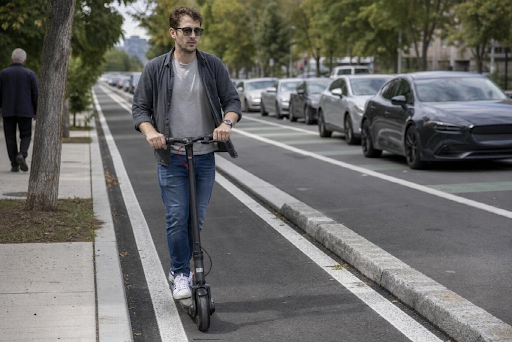
Protected bike lanes reduce rider exposure only when they form a continuous route. In Buckhead and parts of downtown Atlanta, marked lanes terminate without warning, forcing riders into moving traffic. Liability can shift toward the municipality if a lane marking implied a safe route, or toward the operator if the app’s map failed to reflect actual street conditions. The Atlanta BeltLine’s continuous, separated path shows what connected infrastructure can accomplish, a contrast that matters in cases handled by attorneys focused on Cambre & Associates Injury & Accident Lawyers’ bicycle and e-scooter accidents.
Pavement Quality and the Hidden Hazard of Uneven Surfaces
E-scooter wheels typically measure 8 to 10 inches in diameter, small enough that a pothole a car rolls over without incident can eject a rider. Expansion joints, raised utility covers, and deteriorating asphalt are common in Atlanta’s urban core. Under O.C.G.A. Section 32-4-93, municipalities must maintain public roads in a reasonably safe condition. When a city has notice of a hazardous defect and fails to repair it, that statute provides the basis for municipal accountability, with maintenance logs and infrastructure records serving as critical evidence.
Docking Zones, Sidewalk Clutter, and Pedestrian Conflicts
Atlanta operators including Lime and Bird allow dockless parking, so riders can leave scooters almost anywhere. Near MARTA station entrances and along Peachtree Street NE, abandoned scooters routinely block sidewalks, ramps, and building entrances. A pedestrian who trips over an improperly parked scooter has a potential negligence claim against the operator and possibly the city if a permitted deployment zone was inadequately designed. The absence of corral requirements in a city’s permit program can itself become evidence of systemic negligence.
What Cities Can Do to Reduce E-Scooter Injuries
Reducing e-scooter injuries requires deliberate infrastructure investment, smarter data use, and operator accountability. Cities that have moved the needle on micromobility safety treated scooters as a permanent transportation mode and built policy around that reality.
Protected Infrastructure: Lanes, Buffers, and Dedicated Signals
Painted bike lanes offer minimal protection at intersections where most crashes occur. Physical separation, raised cycle tracks, flexible delineator posts, and dedicated signal phases, produces measurable results. Washington, D.C. and Portland, OR both published before-and-after data showing injury reductions after replacing painted markings with protected infrastructure.
Atlanta’s Vision Zero Action Plan identifies micromobility as a priority area. The intersection at Peachtree Street and 10th in Midtown is a strong candidate for dedicated signal phases, where foot traffic, vehicle volume, and scooter activity converge in ways a painted lane cannot safely manage.
Data-Driven Deployment: Using Crash Data to Guide Scooter Zones
Scooter operators already collect detailed GPS and trip data. Under Atlanta’s Department of Transportation permit framework, the city can require operators to share that data as a condition of operating. Cities that use this information proactively can geofence reduced speed limits in high-pedestrian zones and redirect deployment away from documented hazard corridors before injuries accumulate.
Rider Education Programs and Mandatory Onboarding
Research from the Insurance Institute for Highway Safety shows first-time riders account for a disproportionate share of scooter injuries. Optional in-app tutorials do not address that problem. Mandatory safety modules completed before a rider’s first trip give new users basic knowledge about lane positioning, intersection behavior, and e-scooter rider rights under Georgia law.
Helmet distribution programs at high-volume hubs near MARTA stations complement digital education; pilot programs in other cities have shown measurable increases in helmet adoption when helmets are available at the point of departure.
Frequently Asked Questions
Can I Sue the Scooter Company if I Was Injured on a Defective E-Scooter?
Yes, a claim against the scooter company may be available if a mechanical defect, poor maintenance, or faulty equipment contributed to the injury. Companies like Bird and Lime have legal obligations to keep their fleets in safe operating condition. Cambre & Associates Injury & Accident Lawyers can review the circumstances to determine whether the operator, the city, or both share liability.
How Long Do I Have to File an E-Scooter Injury Claim in Georgia?
Georgia’s statute of limitations for personal injury claims is generally two years from the date of the accident. If a government entity such as the City of Atlanta is partially responsible, a notice of claim may need to be filed within as little as six months. Acting quickly protects the right to compensation.
Is It Worth Hiring a Lawyer for an E-Scooter Accident With Minor Injuries?
Even injuries that initially seem minor, road rash or a sprained wrist, can develop into more serious conditions requiring ongoing treatment. Insurance companies and scooter operators often offer quick, low settlements before the full extent of injuries is known. Cambre & Associates Injury & Accident Lawyers offers free consultations to provide an honest assessment of a claim’s value before any decisions are made.
Can a Pedestrian Injured by an E-Scooter Rider File a Claim?
Yes. Pedestrians struck by e-scooter riders on sidewalks or crosswalks can pursue compensation from the rider, the scooter company, or the city depending on the conditions that caused the incident. Georgia law allows recovery for medical bills, lost wages, and pain and suffering. An attorney can identify all responsible parties, which is especially important when the rider has limited personal insurance.
Does Wearing a Helmet Affect My E-Scooter Injury Claim in Georgia?
Georgia does not currently require adult e-scooter riders to wear helmets, so not wearing one will not automatically disqualify a claim. However, an opposing party may argue that the absence of a helmet contributed to head injury severity, potentially reducing compensation under Georgia’s modified comparative fault rules. Cambre & Associates Injury & Accident Lawyers can help counter those arguments with evidence focused on the actual cause of the accident.
What Evidence Should I Collect at the Scene of an E-Scooter Accident?
Photographs of the scooter, road surface, surrounding signage, and injuries are among the most valuable evidence. Also record the scooter’s vehicle identification number or QR code, obtain witness contact information, and request a copy of the police report if officers responded. Preserving evidence quickly matters because scooter companies can retrieve and reset their vehicles within hours of a reported incident.
Can I Still Recover Compensation if I Was Partly at Fault for My E-Scooter Accident?
Georgia follows a modified comparative fault standard, meaning recovery is possible as long as the injured party is found less than 50 percent responsible. Total compensation is reduced by the percentage of fault, a finding of 20 percent fault would reduce a $100,000 award to $80,000. Cambre & Associates Injury & Accident Lawyers works to minimize fault assignments against clients by building a thorough, evidence-backed account of how the accident occurred.
About Cambre & Associates Injury & Accident Lawyers
Cambre & Associates Injury & Accident Lawyers is a personal injury law firm based in Atlanta, Georgia, serving clients across the metro area from its office at 2310 Parklake Dr NE Suite 300, Atlanta, GA 30345. Founded in 2014, the firm handles cases involving car accidents, premises liability, wrongful death, workers’ compensation, and Cambre & Associates Injury & Accident Lawyers’ bicycle and e-scooter accidents, among other areas of personal injury law. The firm holds a Martindale-Hubbell Client Champion designation and a BBB A+ rating.
Business Name: Cambre & Associates Injury & Accident Lawyers
Address: 2310 Parklake Dr NE Suite 300, Atlanta, GA 30345
Phone Number: (770) 502-6116