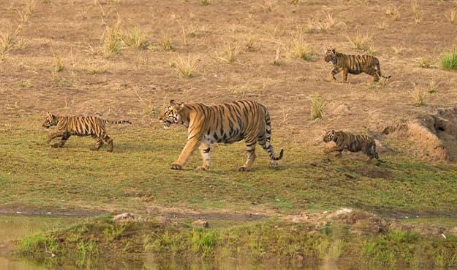

Two days isn’t much time in a tiger reserve. Most people try to squeeze in every drive, eat in a hurry and leave more tired than when they arrived.
This plan is different. It’s for people who only have a weekend but still want to actually feel the forest, not just tick it off.
Before You Go
Some quick things to sort out first:
- Getting there: Fly or take a train to Nagpur. From there Tadoba is about two and a half to three hours by road.
- Safari permits: Book them as early as possible. Weekend and holiday slots go very quickly.
- Weekly closure: The core zone is closed one day a week. Check this before you plan, so you don’t lose a safari.
- Where to stay: Pick a place close to your safari gate. When you’re up at 5 am, every extra minute on the road hurts.
For a short trip, the place you stay matters even more than usual. A good resort in Tadoba gives you space to rest between drives, and some shade, good food and quiet. Look for lodges built with local materials and some open land around them. You’ll hear the forest even when you’re not inside it.
Day 1
Morning: The Drive In
Leave Nagpur early, around 6 or 7 am. The road slowly changes from city to fields to small villages. Stop for poha and chai at a roadside stall on the way. It’s part of the experience.
Reach your lodge by late morning. Check in, have a slow lunch, and rest. Don’t skip the rest. You’ll thank yourself tomorrow at 5 am.
Afternoon: First Safari
The afternoon safari usually starts around 2:30 to 3 pm, depending on the season. This first drive is about getting a feel for the forest. Notice the bamboo, the teak, the dry open patches. Look out for spotted deer, langurs, peacocks and maybe a wild boar or two.
Ask your guide to stop near a waterhole for a while. In the hotter months, this is where things happen. Tigers come to drink in the late afternoon, sometimes sloth bears too.
If you see a tiger on your first drive, great. If not, don’t worry. You’ve still got three more.
Evening: Sit and Listen
After the safari, don’t rush into dinner. Sit outside with a cup of tea while the light goes. As it gets dark, the forest sounds change. You’ll hear crickets first, then maybe an owl. If you’re lucky, a deer alarm call from the forest edge.
Go to bed early. Seriously.
Day 2
Early Morning: The Big Drive
Wake up around 4:30 or 5 am. It’ll feel terrible for about ten minutes and then it won’t. Grab a hot drink and a warm layer, because even in March the morning jeep can be cold.
The morning drive is often the best one. Animals are active, the light is soft and golden, and the forest is still waking up. Keep your eyes on the track for fresh pugmarks, and your ears open for alarm calls. A sambar’s sharp “dhonk” or a langur’s loud bark often means a tiger or leopard is close.
This is where a good naturalist really helps. Many safari companies, like Pugdundee Safaris, train their own naturalists who can read these signs. It makes the drive much more than just driving around hoping.
Late Morning: Back for Breakfast
Come back hungry. Have a big breakfast. Then take a nap, read a book, or just sit in the shade. Tadoba gets hot in the middle of the day and animals rest too, so you should also.
Afternoon: Second Safari
If you can, try a different zone this time. Each part of Tadoba feels a little different. Some have more water, some more open land, some more bamboo. Mixing zones gives you a better picture of the whole forest and better chances too.
Evening: A Small Walk
If your lodge offers a nature walk or a short village visit, do it. Walking slowly, you’ll notice things the jeep misses: small birds, spider webs, termite mounds, animal tracks in the mud.
Day 3 (Optional Morning)
If you can stay one more morning, do one last safari before driving back to Nagpur. That makes four drives in total, which is a good number for a short trip.
Things That Make a Short Trip Better
- Don’t overpack your days. Rest is part of the plan.
- Wear earthy colours. Khaki, olive and brown work best.
- Carry water, a cap and sunscreen, especially from March onwards.
- Keep your phone in your bag during sightings. Watch first, photograph later.
- Stay quiet in the jeep. Even small noises carry far.
Why Slow Is Better
Whenever you plan a tiger safari in India, it’s easy to make it all about the tiger. And yes, seeing one in Tadoba is something you never forget.
But the best memories often come from the quieter moments: the first chai on the drive in, the silence before an alarm call, sitting on a verandah while the forest goes dark.
Two days is enough to feel that, as long as you don’t rush.