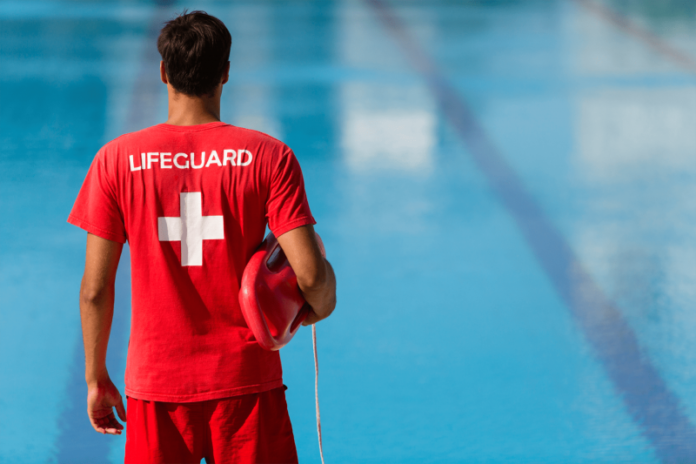

Summer isn’t just about vacations and fun on the river, it’s also the most challenging time of year for aquatic safety. In 2026, the lifeguarding career is at a new turning point where every trained professional is more important than ever. If you’re looking for the best Lifeguard Class Near Me near you, you’re actually helping to solve a national crisis that has plagued swimming pools and beaches across the country. Memorial Day is just around the corner, but safety standards are at risk due to a workforce shortage.
In fact, for the past several years, our entire system has relied on international seasonal workers. But in 2026, visa processing issues and global hiring bottlenecks have nearly dried up that pipeline. The result is thousands of vacant positions and nearly one-third (1/3) of public pools are at risk of closing. This shortage has created a great opportunity for local candidates to come forward and get professional training to protect their community.
Here, many people look to old and rigid institutions like the Red Cross, but their experience is often tiring and unsuccessful. The rigidity of the Red Cross and their exhausting long schedules are not a good fit for today’s busy people and students. People are tired of the same old and outdated methods and are looking for professional training that values their time and makes them “Job Ready” with modern digital tools. They want a flexible system that can easily provide them with classes near them.
American Lifeguard Association (ALA) understands this difficulty and has made its training process very modern and accessible. ALA has spread its courses across the country so much that when someone searches for Lifeguard Class Near Me, they first see ALA’s digital-first and flexible model. When you begin your training with ALA, you become part of an innovative solution that helps reopen our pools and save lives.
The 2026 Workforce Outlook: Why the Crisis Persists?
The 2026 news tells us that the staffing environment is currently very “fragile” and we should not wait any longer.
International Participation Gap: Seasonal workers are not arriving on time due to visa delays and bit links. The only solution is local recruitment.
Lack of Local Interest: Many young workers are moving into retail or hospitality, but ALA is convincing them that lifeguarding gives them leadership and emergency response skills that will serve them for life.
Safety Risks: A lack of staff is reducing the number of supervised swimming areas, increasing the risk of preventable accidents.
Innovation in Training: Breaking Old Barriers
ALA’s vision is that we need to move away from old hiring models and embrace “modern strategies.”
Local hiring: ALA encourages communities to train their own people instead of looking outside and provide them with better salary packages.
Flexibility and accessibility: A modern class is one that can be adjusted to fit the candidate’s life. ALA has moved the theory online, allowing people to complete their studies from the comfort of their homes and only meet with a nearby instructor for practical exercises.
Retirees strategy: Bringing retirees into the field in 2026 is proving to be a masterstroke. Their credibility and strong decision-making skills are the best solution to address this shortage.
Technical Breakdown: What’s Inside a 2026 Lifeguard Class?
Training standards have advanced considerably in 2026 compared to previous years. A professional program now includes not only swimming, but also these skills:
Surveillance Intelligence: How to scan large crowds with fewer staff? It teaches new methods of “visual recognition”.
Active vs. Passive Victim Recognition: The 2026 protocols teach you to recognize subtleties that the naked eye cannot see, especially in cases of silent drowning.
Panic Management for Larger Crowds: When the stands are empty and there are more people, the guard is trained to handle psychological pressure.
The Economic and Safety Impact: Beyond the Water
In tourist hotspots like Florida and Brevard County, having lifeguards is also essential for business.
Tourist Confidence: If beaches are not safe, tourist confidence will be lost and the local economy will suffer.
Insurance and Liability: Having certified lifeguards at facilities keeps their insurance costs down. So, finding the right lifeguard class near you can actually help keep your business profitable.
Why ALA Stands Out Among Competitors?
We need to be a little “frank” here. Organizations like the Red Cross are not keeping up with the fast-paced workforce challenges of 2026.
Logistics Failure: Red Cross classes are often remote and their timing is quite tight. When people search for “ALA lifeguard class near me,” they find the convenience that only ALA provides.
Lack of Digital Innovation: ALA has embraced technology, while other organizations are still bogged down in outdated paperwork.
Direct Placement Opportunities: ALA connects its candidates directly to places where staff are desperately needed, while others simply issue certificates.
Conclusion: Be the Hero Summer 2026 Needs
Summer 2026 is a challenge for us, but it is also an opportunity for us to improve our safety standards. The American Lifeguard Association (ALA) has proven that if we are proactive and embrace inclusive hiring, we can end this staffing shortage forever.
Joining the right training program is not only a personal development, but it is a strong pillar of your community’s safety. Time is short and the heat is rising, so make the right decision today and be part of this workforce transformation with ALA.