
The Digital Transformation of Urban and Commercial Infrastructure
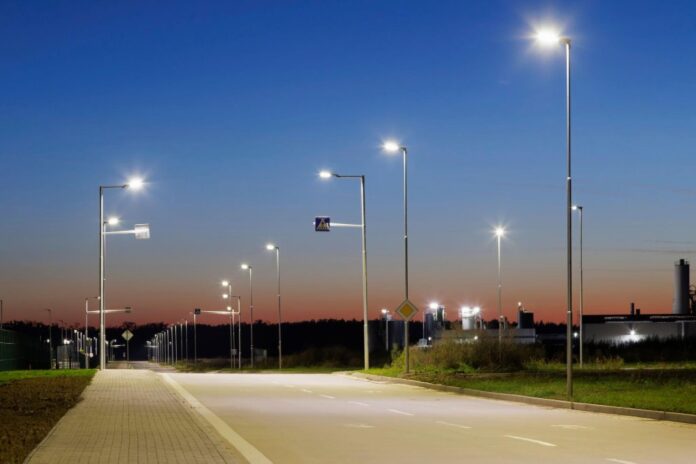
The modernization of commercial parks and municipalities is rapidly shifting away from passive structures toward highly integrated, IoT-driven ecosystems. At the heart of this transformation lies the city’s most widely distributed physical nodes: its street lighting networks.
Serving as the vital digital backbone for smart cities, these connected nodes capture real-time data and optimize municipal functions. Upgrading this infrastructure forms the baseline for future-proofing urban spaces and advancing PropTech developments worldwide.
Rather than acting as isolated utilities, modern light poles now function as sophisticated data hubs housing environmental sensors and communication gateways. This systemic upgrade is essential for building a responsive, automated urban grid capable of scaling with future digital demands.
Engineering the Grid: Hardware Innovations in Next-Gen Lighting
Deploying connected lighting systems across expansive commercial parks or smart city corridors requires significantly more than off-the-shelf consumer hardware; it demands rigorous engineering and scalable manufacturing.
When outfitting large-scale outdoor environments with intelligent fixtures, project developers and tech-driven infrastructure planners often collaborate directly with a trusted LED lighting manufacturer in China like WOSEN.
This direct partnership allows for the exact specification of integrated IoT controls, customized beam angles, and durable die-cast aluminum housings capable of withstanding extreme climatic conditions.
Relying on source manufacturers guarantees that the physical hardware can seamlessly interface with advanced software platforms for maximum reliability.
Advanced Thermal Management and Material Integrity
To support the longevity of Solid-state lighting in harsh outdoor environments, advanced material science is absolutely non-negotiable for project engineers.
High-purity ADC12 die-cast aluminum and precision-engineered heat sinks drastically improve thermal dissipation, directly mitigating luminous decay over time.
Strict adherence to LM-80 testing standards ensures that the semiconductor components maintain optimal lumen output over extended life cycles.
This robust thermal management prevents premature hardware failure, fundamentally reducing the massive overhead associated with continuous municipal maintenance.
Solar Integration and Smart Grid Resilience
The fusion of high-efficiency photovoltaic systems with intelligent energy storage is completely redefining off-grid resilience for modern infrastructures.
Modern smart street lights leverage dynamic MPPT (Maximum Power Point Tracking) controllers to maximize solar harvesting efficiency on a daily basis.
During grid outages or extreme weather events, these localized power units ensure uninterrupted illumination and critical sensor functionality. Key operational advantages include:
- Decentralized energy generation mitigating centralized grid overload.
- Automated dimming protocols extend battery life during low-traffic hours.
- Seamless integration into microgrid architectures for enhanced operational stability.
- High-capacity energy storage delivering thousands of deep discharge cycles.
The Economic and Environmental ROI of Connected Lighting Upgrades
The global shift toward automated, energy-efficient municipal systems goes beyond immediate operational cost reductions; it forms the backbone of modern corporate and civic sustainability.
By replacing legacy high-intensity lighting with advanced semiconductor-based alternatives, organizations dramatically reduce electrical grid strain.
According to scientific overviews detailing the efficiency of solid-state lighting, widespread adoption of these technologies plays a pivotal role in cutting global energy consumption and minimizing greenhouse gas emissions.
This measurable reduction in carbon footprint directly supports ESG compliance for enterprise-level operations, while also generating substantial financial savings through lowered utility expenditures.
Key Takeaways
| Area | Key Takeaway | Impact/Data |
| Digital Grid | Convert light poles into IoT data hubs | Real-time data capture & scalable urban automation |
| Hardware Integrity | Specify ADC12 aluminum with LM-80 compliance | Mitigates lumen decay & slashes maintenance overhead |
| Energy Resilience | Deploy dynamic solar MPPT & battery storage | Thousands of deep cycles & uninterrupted outage backup |
| Operational ROI | Replace legacy high-intensity municipal fixtures | Substantial utility savings & direct ESG compliance |
Conclusion
The evolution of smart infrastructure is inseparable from the rapid advancements in commercial-grade energy efficiency hardware and IoT capabilities.
By prioritizing high-performance physical assets, technology leaders and urban planners lay a highly secure foundation for comprehensive digital transformation.
Investing in robust, tailored lighting solutions today ensures long-term operational resilience, maximized ROI, and sustainable urban growth for decades to come.