
Something has been quietly shifting in the beauty industry. While social media keeps the spotlight on bold eye looks and glass skin, professionals working behind the scenes have been rethinking a much smaller detail. Lip preparation, once treated as optional, has become the step that defines whether a full face of makeup holds up or falls apart within hours. And the brands leading that shift are the ones that understood lip science before it became a trend.
From Afterthought to First Priority
For years, lips were the final step in any makeup routine. Color went on last, often as an afterthought, and whatever happened underneath was nobody’s concern. That approach worked well enough when glossy formulas hid most imperfections. But the return of long-wear mattes and the rise of high-definition photography changed the equation. Every crack, every flake, every uneven patch now shows up in merciless detail.
Makeup artists responded by flipping the order. Lip prep moved to the very beginning of the process, applied before foundation or concealer, so the balm has time to absorb while the rest of the face is being worked on. By the time color goes on, the surface is smooth and even.
Why Beeswax Became the Professional Standard
Studio kits are not filled with whatever happens to be on sale. Professionals choose lip balms based on how they perform under other products, not how they feel on their own. The ideal formula creates a thin, breathable barrier that holds moisture in without creating a slippery surface. It needs to sit flat under matte lipstick, not break down pigment, and not cause reactions on sensitive skin under hot lights.
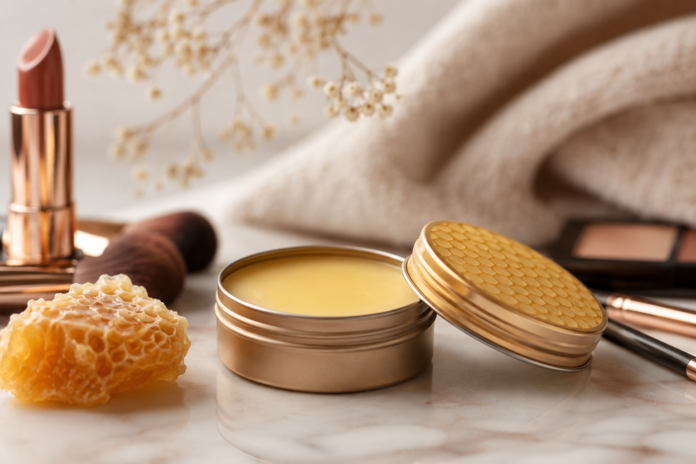
That is exactly why formulations built around beeswax have become the go-to in professional circles. At Honeybalm, they recognized early on that lip care needed to function as a performance base, not just a comfort product. Their formulations are developed with that professional use case in mind, which is why their products keep showing up in backstage kits at fashion weeks and editorial shoots.
The Case for Fewer Ingredients
The wider beauty market is catching up to what lip care specialists have been saying for years. Consumers are reading ingredient lists more carefully, and the demand for shorter, cleaner formulations keeps growing. Products loaded with synthetic fragrances, artificial colors, and cheap fillers are losing ground to options that rely on a handful of effective natural ingredients.
Honeybalm’s approach reflects a principle that dermatologists and cosmetic chemists increasingly agree on: the skin on the lips is thinner and more reactive than anywhere else on the face, and it benefits most from concentrated, natural formulations. A well-made beeswax lip balm works with the skin’s own moisture barrier rather than simply sealing it off. Shea butter, vitamin E, and plant-based oils complement that base without introducing unnecessary risk of irritation.
A Routine Worth Borrowing
The professional approach to lip care does not require expensive products or complicated steps. It comes down to applying a good balm early, choosing formulas with ingredients that genuinely nourish, and giving the product time to do its work before layering anything on top. That discipline is what separates a lipstick application that lasts all day from one that cracks by lunchtime.
What has changed is that the gap between professional-grade lip care and what consumers can access at home has essentially closed. Good makeup starts with good preparation, and the brands that understood that from the beginning are the ones setting the standard today.