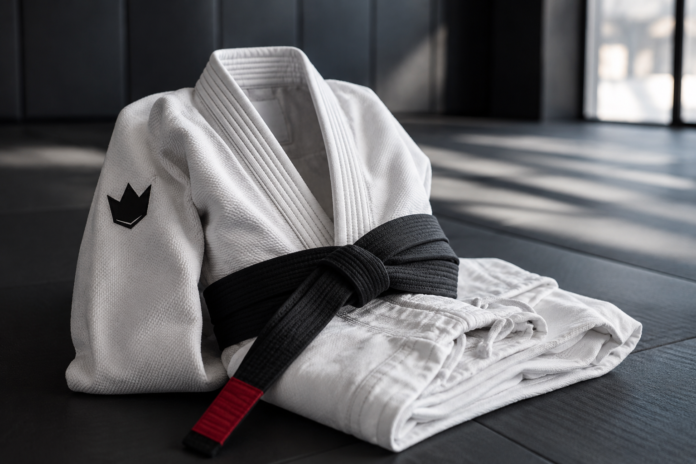

Every martial art has a uniform that tells you something about the discipline itself. In Brazilian Jiu Jitsu, that uniform is the gi, sometimes called a kimono, and it is far more than a piece of clothing. It is a functional tool that gets gripped, pulled, and stretched through hundreds of live rounds, so it needs to hold up to demands that a normal athletic garment never faces.
If you are new to the sport, understanding what actually goes into a jiu jitsu uniform will help you buy smarter and train more comfortably. This guide walks through the parts of the uniform, what to look for in quality, and how to pick the right one for your goals.
What Makes Up a Jiu Jitsu Uniform
A traditional jiu jitsu uniform consists of three main pieces:
- The jacket. A reinforced cotton top with a thick collar, closed with a cloth belt. The collar is the most heavily gripped part of the entire uniform, so its construction matters more than almost anything else.
- The pants. Usually made from ripstop or cotton drill fabric with a rope drawstring waist and reinforced knees, since ground grappling puts constant pressure on that area.
- The belt. Worn to secure the jacket and to indicate rank, moving through the recognized color system as a practitioner progresses.
Together these three pieces need to survive repeated washing, constant stretching, and direct contact with another person’s grip, all while staying within the size and fit rules used in competition.
Fabric and Weight: Why It Matters
Most jiu jitsu uniforms are made from pearl weave cotton, a weave pattern that balances strength with a lighter overall feel compared to older single weave designs. Weight is measured in grams per square meter, often written as GSM, and it changes how the uniform behaves.
- Lightweight uniforms, around 350 to 400 GSM, suit hot training rooms, travel, and competitors who need to manage weight before a match.
- Mid weight uniforms, around 400 to 450 GSM, are the most common choice for regular training since they balance durability with comfort.
- Heavyweight uniforms, above 450 GSM, last longer under constant use but feel warmer and heavier during long sessions.
A brand like Kingz offers models across all three categories, which makes it easier to match a uniform to your actual training environment rather than guessing.
Fit and Sizing Considerations
A jiu jitsu uniform that fits poorly can actually work against you. A jacket that is too loose gives your opponent more fabric to grip, while pants that are too tight restrict the hip movement needed for guard passing and sweeps.
Most brands size uniforms using a letter and number system based on height and weight rather than standard clothing sizes, since the fit needs to account for range of motion rather than just body measurements. Kingz sizes its men’s uniforms from A0 to A6 and its women’s uniforms from F0 to F5, with a cut designed specifically for the female frame rather than a resized men’s pattern.
It also helps to buy a pre-shrunk uniform. Cotton naturally shrinks with washing, and a uniform that has already gone through that process will keep a consistent fit wash after wash instead of surprising you after the first cold wash and hang dry.
Competition Legality
If you plan to compete, your uniform needs to meet the standards set by the International Brazilian Jiu Jitsu Federation, commonly known as IBJJF. These rules cover collar thickness, sleeve and pant length, and overall fit, and referees check them before every match.
Buying a uniform that is already built to those specifications removes one more thing to worry about on competition day. Every Kingz is designed to meet these requirements out of the box, so competitors do not need to double-check measurements before stepping on the mat.
Beyond the Gi: No Gi Uniforms
Not all jiu jitsu training uses the traditional uniform. In no-gi classes and competitions, practitioners wear rash guards, grappling shorts, and spats instead of the jacket and pants. This style relies on tighter, more compression-focused clothing since there is no fabric for an opponent to grip.
A good no gi collection should include moisture wicking rash guards, flatlock seams that reduce chafing during long rounds, and shorts built with enough flexibility for deep guard positions and scrambles.
Caring for Your Uniform
A well made jiu jitsu uniform can last for years if it is cared for properly:
- Wash in cold water to protect the fabric and reduce further shrinkage.
- Hang dry rather than using a machine dryer, since heat is the main cause of unwanted shrinkage over time.
- Wash after every training session, since sweat and bacteria break down cotton fibers faster than normal wear.
- Rotate between two uniforms if you train often, giving each one time to fully dry between sessions.
Choosing the Right Uniform for You
The right choice depends mostly on how often you train and what you use it for. A beginner training two or three times a week can start with a mid weight uniform that handles daily wear without overheating. A competitor cutting weight before a tournament will benefit more from a lightweight option, while someone training in a hot climate may prefer an ultralight build regardless of experience level.
Practitioners who want to represent the sport off the mat can also look at lifestyle BJJ apparel, and those shopping on a budget can check the current gi sale collection for competition-grade uniforms at reduced prices.
Final Thoughts
A jiu jitsu uniform is not just something you put on before class. It is equipment that directly affects how you move, train, and perform, which is why it is worth choosing carefully rather than buying whatever is cheapest or most convenient. Paying attention to fabric weight, fit, and competition legality will save money and frustration over the long run.
Whether you are buying your first uniform or replacing one that has finally worn out, brands like Kingz that build their gear around real training and competition needs remain one of the most reliable places to start.