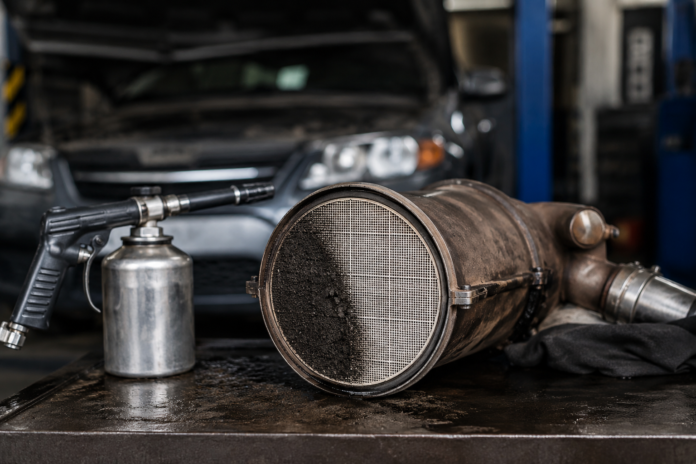

Diesel engines are known for their durability, torque, and ability to handle demanding workloads. However, modern diesel vehicles rely on complex emissions systems to control exhaust pollutants. One of the most important components in this system is the Diesel Particulate Filter.
The DPF captures soot and particulate matter produced during diesel combustion. Over time, soot and ash can accumulate inside the filter, restricting exhaust flow and affecting engine performance. When this happens, vehicle owners may start looking for a dpf cleaner to help maintain the filter and prevent performance problems.
However, not every cleaning product or method is suitable for every diesel vehicle. Understanding how DPF cleaners work, their limitations, and when professional truck dpf cleaning is necessary can help diesel owners make better maintenance decisions.
What Is a DPF Cleaner?
A DPF cleaner generally refers to a product or cleaning solution designed to help reduce deposits inside a Diesel Particulate Filter. Depending on the type, it may be added to fuel, introduced into the exhaust system, or used during a specialized cleaning procedure.
Some products are designed to support the combustion of soot during normal regeneration. Others are intended to assist with cleaning deposits when a filter is becoming restricted.
It is important to understand that these products are not necessarily a substitute for professional DPF cleaning. Their effectiveness depends on the condition of the filter, the type of deposits present, and the vehicle’s ability to complete regeneration properly.
Why Does a Diesel Particulate Filter Become Clogged?
Understanding why DPF restriction occurs is essential before choosing a cleaning solution.
During normal operation, a diesel engine produces soot. The DPF captures this soot before exhaust gases leave the vehicle. The vehicle periodically performs a regeneration cycle that raises exhaust temperatures and burns accumulated soot.
However, regeneration does not remove everything from the filter.
Non-combustible ash gradually accumulates inside the DPF. Short trips, excessive idling, low-speed driving, poor engine operation, faulty sensors, and repeated interrupted regenerations can also contribute to DPF-related problems.
As deposits build up, exhaust flow can become restricted.
Common symptoms include:
- Reduced engine power
- Lower fuel economy
- Frequent regeneration cycles
- DPF warning lights
- Increased exhaust backpressure
- Poor throttle response
- Engine derate conditions
- Increased exhaust temperatures
These symptoms indicate that the vehicle may require more than a simple additive.
How Does a DPF Cleaner Work?
The exact operation depends on the product being used.
Some fuel additives are formulated to help lower the temperature required for soot combustion. This may help the vehicle complete regeneration under certain operating conditions.
Other cleaning products are designed for use directly within the exhaust system or during a workshop cleaning procedure.
The important distinction is between soot removal and ash removal.
Soot can generally be burned during regeneration. Ash cannot simply be burned away. As a result, a vehicle may continue regenerating while ash gradually accumulates inside the filter.
This is why using a cleaner should not be considered a guaranteed solution for a heavily restricted DPF.
Choosing the Right DPF Cleaner for Your Vehicle
Before purchasing any DPF cleaning product, consider the vehicle manufacturer’s recommendations and the condition of the filter.
1. Check Product Compatibility
Not every product is designed for every diesel engine.
Always check whether the product is compatible with your engine, fuel system, emissions system, and DPF configuration. Using an unsuitable chemical can potentially create additional problems.
Read the manufacturer’s instructions carefully and follow the recommended dosage.
2. Consider the Severity of the Problem
A mildly loaded DPF and a severely restricted DPF require different approaches.
If the vehicle is operating normally and the goal is preventive maintenance, a suitable product may support normal regeneration.
However, if the DPF warning light is illuminated, the vehicle has significant power loss, or repeated regeneration attempts are occurring, the underlying problem should be diagnosed rather than relying only on an additive.
3. Understand the Difference Between Soot and Ash
This is one of the most important considerations.
A cleaner may help with soot-related deposits, but accumulated ash generally requires physical removal through professional cleaning.
If a DPF has been used for a long period and has accumulated significant ash, adding another product may not restore the filter’s original flow characteristics.
Professional inspection can determine whether cleaning is required.
4. Look for Clear Usage Instructions
A reputable product should provide clear instructions regarding:
- Application method
- Recommended dosage
- Vehicle compatibility
- Usage frequency
- Safety precautions
- Storage requirements
Avoid products that make unrealistic claims about completely restoring every clogged DPF without inspection or mechanical cleaning.
Can a DPF Cleaner Replace Professional DPF Cleaning?
In most cases, no.
A cleaner can be useful as part of preventive maintenance or for certain soot-related conditions, but it cannot replace specialized cleaning when a DPF has substantial ash accumulation or physical contamination.
Professional cleaning uses specialized equipment to remove deposits from the internal channels of the filter.
For commercial vehicles and heavy-duty trucks, this distinction is particularly important. A severely restricted DPF can affect vehicle uptime, fuel consumption, and overall operating costs.
Why Truck DPF Cleaning Is Important
Heavy-duty diesel trucks often operate under demanding conditions. Long hours, high mileage, heavy loads, frequent idling, and stop-and-go operation can place additional demands on the emissions system.
Regular truck dpf cleaning can help remove accumulated ash and other contaminants that normal regeneration cannot eliminate.
Professional cleaning may be especially beneficial when a truck experiences:
- Repeated DPF warnings
- Frequent regeneration
- Increasing backpressure
- Reduced engine performance
- Poor fuel economy
- Excessive downtime
- Failed regeneration cycles
Instead of repeatedly attempting regeneration, owners can have the filter inspected and professionally cleaned when appropriate.
Signs You May Need Professional DPF Cleaning
Knowing when to move beyond a cleaning additive can save time and money.
Frequent Regeneration
If the truck is regenerating more often than usual, the DPF may have excessive soot or ash accumulation.
DPF Warning Light
A warning light indicates that the emissions system requires attention. Continuing to operate the vehicle without diagnosing the issue can lead to more serious problems.
Reduced Engine Power
A restricted DPF can increase exhaust backpressure and cause the vehicle’s computer system to reduce engine power.
Increasing Fuel Consumption
When the exhaust system becomes restricted, the engine may not operate as efficiently as it should.
Failed Regeneration
Repeated regeneration failures are another reason to have the DPF professionally inspected.
Why Professional Inspection Matters
A DPF problem is not always caused by the DPF itself.
Faulty sensors, exhaust leaks, injector problems, turbocharger issues, excessive oil consumption, and engine problems can contribute to increased soot production or regeneration failures.
Simply adding a cleaning product without diagnosing the cause may temporarily mask the symptoms while the underlying problem continues.
A professional inspection can help identify whether the DPF needs cleaning or whether another component requires attention.
Benefits of Maintaining a Clean DPF
Proper DPF maintenance can contribute to better overall diesel vehicle operation.
Potential benefits include:
- Improved exhaust flow
- More consistent engine performance
- Reduced risk of excessive backpressure
- Better regeneration performance
- Improved fuel efficiency
- Reduced unexpected downtime
- Longer DPF service life
- Lower maintenance costs compared with premature replacement
For fleets, maintaining DPFs can be particularly valuable because unexpected emissions-system failures can take commercial vehicles out of service.
How to Maintain Your DPF After Cleaning
Cleaning the filter is only one part of proper maintenance. Drivers and fleet managers should also address the factors that contribute to DPF problems.
Follow the vehicle manufacturer’s recommended maintenance schedule and avoid unnecessary extended idling. Make sure the engine is operating correctly and address warning lights promptly.
If the vehicle regularly performs short trips, monitor its regeneration behavior carefully. For trucks operating under demanding conditions, establish a preventive maintenance schedule based on mileage, operating hours, duty cycle, and manufacturer recommendations.
Using a suitable dpf cleaner may also be considered when recommended for your particular vehicle, but it should complement not replace proper inspection and maintenance.
Why Professional DPF Cleaning Can Be More Cost-Effective
Replacing a DPF can be expensive, especially on heavy-duty diesel trucks.
If the existing filter is structurally sound but restricted with soot and ash, professional cleaning may provide a more economical alternative to immediate replacement.
A professional service can evaluate the filter and determine whether it can be cleaned and returned to service.
This approach allows vehicle owners to make a maintenance decision based on the actual condition of the filter rather than automatically purchasing a replacement.
Get Professional DPF Cleaning for Your Diesel Vehicle
Choosing the right DPF maintenance solution starts with understanding the condition of your filter. A quality dpf cleaner may support soot management and routine maintenance, but heavily contaminated or restricted filters often require professional attention.
30 Minute DPF Clean provides professional DPF cleaning services designed to help diesel truck owners and fleet operators restore proper filter performance. Professional cleaning can remove accumulated soot and ash while helping improve exhaust flow and reduce the risk of unnecessary DPF replacement.
If your truck is experiencing frequent regeneration, reduced power, warning lights, or signs of DPF restriction, don’t wait for the problem to become more expensive.
Contact 30 Minute DPF Clean today to have your DPF professionally inspected and cleaned. Get your diesel vehicle back on the road with dependable performance and confidence.