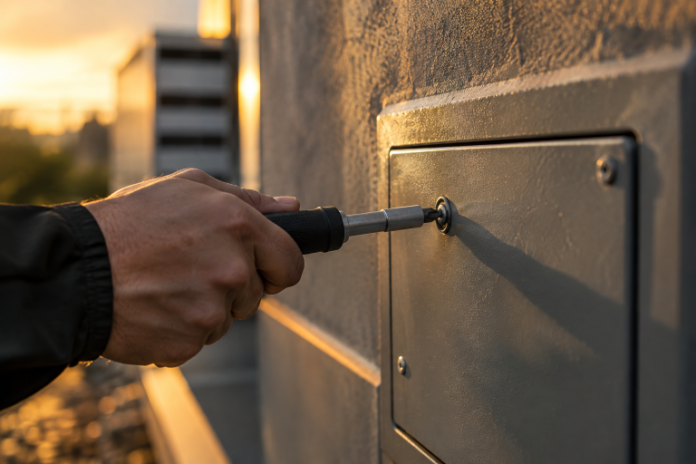

Public fixtures and commercial equipment often depend on small hardware to protect larger investments. From restroom partitions and outdoor signs to electrical covers, kiosks, benches, lighting, and access panels, the right fastener can make casual interference more difficult while preserving practical access for authorized personnel. Suppliers such as Best Security Screws offer specialty hardware designed for applications where ordinary screws may be too easy to remove.
The goal is not to find a screw that is impossible to defeat. Tamper-resistant hardware is one layer of physical protection that can delay unauthorized removal, discourage opportunistic vandalism, and help prevent the loss of components. A successful selection also considers service frequency, mounting material, weather exposure, available tools, and the likely consequences of unauthorized access.
Why Fastener Choice Matters
Ordinary slotted, Phillips, and hex screws are convenient because their tools are widely available. That convenience can create an easy point of access to public-facing equipment. A removable sign face, service cover, dispenser, or enclosure may become more vulnerable when the only barrier is a common driver bit.
Specialty fasteners can raise the effort required to remove a component. They are especially useful where fixtures are exposed, lightly supervised, or expensive to repair. However, a strong screw cannot make up for a weak panel, stripped threads, thin sheet metal, or an undersized anchor. The fastener, substrate, enclosure, and inspection plan should work together.
Common Security Levels
Security hardware is best viewed as a range rather than a single category. Basic tamper resistance uses an uncommon drive to discourage casual access. Controlled-access hardware requires a matching tool that approved staff keep available. Permanent or one-way fasteners prioritize retention over easy future removal.
- Basic tamper resistance: A less common drive helps deter people carrying only standard tools.
- Restricted-tool access: A specialized bit or driver limits routine removal to staff and contractors who have the tool.
- One-way fastening: The head is intended for installation, but does not provide a straightforward conventional removal method.
- Breakaway or shear-head fastening: Part of the head separates at the installation torque, leaving a smoother, harder-to-grip surface.
- Captive fastening: The screw remains attached to the panel after loosening, reducing the risk of lost hardware during service.
Physical-security designs may also combine multiple features. For example, Sandia’s tamper-resistant fastener research describes a cap-and-bolt concept intended to delay access to high-value physical assets.
Popular Drive Types
A screw drive is the shaped interface between a fastener and the tool that turns it. The broad range of screw drives illustrates why drive geometry affects both installation and removal. The best choice is usually one that authorized teams can service reliably without making unauthorized access convenient.
- Pin-in Torx: A center pin prevents a standard Torx bit from engaging and requires a matching security bit.
- Spanner or snake-eye: Two-hole or two-slot fasteners require a two-pin driver.
- Hex-pin: A center pin inside a hex recess requires a compatible security hex key or bit.
- Pentagon and specialty drives: Uncommon shapes can reduce casual tool compatibility.
- Tri-groove designs: These use an external three-sided form and may suit controlled-access applications.
Match The Fastener To The Risk
Selecting hardware starts with the installation, not the catalog. Consider who can reach the asset, what they could access by removing it, how often the assembly needs service, and what interruption or replacement would cost.
- Low-risk areas: Basic tamper-resistant screws may be enough to discourage casual interference.
- Public-facing fixtures: Use specialty drives for exposed signs, covers, kiosks, dispensers, and benches.
- Frequently serviced equipment: Choose removable or captive fasteners to keep inspections and repairs efficient.
- Higher-risk assets: Combine controlled tooling with durable enclosures, secure mounting points, and routine inspections.
- Low-service assemblies: Consider one-way or breakaway options only when future access is unlikely or can be planned around replacement hardware.
Consider Materials And Weather
Security is only one part of fastener performance. Outdoor hardware may be exposed to rain, snow, condensation, salt air, road spray, cleaning chemicals, heat, vibration, and impact. Material selection should suit those conditions and the surrounding components.
Stainless steel is often chosen where corrosion resistance matters, while coated steel may be appropriate for less demanding environments when the coating remains intact. Review the materials in contact with each other, since dissimilar metals in a wet environment can create corrosion concerns. Select a head style that sits appropriately on the surface and does not create an unnecessary snag point or water trap.
Plan For Authorized Maintenance
A security fastener should not prevent safe, timely service. Before standardizing on a drive style, document the exact bit size, fastener dimensions, material, finish, and replacement source. Store matching drivers where authorized technicians can obtain them without delay, while avoiding unsecured locations that make them widely available.
Maintenance Planning Questions
- Who is authorized to remove the hardware?
- How often does the panel or fixture require inspection?
- Will emergency personnel need access outside normal work hours?
- What is the replacement plan for damaged, corroded, or missing fasteners?
- Should the fastener remain attached to the panel during service?
Installation Steps That Improve Results
- Confirm diameter, thread type, length, head style, drive type, and material.
- Inspect the mounting surface for stripped threads, cracks, corrosion, or insufficient thickness.
- Use the correct pilot hole, insert, anchor, washer, backing plate, or thread engagement for the substrate.
- Test the driver on a sample fastener before installing the full set.
- Apply the manufacturer-recommended torque and avoid forcing a damaged or poorly seated bit.
- Verify that each head seat is correctly installed and does not compromise sealing, clearance, or user safety.
- Record the fastener and tool requirements for future maintenance.
Common Mistakes To Avoid
- Using permanent hardware on equipment that needs frequent service.
- Selecting a specialty drive before confirming that the maintenance team has the correct tool.
- Installing a secure screw into a weak or damaged substrate.
- Mixing several drive types without clear documentation.
- Choosing a finish for appearance alone while overlooking moisture or chemical exposure.
- Replacing missing security hardware with ordinary screws during a rushed repair.
- Leaving specialty drivers in unlocked vehicles, cabinets, or outdoor enclosures.
Fastener Selection Checklist
- What asset or opening is being protected?
- Who can physically reach it?
- How often must it be opened?
- What material supports the fastener?
- Will it be exposed to weather, salt, chemicals, heat, vibration, or impact?
- Is removable, captive, or permanent hardware the best fit?
- Can staff quickly identify replacement fasteners and matching tools?
- Does the selection comply with the project drawings, site rules, and applicable specifications?
Frequently Asked Questions
Are Tamper-Resistant And Tamper-Proof Fasteners The Same?
Not necessarily. The terms are often used broadly, but most specialty fasteners are designed to resist or delay unauthorized removal rather than make removal impossible.
Can Security Fasteners Prevent Theft On Their Own?
No. They work best with strong mounting surfaces, durable enclosures, sensible placement, lighting, access controls, and regular inspection.
Why Does The Substrate Matter?
If a panel, anchor, insert, or frame can be pulled away, upgrading the screw alone may not resolve the underlying weakness.
Final Takeaway
Choosing tamper-resistant fasteners in 2026 is less about selecting the most unusual screw and more about making a balanced design decision. Match the drive, material, head style, and installation method to the threat, environment, substrate, and maintenance needs. That approach can make public and commercial installations harder to disturb without unnecessarily complicating legitimate service.