
Contemporary luxury architecture is increasingly defined by expansive floor-to-ceiling panoramic curtain walls, uncompromising envelope airtightness, and rigorous operational efficiency aligned with Passivhaus and Net-Zero standards. These design paradigms drastically reduce heating and cooling energy loads while establishing seamless visual connections between interior spaces and the surrounding landscape.
However, this engineered structural impermeability introduces two profound, interdependent engineering vulnerabilities: the accelerated risk of irreversible condensation and seal failure within multi-pane insulating glass units (IGUs), alongside the dangerous accumulation of indoor volatile organic compounds (VOCs) and latent moisture.
Resolving these systemic microclimate and building physics challenges requires looking beyond macroscopic structural design. Achieving authentic structural resilience and occupant health requires engineering at the sub-nanometer scale.
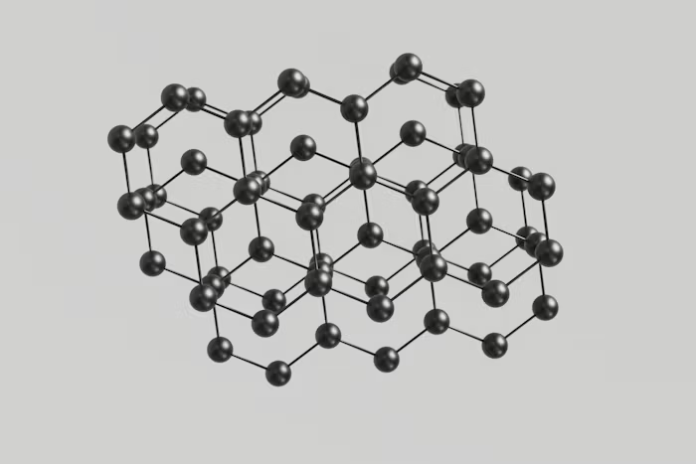
Engineered synthetic zeolites—crystallized aluminosilicate materials characterized by perfectly uniform micropore networks—have emerged as an essential material science foundation for modern high-performance building envelopes and premium interior microclimates.
The Physics of the Invisible Envelope: Micro-Porous Materials in Modern Facades
Modern building facades must withstand extreme mechanical, thermal, and atmospheric stresses across multi-decade operating cycles without structural degradation.
Overcoming Dew-Point Degradation in Triple-Glazed Architectural Glass
Modern triple-glazed architectural units rely on hermetically sealed internal cavities filled with argon or krypton gas to achieve target thermal transmittance (U-value) ratings. The physical survival of these assemblies depends on maintaining moisture vapor pressures near zero within the spacer frame:
- Deep desiccating capacity: High-performance Type 3A molecular sieve desiccants housed within warm-edge spacer bars continually adsorb moisture diffusing past external polyisobutylene seals.
- Sustained dew-point integrity: By locking away moisture at fractional partial pressures, these synthetic desiccants maintain an internal dew-point integrity below -60°C across decades of intense thermal cycling.
- Coating preservation: Eliminating cavity condensation prevents moisture-driven degradation of microscopically thin low-emissivity (low-E) metallic coatings, ensuring optical clarity and thermal reflectance remain pristine.
Precision Pore Architecture and Selective Adsorption
Unlike amorphous desiccants that suffer from premature saturation and random pore distributions, architectural envelope resilience relies on synthetic crystalline adsorbents engineered with exact sub-nanometer cage geometries.
Technical benchmark data from specialized synthetic zeolite manufacturers like Jalon illustrates that synthetic Type 3A aluminosilicates—calibrated to an exact 3-angstrom pore threshold—selectively capture residual water vapor molecules while completely excluding larger atmospheric gases like nitrogen and oxygen.
This crystallographic precision eliminates the risk of internal pressure imbalances and glass deflection, ensuring structural seal integrity and thermal insulation across decades of seasonal exposure.
Deploying this crystalline selectivity unlocks distinct structural safeguards:
- Deflection prevention: Completely excluding atmospheric nitrogen (kinetic diameter ~3.64 Å) and oxygen ( ~3.46 Å) prevents internal pressure drops during cold snaps, mitigating concave pane distortion and spontaneous glass fractures.
- Thermal desorption resistance: Strong electrostatic dipole interactions permanently trap water molecules within the zeolitic lattice, preventing desorption even under sustained solar glass temperatures exceeding 70°C.
- Volatile solvent scavenging: Specialized crystalline formulations simultaneously adsorb volatile organic outgassings emitted by secondary polysulfide and structural silicone sealants, preventing permanent glass hazing.
Indoor Microclimate Engineering: Eliminating Airborne Contaminants at Molecular Scale
In hyper-sealed residential and commercial environments, indoor environmental quality (IEQ) directly influences occupant health, cognitive vitality, and biological longevity. Addressing airborne chemical contamination requires precision gaseous-phase filtration.
Sub-Nanometer VOC Trapping in High-Performance Air Filtration
Standard mechanical air filtration relies on amorphous activated carbon beds. However, standard carbon presents severe thermodynamic limitations within conditioned indoor environments:
- Moisture-induced competitive displacement: Under relative humidity levels above 50%, non-polar carbon pores preferentially bind water vapor over hazardous chemical toxins, displacing previously captured compounds back into the breathing zone.
- Thermal secondary off-gassing: Weak van der Waals physical bonds permit trapped formaldehyde, benzene, and toluene to desorb when indoor ambient temperatures fluctuate.
- High-silica hydrophobic sieving: Delayuminated synthetic zeolites feature non-polar, moisture-repellent frameworks that selectively adsorb airborne VOCs even in humid environments.
- Permanent molecular confinement: Uniform 5A and 10A (Type 13X) pore cages electrostatically immobilize volatile organic molecules by matching target kinetic diameter profiles, achieving permanent containment without downstream off-gassing.
Moisture Scavenging in Architectural Coatings and Polyurethane Systems
The execution of luxury interior finishes—such as seamless self-leveling polyurethane flooring, micro-cement toppings, and elastomeric structural sealants—requires absolute moisture elimination during curing.
Trace moisture within raw polyols, mineral pigments, or ambient air triggers an unintended chemical side-reaction with isocyanate prepolymers, generating carbon dioxide gas bubbles:
- Targeted chemical drying: Integrating activated molecular sieve powder into raw formulations scavenges moisture before secondary isocyanate reactions occur.
- Elimination of pinholing defects: Suppressing generation prevents micro-porosity, bubbling, and blistering across expansive polyurethane floor surfaces.
- Enhanced structural adhesion: Curing in an anhydrous state ensures maximum mechanical density, tensile elongation, and long-term joint adhesion against structural movement.
Circular Horizons: Sustainable Energy and Gas Separation in Net-Zero Projects
At the leading edge of sustainable architecture, advanced adsorption materials are transitioning from passive envelope barriers into active drivers of building decarbonization and distributed clean energy.
On-Site Oxygen Enrichment and Biogas Upgrading
Next-generation Net-Zero projects and ultra-luxury wellness estates increasingly integrate distributed gas-separation infrastructure powered by selective adsorption cycles:
- Pressure Swing Adsorption (PSA) for occupant wellness: Advanced lithium-exchanged synthetic zeolites selectively separate atmospheric nitrogen from oxygen, delivering continuous, micro-pressurized oxygen-enriched living spaces that enhance sleep architecture and cellular recovery.
- Biomethane decarbonization: Closed-loop residential developments utilize high-silica zeolite frameworks within vacuum pressure swing adsorption (VPSA) units to scrub
 and hydrogen sulfide from community anaerobic digesters, producing pipeline-grade biomethane.
- Thermochemical energy storage: Zeolite-water adsorption heat pumps leverage reversible exothermic hydration cycles to store summer solar thermal energy for winter heating without standby thermal loss.
Life-Cycle Durability and Building Longevity
As structural performance standards shift from mere operational energy savings to holistic lifecycle analysis, material durability emerges as a primary environmental factor.
According to the World Green Building Council’s net zero carbon buildings framework, extending the operational longevity of architectural building envelopes through superior moisture management and continuous thermal performance directly mitigates the carbon-intensive cycle of premature facade degradation and component replacement.
Specifying high-purity crystalline aluminosilicates yields significant compounding lifecycle benefits:
- Embodied carbon reduction: Preserving IGU seal integrity across 30 to 50 years eliminates the emissions associated with premature glass remanufacturing and aluminum frame re-extrusion.
- Sustained thermal resistance: Preventing moisture accumulation within cavity spaces guarantees designed U-values remain constant over decades of exposure.
- Lifecycle maintenance elimination: Stable, non-friable synthetic crystal matrices eliminate powder migration, desiccant breakdown, and recurring facade remediation.
Conclusion: The Molecular Shift in Luxury and Sustainable Design
Modern architectural design is evolving past visible materiality, formal geometry, and exterior aesthetics. The real benchmark of lasting architectural excellence resides in the invisible engineering of the building envelope.
By deploying synthetic zeolites with calibrated sub-nanometer pore architectures, architectural specifiers and facade engineers achieve complete physical control over building microclimates: maintaining insulated glazing integrity, permanently filtering indoor air, and eliminating moisture failure points.
For design teams shaping the next generation of sustainable architecture, specifying molecular adsorption science is not merely a technical detail—it is the engineering baseline for building resilience, occupant wellness, and architectural longevity.