
Silicone injection molding has become one of the most reliable manufacturing processes for producing flexible, durable, and heat-resistant components across multiple industries. From medical devices to automotive seals and consumer electronics, manufacturers rely on liquid silicone injection molding to create precision parts with consistent quality and long-term performance.Businesses looking for durable elastomer components often choose LSR injection service because it supports high-volume production, excellent dimensional accuracy, and fast cycle times.
What Is Silicone Injection Molding?
Silicone injection molding is a manufacturing process used to produce parts from liquid silicone rubber. In this method, liquid silicone material is injected into a heated mold cavity under pressure. Once cured, the silicone part is removed and prepared for finishing or assembly.
Unlike traditional rubber molding processes, silicone injection molding offers better automation, lower waste, and higher production efficiency. It is widely used for products that require flexibility, temperature resistance, chemical stability, and biocompatibility.
LSR materials are especially valued because they maintain their properties in extreme environments. They can withstand both high and low temperatures without cracking, deforming, or losing elasticity.
Why Manufacturers Choose LSR Injection Service
Manufacturers across industries prefer LSR injection service because of the performance advantages silicone materials provide. The process supports both small precision parts and larger industrial components while maintaining excellent repeatability.
High Temperature Resistance
Liquid silicone rubber performs exceptionally well in extreme temperatures. This makes it ideal for automotive engine components, electrical insulation parts, and industrial sealing applications.
Unlike many plastics, silicone maintains flexibility and strength even after prolonged heat exposure.
Excellent Chemical Resistance
Silicone parts resist oils, chemicals, UV exposure, and moisture. This durability extends product lifespan and reduces maintenance requirements in demanding environments.
Industries such as healthcare and food processing rely heavily on silicone because it remains stable when exposed to cleaning agents and sterilization procedures.
Biocompatibility for Medical Applications
Medical-grade silicone is commonly used in healthcare products because it is non-toxic and biocompatible. Silicone injection molding is frequently used to manufacture:
- Medical seals
- Respiratory masks
- Catheter components
- Baby care products
- Wearable healthcare devices
The material is safe for skin contact and can withstand repeated sterilization cycles.
Precision and Consistency
Modern LSR injection service uses automated systems to ensure highly accurate part production. Tight tolerances and repeatable quality are essential for industries where precision matters.
This is particularly important for electronics, automotive connectors, and medical equipment manufacturing.
Industries That Use Silicone Injection Molding
Silicone molding technology supports a wide range of industrial applications. The versatility of liquid silicone rubber allows manufacturers to meet strict technical and regulatory requirements.
Automotive Industry
Automotive manufacturers use silicone components because they can endure harsh operating conditions. Common applications include:
- Gaskets
- O-rings
- Sensor covers
- Connectors
- Sealing systems
Silicone materials help improve vehicle durability and performance in high-temperature environments.
Medical Industry
The healthcare sector depends heavily on LSR injection service for safe and hygienic products. Medical-grade silicone offers flexibility, purity, and sterilization compatibility.
Silicone is commonly used in:
- Surgical devices
- Medical tubing
- Diagnostic equipment
- Wearable medical products
The material’s resistance to bacteria and contaminants makes it suitable for critical healthcare applications.
Consumer Electronics
Electronic devices require components that provide insulation, flexibility, and moisture resistance. Silicone injection molding supports the production of:
- Keypads
- Protective covers
- Cable connectors
- Waterproof seals
The precision of the process allows manufacturers to create intricate designs for compact electronic products.
Food and Beverage Industry
Food-grade silicone components are widely used because they meet strict safety standards. Silicone materials are odorless, non-toxic, and resistant to temperature changes.
Applications include:
- Food processing seals
- Beverage dispenser parts
- Kitchenware components
- Baking molds
The Silicone Injection Molding Process
Understanding the silicone molding process helps businesses choose the right manufacturing solution for their products.
Material Preparation
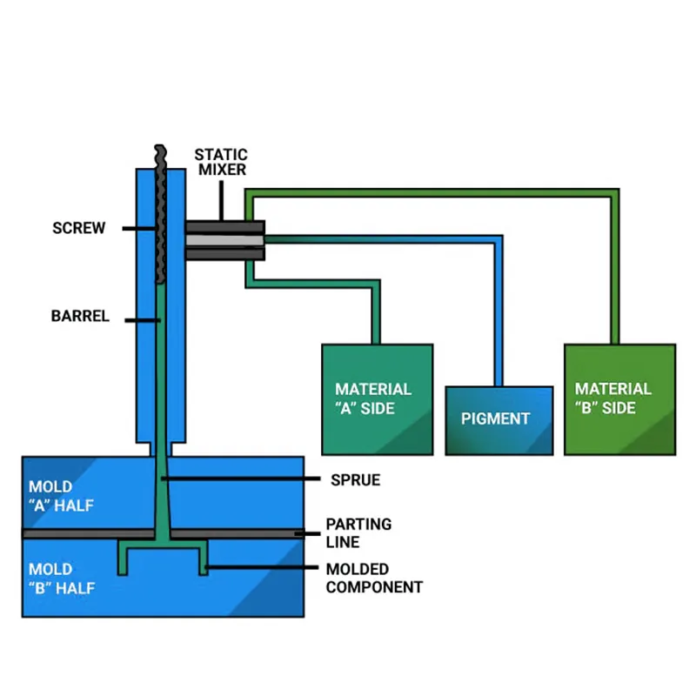
Liquid silicone rubber is supplied in two separate components that are mixed before injection. Pigments or additives may also be added depending on product requirements.
The material is carefully controlled to ensure consistent curing and performance.
Injection Phase
The mixed silicone material is injected into a heated mold cavity under pressure. Advanced injection systems ensure accurate filling and reduce material waste.
Automation helps maintain uniform quality throughout production runs.
Curing Process
Heat inside the mold triggers the curing reaction, transforming the liquid silicone into a solid elastomer component.
Curing times vary depending on part size, geometry, and material specifications.
Demolding and Finishing
After curing, the finished silicone component is removed from the mold. Additional finishing processes may include trimming, inspection, or secondary assembly.
High-quality LSR injection service providers use automated inspection systems to maintain product consistency.
Advantages of Liquid Silicone Rubber Over Traditional Materials
Liquid silicone rubber offers several advantages compared to conventional plastics and rubber materials.
Long-Term Durability
Silicone maintains its physical properties for extended periods, even under demanding conditions. This reduces replacement frequency and maintenance costs.
Design Flexibility
The material supports complex geometries and thin-wall designs that are difficult to achieve with other materials.
Manufacturers can create custom silicone components for highly specialized applications.
Faster Production Cycles
Automated silicone injection molding systems improve production efficiency and reduce labor requirements. Faster cycle times help manufacturers meet large production demands.
Choosing the Right LSR Injection Service Provider
Selecting an experienced silicone molding partner is critical for achieving consistent product quality and efficient production.
Technical Expertise
A reliable manufacturer should understand material selection, mold design, and process optimization. Technical expertise ensures that products meet both functional and regulatory requirements.
Advanced Equipment
Modern injection molding machines and automation systems improve precision, speed, and repeatability.
Manufacturers using advanced technology can deliver higher-quality silicone parts with shorter lead times.
Future Trends in Silicone Injection Molding
The demand for silicone components continues to grow as industries seek more durable and flexible materials. Advancements in automation, tooling technology, and material science are improving manufacturing capabilities.
Emerging industries such as wearable electronics, electric vehicles, and advanced healthcare devices are increasing the need for precision silicone components.
Sustainable manufacturing practices are also becoming more important. Many manufacturers are investing in energy-efficient molding systems and material optimization strategies to reduce environmental impact.
Conclusion
Silicone injection molding plays a vital role in modern manufacturing by delivering durable, flexible, and high-performance components for multiple industries. With excellent temperature resistance, chemical stability, and precision molding capabilities, liquid silicone rubber continues to be a preferred material for demanding applications.
Businesses seeking reliable production solutions benefit from professional LSR injection service providers that combine technical expertise, advanced equipment, and strict quality control standards. As product innovation continues across automotive, medical, electronics, and industrial sectors, silicone molding technology will remain an essential part of advanced manufacturing.
READ ALSO: How Modern LED Strip Systems Are Improving Flexible Lighting Design