
Key Takeaways
- Defined storage and work zones reduce confusion around where materials belong.
- Clear paths, labels, and housekeeping routines support safer material movement.
- Storage should reflect each item’s weight, shape, handling method, and frequency of use.
- Workers help sustain an organized shop when they understand the system and can report problems.
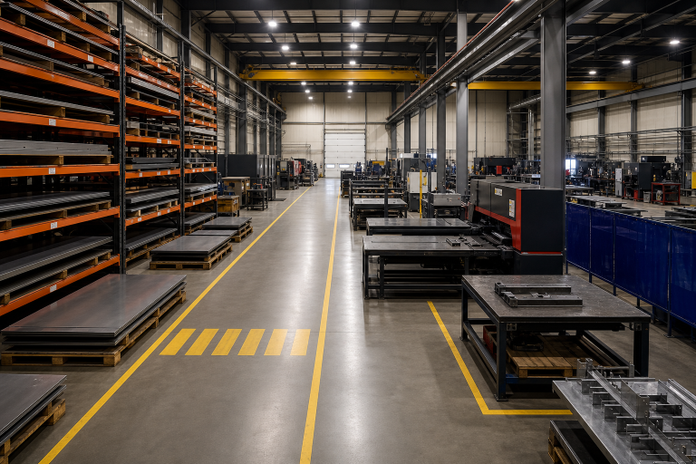
A well-organized fabrication shop makes it easier to move material from receiving through production and shipping without creating unnecessary obstacles. Planning sheet steel storage alongside pedestrian routes, machine access, staging areas, and scrap collection can help create a layout that supports the work instead of getting in its way.
Organization is not simply a cleanup task. It is an operating practice that affects how workers find tools, handle loads, inspect parts, and respond when something is out of place. The goal is to create a system that is easy to understand during a busy shift, not one that only looks orderly after a major cleanup.
Why Shop Organization Matters
Clutter can turn routine tasks into delays. A worker looking for a fixture, measuring tool, or cart may walk across active travel lanes while another employee is moving material nearby. Clear locations for tools, stock, work in process, and scrap reduce this uncertainty and allow teams to focus on the job at hand. Better organization also supports quality because parts are less likely to be mixed, misplaced, damaged, or sent to the wrong operation.
Start With a Floor Plan Review
Before moving racks or equipment, walk the shop during normal production. Observe how people, forklifts, carts, cranes, and materials travel from receiving to cutting, forming, welding, finishing, inspection, and shipping. Mark locations where traffic crosses, workers make tight turns, or parts sit without an assigned place. Ask employees where delays and confusion most often occur, then record the findings before making any changes to the layout.
Build Clear Work Zones
Defined zones give every item a destination and make the next production step easier to identify. Use visible boundaries for the following areas:
- Receiving: New material awaits inspection, identification, and storage direction.
- Raw material: Sheets, plates, tubes, bars, and other stock are stored by type and handling needs.
- Work-in-process: Parts awaiting the next operation remain under control and identifiable.
- Finished goods: Completed, inspected work stays separate from active production.
- Scrap: Offcuts, recyclable metal, and waste are placed in designated containers.
- Travel paths: People and material-handling equipment have marked routes with adequate clearance.
Use Labels, Signs, and Floor Markings
Labels should be large, consistent, and readable from a reasonable distance. Mark racks, shelves, bins, carts, staging areas, and tool cabinets so workers can return items without having to guess. Floor markings can distinguish pedestrian paths from equipment lanes and show where materials may be staged. Post load limits and handling instructions where they are needed, and use simple status signals for jobs that are waiting, active, approved, or held for inspection.
Choose Storage Based on Safe Access
Storage decisions should account for weight, dimensions, frequency of use, and the equipment needed to move each item. Keep frequently used stock accessible, and avoid placing heavy items where employees must lift above shoulder height, reach far forward, or twist while carrying a load. Secure long bars, tubing, and sheets so they cannot lean into walkways or shift unexpectedly. Keep all storage clear of exits, electrical panels, eyewash stations, fire equipment, and machine operating space.
Improve Material Handling
Map each material’s route, then remove unnecessary lifting, carrying, and repositioning where possible. Select carts, hoists, forklifts, or other handling equipment that suits the load and the available travel space. Loads should be stable before movement begins, and workers should understand equipment limits, travel expectations, and communication signals. When the layout permits, separate pedestrian movement from powered equipment routes.
Make Machine Safety Part of the Layout
Every machine needs clear space for loading, unloading, setup, cleaning, maintenance, and access to emergency stops. Keep loose tools, cords, hoses, scrap, and unfinished parts out of these areas. Guards should remain in place and be easy to inspect, while shutdown, adjustment, and repair procedures should be written and understood.
Control Welding, Cutting, and Grinding Hazards
Separate hot work from flammable materials and high-traffic areas whenever practical. Screens or barriers can help contain sparks, glare, and flying particles that could affect nearby employees. Secure gas cylinders in accordance with applicable requirements, remove slag and sharp scrap on a regular schedule, and keep fire extinguishers visible and accessible. Ventilation and required personal protective equipment should be reviewed for the specific process being performed.
Create a Simple Housekeeping Routine
- Assign cleanup responsibility by area and shift.
- Remove scrap at scheduled points during the day.
- Return shared tools immediately after a task is complete.
- Address spills and blocked access points promptly.
- Use a short end-of-shift check for aisles, exits, and workstations.
Build a Practical Tool Organization System
Assign commonly used tools to a designated place near the workstations where they are needed. Utilizing shadow boards, labeled drawers, and marked cabinets makes it easier to notice missing items and reduces the time spent searching for them. Protect measuring and calibrated tools from damage by keeping them separate from general-use equipment. Additionally, clearly identify any tools that are damaged or out of service to ensure they are not returned to active use.
Train Workers to Maintain the System
Explain the reason behind each zone, route, label, and storage rule. Train new employees before they begin independent work, and use brief toolbox talks to address one risk or process at a time. Encourage workers to report blocked paths, unstable loads, damaged storage, and near misses. Information on sheet metal worker safety shows how proper training and safety practices can support stronger daily habits.
Use Weekly Inspections and Simple Metrics
A weekly inspection should review walkways, exits, lighting, storage, labels, machine clearance, unstable loads, and scrap control. Record each issue, assign an owner, and set a completion date. Track repeat findings, near misses related to traffic or housekeeping, time spent searching for tools or materials, and material damage caused by rehandling. These measures help identify whether improvements are lasting.
A 30-Day Improvement Plan
- Week One: Observe the shop, gather employee feedback, and list the most urgent issues.
- Week Two: Remove unused items, define zones, and mark travel paths.
- Week Three: Improve labeling, tool storage, staging practices, and scrap collection.
- Week Four: Inspect the changes, correct weak points, and establish the weekly review process.
Common Mistakes to Avoid
Avoid moving equipment without reviewing traffic patterns and utility connections. Do not rely on labels that are vague, too small, or inconsistent. Temporary staging areas should not become permanent clutter, and heavy materials should not require awkward lifting. Most importantly, treat housekeeping as a daily process and continue gathering feedback after layout changes.
Conclusion
A safer, more organized metal fabrication shop does not require a complete rebuild. Clear zones, stable storage, visible labels, practical travel routes, and consistent worker involvement can improve the flow of materials and people through the facility. Review the system often, correct small problems early, and make organization part of normal production work.