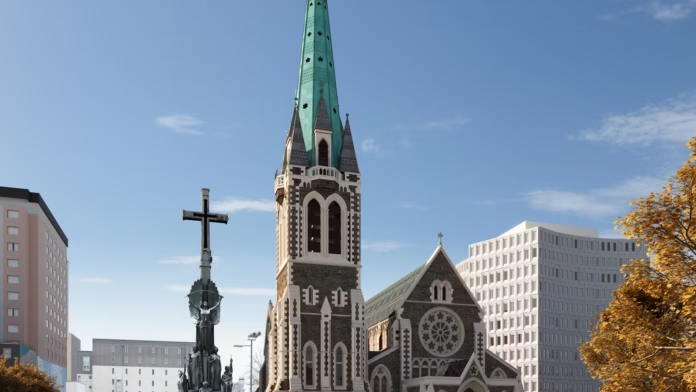

Christchurch is a city shaped by its history, resilience, and strong connection to its architectural heritage. Few buildings represent that story as clearly as Christ Church Cathedral, a landmark that has stood at the heart of the city for generations. After the devastating Canterbury earthquakes, the future of the cathedral became an important question not only for Christchurch but for people across New Zealand who value historic buildings and community spaces.
The rebuilding of an important heritage structure is about much more than repairing stone, walls, and foundations. It involves preserving memories, protecting architectural character, and creating a place that can continue serving the community in the future. The Christchurch Cathedral rebuild is therefore an important example of how heritage conservation and modern construction can work together.
Why Christ Church Cathedral Matters
Located in Cathedral Square, Christ Church Cathedral has long been one of Christchurch’s most recognisable landmarks. Its Gothic Revival architecture, historic materials, and central location have made it an important part of the city’s identity.
For residents and visitors alike, the cathedral represents a connection with Christchurch’s past. It has been associated with worship, public events, tourism, community gatherings, and significant moments in the city’s history.
When earthquakes severely damaged the building, the loss was therefore both physical and cultural. The challenge was not simply to create a safe structure, but to determine how a historic landmark could be preserved while meeting contemporary safety and engineering requirements.
The Challenge of Earthquake Heritage Restoration in NZ
New Zealand has a long history of dealing with seismic risk. Historic buildings can be particularly challenging because they were often designed and constructed according to standards that existed long before modern earthquake engineering.
The earthquake heritage restoration NZ experience demonstrates the complexity of protecting historic architecture in a seismically active country. Engineers, architects, conservation specialists, construction professionals, and heritage organisations may all need to work together to balance different priorities.
A successful restoration must consider structural stability while respecting the original character of the building. Materials may need to be carefully assessed, damaged elements documented, and appropriate restoration techniques selected.
This combination of conservation and modern engineering makes major heritage projects both technically demanding and culturally significant.
Balancing Heritage and Modern Safety
One of the most important principles in heritage restoration is finding the right balance between preserving historic character and ensuring that a building is safe for future use.
Modern construction technology can provide solutions that were unavailable when many historic buildings were originally constructed. Structural reinforcement, improved foundations, carefully engineered connections, and modern safety systems can help extend the life of heritage buildings without unnecessarily compromising their architectural identity.
The Christ Church Cathedral restoration reflects this broader challenge. Restoring a landmark after a major earthquake requires careful planning and a long-term vision. Every decision can involve questions about authenticity, safety, cost, usability, and the expectations of the community.
A Wider Christchurch Heritage Rebuild
The cathedral is also part of a much larger story. The Canterbury earthquakes affected homes, businesses, public buildings, infrastructure, and heritage sites throughout the region.
The Christchurch heritage rebuild has therefore involved many different projects aimed at recovering the city’s physical and cultural character. Some historic structures can be repaired, while others may require reconstruction or carefully designed adaptations.
Heritage recovery can contribute to urban regeneration by retaining distinctive buildings and places that give a city its sense of identity. When historic landmarks are preserved, communities can maintain tangible connections with their past while developing spaces that serve modern needs.
Why Community Support Matters
Large heritage projects cannot be understood purely as construction projects. Community support can play an equally important role.
A landmark such as the cathedral belongs to a shared cultural landscape. People may have personal memories connected with the building, while visitors may associate it with their experience of Christchurch. This makes public engagement, fundraising, charitable support, and transparent communication valuable parts of the restoration process.
Organisations such as Reinstate have helped keep attention focused on the importance of rebuilding and preserving this significant Christchurch landmark. Supporting heritage projects can give communities an opportunity to participate in protecting places that have meaning beyond their physical structures.
Lessons for Canterbury Earthquake Reconstruction
The experience offers broader lessons for Canterbury earthquake reconstruction. Recovery following a major natural disaster is rarely a short-term process. Buildings may require years of planning, fundraising, engineering assessment, design work, and construction.
Heritage sites introduce additional considerations because their value cannot always be measured through replacement cost alone. A modern building might replace the function of an old structure, but it cannot necessarily reproduce its history, craftsmanship, memories, or role within the character of a city.
This is why heritage reconstruction requires patience and careful decision-making. The objective is not simply to rebuild quickly, but to create a future in which historic places remain meaningful and functional.
Preserving the Past While Building for the Future
The restoration of Christ Church Cathedral represents a wider question faced by cities around the world: how can historic buildings survive in an era of natural hazards, changing technology, and evolving community needs?
The answer often lies in combining conservation with innovation. Historic materials and architectural features can be respected while modern engineering techniques improve resilience. Traditional craftsmanship can work alongside contemporary construction methods. Community values can help guide decisions about what should be preserved and how the building should serve future generations.
For Christchurch, the cathedral’s future is closely connected with the city’s continuing recovery and renewal. Preserving such a landmark can help maintain a visible link between the Christchurch of the past and the Christchurch of tomorrow.
Conclusion
The rebuilding and restoration of Christ Church Cathedral is much more than an architectural undertaking. It is part of Christchurch’s continuing story of resilience following the Canterbury earthquakes.
From earthquake heritage restoration NZ projects to broader efforts across the region, the lessons are clear: heritage recovery requires technical expertise, community commitment, thoughtful planning, and a willingness to look beyond immediate challenges.
The Christchurch Cathedral project demonstrates why historic landmarks matter. They provide places where history, architecture, community, and identity come together. By protecting these spaces while incorporating modern safety and engineering principles, New Zealand can ensure that its heritage remains relevant and accessible for generations to come.