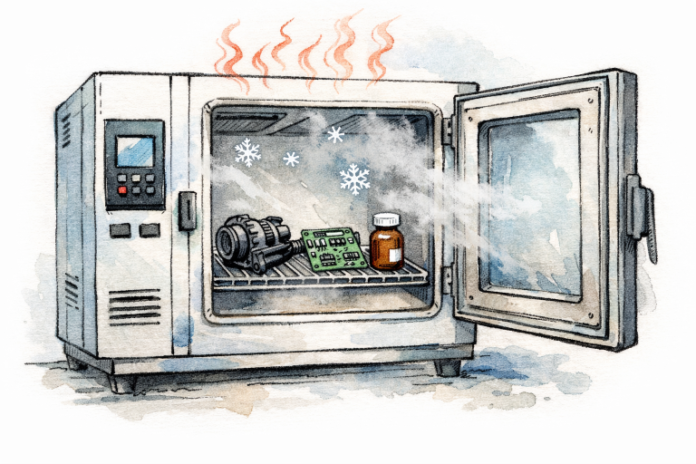

Bringing high-quality, reliable products to consumers quickly is essential for staying ahead of the competition. Environmental testing plays a crucial role in validating product durability under real-world conditions, but traditional testing methods can slow things down. Modern in stock environmental chambers are transforming this process, letting businesses expedite testing and reach the market faster without sacrificing reliability or safety.
Whether developing new automotive components, aerospace equipment, or sensitive electronics, the demand for rapid, repeatable testing has fueled innovation in environmental simulation technology. Today’s rapid-access chambers are capable of replicating diverse conditions with greater speed and flexibility, minimizing downtime and accelerating the entire development lifecycle. This means companies can iterate more quickly, uncover design weaknesses early, and deliver better products to customers.
Importance of Environmental Testing
Environmental testing creates controlled scenarios where products are pushed to their limits. This might include exposure to extreme temperatures, varying humidity, or prolonged vibration. Such rigorous simulations are especially important in sectors like automotive, aerospace, electronics, and pharmaceuticals, where product failure is not an option. By uncovering weaknesses before products reach end users, manufacturers can ensure reliability, reduce recalls, and protect brand integrity. Environmental testing is often required by industry standards and regulations, further emphasizing its significance.
Challenges in Traditional Testing Methods
Traditional test chambers and methods often slow down innovation rather than support it. Setting up tests for each product iteration can consume both time and resources due to lengthy adjustments, calibration procedures, and scheduling conflicts with limited testing equipment. The increased complexity of modern products only adds to this challenge, demanding more nuanced and sophisticated testing capabilities that legacy chambers may lack. For many organizations, these delays can mean missed market opportunities and added operational costs. Extended lead times and bottlenecks in the test lab frequently force trade-offs between thoroughness and speed.
Advantages of Rapid-Access Test Chambers
Rapid-access test chambers eliminate many of the obstacles found in traditional setups by introducing several key benefits:
- Reduced Lead Times: Companies can begin testing almost immediately due to easy access and faster setup, slashing wait times that once stalled development projects.
- Enhanced Flexibility: Modular, configurable designs adapt quickly to different test setups and product forms, removing the need for extensive chamber reconfiguration.
- Improved Efficiency: State-of-the-art controls enable precise, swift changes to environmental settings, significantly shortening the duration of each test cycle and speeding up product iteration.
Real-World Applications
Companies across multiple sectors use rapid-access test chambers to cut development cycles and improve product reliability. Automotive engineers, for example, use fast-cycling temperature chambers to ensure crucial components like batteries, engines, and electronics can withstand both arctic cold and desert heat. The electronics industry leverages this technology for accelerated life testing of printed circuit boards, sensors, and consumer devices, reducing the risk of early failures in the field. Pharmaceutical manufacturers benefit from rapid-access chambers by simulating storage and transit conditions, helping safeguard drug efficacy and safety.
In addition to these common industries, renewable energy businesses now rely on environmental chambers to validate the performance of solar panels, wind turbine components, and energy storage solutions under diverse environmental extremes. This not only helps improve efficiency and reliability, but also ensures compliance with international standards for safety and longevity. The burgeoning field of wearable technology is another example, where electronic devices are subject to sweat, movement, and variable weather during testing cycles. As the market for innovative products expands, the scope and diversity of real-world applications for rapid-access test chambers will only continue to grow, with organizations increasingly viewing environmental testing as a strategic investment rather than a simple compliance checkbox.
Key Features to Consider
When investing in a rapid-access environmental test chamber, it is essential to examine these features to maximize your return:
- Temperature and Humidity Range: The chamber should replicate the specific conditions your product will face during actual use, encompassing both high and low extremes.
- Change Rate: Quick shift between temperature or humidity settings keeps tests on schedule. High-performance chambers deliver faster change rates while maintaining accuracy.
- Size and Capacity: Select a chamber sized for your typical test articles and throughput demands, whether for small components or full-system assemblies.
- Control Systems: Look for intuitive user interfaces, programmable cycles, and automated data collection for error-free and traceable testing.
There is additional value in choosing chambers verified and validated by recognized standards, as discussed in NIST’s testing and measurement standards.
Furthermore, top-tier chambers often offer robust connectivity options, enabling data integration with laboratory information management systems (LIMS) and enterprise resource planning (ERP) tools for comprehensive tracking and reporting. Safety mechanisms such as fail-safes, alarms, and remote diagnostics can also play a vital role, ensuring that operations run smoothly even when equipment is unattended. Automated preventive maintenance notifications serve to minimize unscheduled downtime, allowing organizations to allocate resources more efficiently and further support continuous improvement efforts. Keeping these factors top of mind will help align the investment with both current and future business needs.
Future Trends in Environmental Testing
Environmental testing technology is quickly evolving. The latest chambers now integrate IoT sensors, big data analytics, and remote operation capabilities. This enables real-time monitoring, advanced data visualization, and instant reporting for engineering and quality teams, even from offsite locations. Advances in AI and machine learning may soon automate portions of the testing process, creating smarter, more adaptive systems that further compress development timelines. These next-generation solutions promise even greater accuracy, cost savings, and predictability in product qualification efforts.
Another trend shaping the future is the miniaturization of environmental chambers for field-testing and rapid prototyping. Portable chambers make it possible to verify product performance directly where products are used, such as remote locations or customer sites. Sustainability is also gaining momentum as manufacturers seek to adopt eco-friendly refrigerants and energy-efficient chamber designs to reduce their overall environmental impact. Collaborations between testing equipment providers and data analytics firms are further resulting in predictive maintenance models that optimize chamber uptime and resource usage. By embracing these trends, businesses can harness a new era of testing innovation aligned with technological, regulatory, and environmental priorities.
Conclusion
Rapid-access environmental test chambers represent a significant leap forward for industries committed to innovation and quality. By reducing testing bottlenecks, supporting modern product complexities, and providing unprecedented flexibility, these systems accelerate the path to market for new products. Businesses that invest in advanced environmental testing infrastructure can better ensure reliability, compliance, and long-term success in an increasingly competitive world.
In an age defined by technological advances and customer expectations for excellence, rapid-access test chambers serve as critical enablers of progress. For companies striving to minimize risk, optimize processes, and continually exceed market demands, these chambers offer a reliable foundation for future growth and quality assurance. As the landscape of product development evolves, environmental chambers will remain indispensable tools, empowering engineers and manufacturers to innovate with confidence and deliver lasting value to customers worldwide.