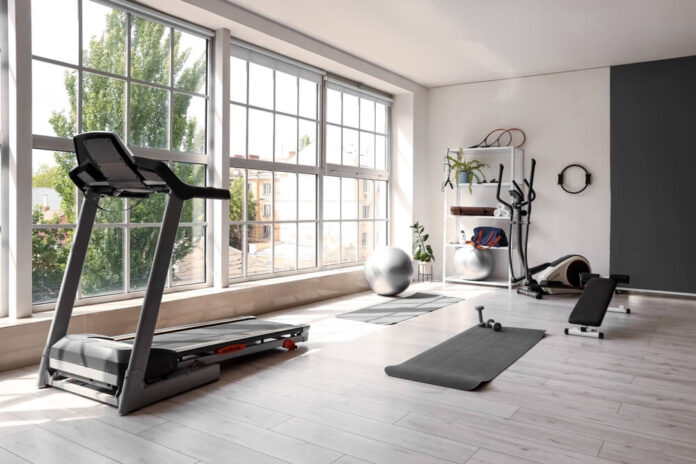

If you’re spending the time and effort to set up a home gym, the last thing you want is bulky equipment that just gathers dust in a corner. A functional home gym doesn’t require a fortune or a spare warehouse. With a few smart choices, you can build a gym that fits your goals, your space and your budget.
If the cost of larger equipment spans beyond the amount you’re comfortable spending at once, a $3,000 loan could help you cover the upfront cost and spread it out over time. Before you shop, though, it helps to know which pieces deliver the most value.
Let’s explore some popular home gym equipment you’re actually likely to use.
Start with adjustable dumbbells
Adjustable dumbbells are one of the most versatile purchases you can make. Instead of buying a full rack of fixed weights, you get several weight options in a single compact set, saving you space and money.
You can adjustable dumbbells for dozens of exercises, including presses, curls, rows, lunges, and squats. Most sets let you switch weights with a dial or pin, so you can move between exercises quickly, making them a strong contender if you only want to buy one piece of equipment to get started.
Add a quality workout bench
A sturdy adjustable bench can be paired with adjustable dumbbells for incline presses, step-ups, seated shoulder work and core exercises.
Look for a bench that adjusts to flat, incline and decline positions. Check the weight capacity before buying so it holds up to your body weight plus the weights you plan to lift. A wobbly bench is more than annoying — It’s a safety risk.
Consider a squat rack
If strength training is your main focus, a squat rack or power rack becomes the centerpiece of your setup. A solid squat rack should offer safety bars to catch the weight if you struggle, enabling you to lift heavier loans safely at home.
However, a rack takes up more room and costs more than smaller equipment. Buying one might not make sense if you’re not a serious lifter.
Don’t overlook resistance bands
Resistance bands are affordable, lightweight and surprisingly effective. They travel well, store easily and work well for everything from warm-ups to full strength training sessions.
Bands are also gentle on the joints, which makes them a solid choice if you’re recovering from an injury or easing back into exercise. A set of bands with different resistance levels gives you plenty of range without taking up any real space.
Pick cardio equipment that fits your space
Cardio machines round out most home gyms, but they vary widely in size and price. A few popular options include:
- Treadmills for walking, jogging, or running indoors
- Stationary bikes for low-impact leg workouts
- Rowing machines for a full-body cardio session
- Jump ropes for an inexpensive, high-intensity option
Before you buy a bulky machine, measure your available space and think about how often you’ll realistically use it. A jump rope costs a few dollars and delivers a serious workout, while a treadmill might sit unused if you prefer exercising outdoors.
Round out your setup with the basics
A few smaller items make your gym more complete and comfortable:
- An exercise mat for floor work and stretching
- A kettlebell or two for swings and functional movements
- A foam roller for recovery and muscle relief
- A stability ball for core training and balance work
Pieces like these are generally inexpensive and don’t take up much room, but they fill in the gaps between your bigger purchases.
Budget before you build
Equipment costs range from a few dollars for a jump rope to well over a thousand for a full power rack setup. Deciding on your budget first helps you prioritize the pieces that matter most for your goals.
If you plan to finance part of your purchase, it pays to understand what borrowing actually costs. Knowing the difference between APR vs interest rate can help you compare options and see the full picture before you commit.
A gym that feels like home
The best home gym isn’t the one with the most equipment. It’s the one you’ll use day after day. Start with versatile basics like dumbbells and a bench, add cardio and accessories that match how you like to train, and expand from there as your routine grows.
Take stock of your space, your goals, and your budget before you buy. With a thoughtful approach, you can create a home gym that keeps you moving for years to come.