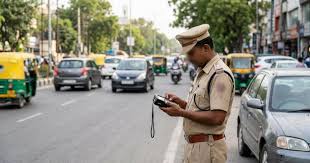

Automated enforcement has changed how traffic penalties are issued in Indian cities. Cameras mounted at junctions, speed detection equipment on arterial roads and number plate recognition systems record contraventions without an officer stopping the vehicle. Enforcement that once depended on an officer being present at the right moment has become continuous, and the penalty now arrives as a digital entry attached to a registration number rather than as a slip handed over at the roadside.
Consistency at that scale is a genuine improvement, and it is not the same thing as infallibility. Machine capture misreads, ownership databases carry information that has gone stale, and a single event occasionally generates more than one record. Any system that issues penalties automatically therefore needs a route by which an entry can be questioned, and the existence of that route matters more than the number of challenges made through it. It is what keeps an automated process accountable to the vehicle owners it bills.
Why automated systems produce wrong entries
Automated capture works from an image and a set of rules applied to that image. The equipment reads a registration plate, matches it against a database and generates a record. Each stage is reliable in ordinary conditions and capable of failing outside them. Rain, glare, dust, a partially obscured plate, a non-standardised font, a damaged number plate or a vehicle positioned awkwardly in the frame can all degrade a reading. The database side introduces a second class of error, because a record is only as current as the ownership information held against the registration number at the moment the entry is raised.
This does not make automated enforcement unsound. It does mean that a penalty generated without human involvement at the point of capture carries a residual error rate that manual enforcement did not carry in the same form, and that an owner has no opportunity to point out a mistake while it is being made.
The failure modes owners encounter most often
- A misread registration plate, where one character is interpreted as another and the entry lands against a vehicle that was never at the location.
- A penalty recorded against a vehicle that has already been sold, where the transfer of ownership is not yet reflected in the record the enforcement system consults.
- A duplicate entry, where the same contravention is captured more than once or recorded twice during processing.
Disputes tend to cluster around a short list of recognisable situations rather than being spread evenly across every possible error.
These are mundane failures, and they are the reason a dispute mechanism is treated as part of the enforcement system rather than as an exception to it.
How a digital record makes a challenge possible
Because the entry originates in captured material rather than in an officer’s recollection, there is something concrete sitting behind it. A record carries a location, a time and the basis on which the contravention was identified. That material can be examined, compared against what the owner knows about where the vehicle was, and either upheld or set aside on the strength of the comparison.
A roadside penalty issued and settled on the spot left very little behind it. An entry that exists in a database leaves a trail, and a trail is what a challenge needs. An owner contesting an entry raised after a vehicle changed hands is doing so with documentation that is independently verifiable, which is a far stronger position than an account of events offered after the fact.
The burden of noticing sits with the owner
The weakness in a digital system is the point at which the owner becomes aware that an entry exists at all. A record can sit against a registration number without being acted upon, and because enforcement is no longer accompanied by a physical interaction, nothing about the driving experience signals that a penalty has been raised. Periodic checking against the registration number has become a routine part of owning a vehicle for that reason. Unresolved entries otherwise tend to surface when a vehicle is being sold, insured or transferred and its record is examined by somebody else. Searches such as e challan delhi rise after enforcement drives, when a large number of owners check a registration number at the same time.
Routes and timelines vary between states
Enforcement is administered at the state level, and the mechanism for questioning an entry is administered alongside it. The practical consequence is that there is no single national description of how a challenge proceeds. The forum that hears a disputed entry, the window within which a dispute can be raised and the material an owner is expected to produce all differ from one state to another, and they change over time within a state as processes are revised.
An owner who receives a Delhi challan is therefore dealing with a route defined by that state’s arrangements, which will not necessarily match the arrangements elsewhere. What holds generally is that a route exists in each state, administered by the same authority that issued the entry.
A contested entry is resolved against evidence
A dispute over an automated penalty is not an argument about reasonableness. It is a comparison between what the record asserts and what can be demonstrated. A plate misread in capture is answered by establishing that the vehicle in the image is a different vehicle. A Delhi traffic challan raised against a car that had already changed hands is answered by the dated record of the transfer. A duplicate is answered by the original entry.
This is a narrower scope than many owners expect, and it is also what makes the mechanism workable at the same scale as the enforcement that generates the entries.
What the dispute route changes
The value of a dispute mechanism is measured less by how often it is used than by the discipline it imposes on everything upstream of it. An enforcement system whose entries can be examined is obliged to keep the material behind those entries in order, to maintain the ownership records it relies on, and to accept that a proportion of its output will be reversed. That is a reasonable price for enforcement that operates continuously and without discretion, and it is the condition on which automated penalties can be regarded as fair rather than merely efficient.