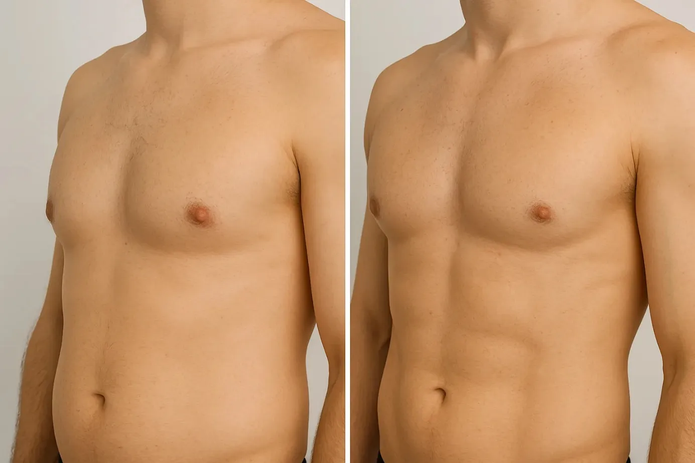

Weight changes can affect the chest and abdomen in different ways. A man may lose weight yet still have enlarged breast tissue, while the abdomen may be left with loose skin, residual fat or weakened muscles. Although these concerns can appear together, they are not corrected with the same operation.
For someone considering male breast reduction Malaysia, the first question is whether the chest enlargement is caused mainly by glandular tissue, fat, loose skin or a combination of these factors. The abdominal area needs its own assessment because skin laxity and muscle changes can require a different surgical plan.
Why Male Chest Enlargement Needs a Diagnosis
Male breast enlargement is not always caused by weight gain. Gynecomastia involves enlargement of male breast tissue, while some men mainly have excess fatty tissue in the chest.
The American Society of Plastic Surgeons describes gynecomastia surgery, also known as male breast reduction, as surgery used to correct enlarged breasts in men. Suitable candidates are generally healthy, at a relatively normal weight, realistic about the result and have stable breast development.
A consultation should therefore assess the tissue involved rather than assuming that losing more weight will necessarily correct the chest.
Liposuction and Excision Have Different Roles
When chest fullness is mainly fatty, liposuction may form part of the treatment. Firm glandular tissue, however, may require direct excision.
Some patients need both techniques. More significant enlargement can also stretch the skin or alter the areola, which may require additional planning.
The amount of tissue removed should be based on chest anatomy and proportion rather than on making the chest as flat as possible.
The Abdomen Can Change Differently
After major weight loss, the abdomen may remain loose even when body weight is stable. Skin that has been stretched for a long time does not always contract fully, and the abdominal wall may also have weakened.
Patients researching tummy tuck Kuala Lumpur may therefore be dealing with a problem that liposuction alone cannot solve. Abdominoplasty removes excess abdominal skin and, when appropriate, can restore weakened or separated muscles to create a firmer contour.
A Tummy Tuck Is Not a Weight-Loss Procedure
A tummy tuck is intended for contouring rather than substantial weight reduction. ASPS guidance describes suitable candidates as physically healthy people at a stable weight with realistic expectations.
The procedure can remove selected excess skin and fat, but it cannot prevent future weight gain. Significant changes in body weight after surgery can alter the result.
Patients who are still actively losing weight may therefore be advised to wait until their weight has stabilised before considering extensive body contouring.
Should Chest and Abdominal Surgery Be Combined?
Some men may want both areas addressed because loose abdominal tissue and persistent chest enlargement remain after weight loss.
Combining procedures can sometimes be considered, but it is not automatically the best approach. Operating time, recovery demands, medical history and overall surgical risk all need to be reviewed.
Scars Should Be Discussed Before Surgery
Male breast reduction and tummy tuck surgery both involve incisions, although scar patterns differ.
Chest scars depend on whether treatment involves liposuction, gland excision or skin removal. A tummy tuck generally requires a lower abdominal incision, with length influenced by the amount of skin being removed.
Patients should understand that scars mature over time but do not disappear completely.
Recovery Is More Than Time Off Work
Recovery depends on the extent of surgery, individual healing and whether procedures are combined.
Patients may need temporary restrictions on lifting, exercise and strenuous activity. Compression garments or other postoperative support may also be recommended.
Certain medications and medical conditions can affect healing, so these factors should be discussed honestly during consultation.
Keep Expectations Focused on Proportion
The aim of body contouring is usually to create a more balanced shape, not to guarantee perfect symmetry or a permanently unchanged body.
Natural differences between the two sides of the chest may remain, and future ageing or weight changes can affect both the chest and abdomen.
Conclusion
Weight loss can leave different problems in the chest and abdomen, even when both changes occur at the same time. Male breast reduction is planned according to glandular tissue, fat and skin, while a tummy tuck addresses excess abdominal skin and may also treat weakened muscles.
The right approach depends on anatomy, weight stability, general health and recovery goals. A qualified plastic surgeon can assess each area separately and determine whether one procedure, a combined operation or staged treatment is the most appropriate option.