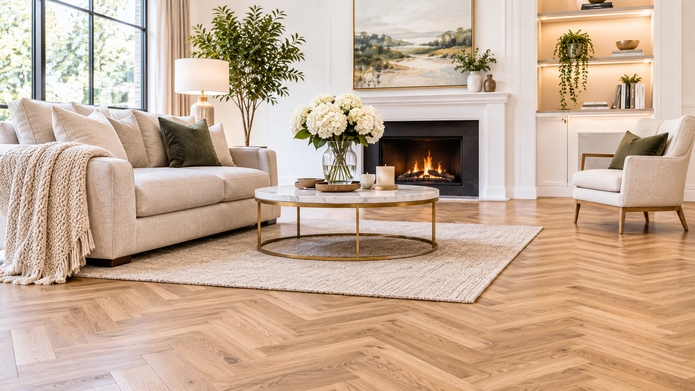

Flooring is one of the biggest design decisions you’ll make when decorating or renovating your home. Unlike paint colours or furniture, it’s not something you can easily change when your tastes evolve. Choosing the wrong style could leave your home looking outdated long before the flooring itself needs replacing.
The challenge is finding something that looks beautiful today without relying too heavily on current trends. Bold colours, unusual patterns and fashionable finishes might catch your attention, but they don’t always age gracefully.
Fortunately, timeless flooring doesn’t have to be boring. Classic options such as herringbone french oak floors demonstrate how natural materials and traditional patterns can create visual interest without depending on short-lived trends. The key is understanding which design choices are likely to remain appealing over time.
Choose Natural Colours Over Fashionable Shades
Flooring colours can dramatically influence how a room feels.
Dark grey timber finishes and heavily whitewashed floors have both enjoyed periods of popularity, but distinctive colour trends can eventually make a home look tied to a particular decade.
Natural wood tones tend to be more adaptable because they complement a wide variety of decorating styles.
Consider warm browns, soft oak shades and neutral finishes that allow you to change your furniture and wall colours without creating clashes.
Before committing, take samples home and examine them at different times of day. A floor that looks beautifully neutral in a showroom might appear surprisingly orange or grey under your home’s lighting.
Think About the Pattern, Not Just the Material
The way flooring is arranged can have just as much impact as its colour or finish.
Traditional straight planks create a clean, understated appearance that works well in most interiors.
Patterns such as herringbone can introduce texture and character without requiring bold colours or decorative features.
However, the size and proportions of the room matter.
A detailed pattern may look impressive in a spacious living area but feel overwhelming in a smaller room filled with furniture.
If you’re unsure, consider using a simpler layout throughout most of your home and reserving decorative patterns for selected spaces.
Avoid Finishes That Are Difficult to Maintain
A floor might look stunning when it’s first installed, but everyday wear can quickly change its appearance.
Highly polished surfaces often reveal scratches, dust and footprints more easily than finishes with a softer sheen.
Extremely dark floors can also make everyday dirt more noticeable, particularly in busy households with children or pets.
Before choosing a finish, think about how your home is actually used.
Ask yourself:
- Will the flooring be exposed to heavy foot traffic?
- Are pets likely to scratch the surface?
- How easily can spills be cleaned?
- Can damaged sections be repaired or refinished?
- Does the manufacturer recommend special cleaning products?
A practical finish that continues looking good with ordinary maintenance is often a better long-term investment than something that requires constant attention.
Consider How Flooring Connects Between Rooms
Using too many different flooring styles can make a home feel disconnected.
For example, switching between several timber colours, tile patterns and laminate finishes may create unnecessary visual clutter.
Where practical, maintaining consistent flooring across adjoining living spaces helps create a smoother transition between rooms.
You don’t necessarily need identical flooring everywhere. Bathrooms, kitchens and other moisture-prone areas may require different materials.
The goal is to choose finishes that complement one another rather than compete for attention.
Matching undertones and keeping transitions simple can help your home feel more cohesive.
Prioritise Quality Over Temporary Trends
Flooring needs to withstand years of furniture movement, cleaning, foot traffic and occasional accidents.
Choosing a cheaper product purely because it looks fashionable could prove disappointing if it wears quickly or becomes difficult to maintain.
Compare materials based on durability, installation requirements, warranties and suitability for your household.
For example, engineered timber can provide a natural wood appearance with different construction characteristics from solid timber, while quality vinyl and laminate products may offer practical alternatives for certain spaces.
No material is perfect for every home, so consider how each option performs in the rooms where it will be installed.
Choose Something You’ll Still Enjoy Living With
The most timeless flooring isn’t necessarily the most expensive or traditional option. It’s the one that suits your home, complements your personal style and remains practical as your needs change.
Rather than following the latest design trend, focus on balanced colours, appropriate materials and finishes that are easy to maintain.
When flooring works with your home instead of dominating it, you have much more freedom to update everything around it.
That flexibility is what helps a well-chosen floor remain attractive long after today’s decorating trends have disappeared.