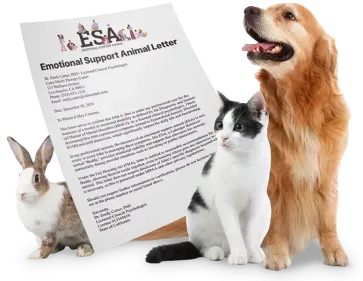

A legitimate emotional support animal letter requires a live clinical evaluation from a therapist who holds an active license in your state. The ESA letter market includes services that skip the evaluation entirely, producing documents that landlords can legally reject under the Fair Housing Act. Under federal housing law, only a letter issued by a state-licensed mental health professional after a genuine assessment carries legal weight with housing providers. Renters who verify provider credentials before committing avoid the cost and delay of starting over with a compliant service.
What Makes an ESA Letter Legit for Housing
A legit ESA letter for housing is valid only when a therapist licensed in your state signs it after conducting a genuine clinical evaluation.
That single requirement separates letters landlords accept from letters they reject. The federal Fair Housing Act applies in all 50 states and requires landlords to provide reasonable accommodation when a tenant presents valid documentation.
No local landlord policy, breed restriction, or no-pet clause can override a properly issued ESA letter under federal law. The therapist who signs the letter must hold one of the following active credentials: Licensed Clinical Social Worker (LCSW), Licensed Marriage and Family Therapist (LMFT), Licensed Professional Counselor (LPC), Licensed Mental Health Counselor (LMHC), psychologist, psychiatrist, or a licensed nurse practitioner with a psychiatric specialty.
The license must be active in the state where the tenant lives, not the state where the provider is headquartered. Interstate therapy compacts allow some providers to practice across state lines legally, but the license must still be valid in your specific state. An ESA letter is valid for 12 months from the date of issue. Most landlords require documentation issued within the past year before granting or renewing an accommodation request.
The Credentials Your ESA Letter Must Include
When your landlord receives your ESA letter, they can verify every credential listed on it. A legitimate emotional support animal letter includes the therapist’s full name, license number, and state of licensure on the document itself.
Before submitting any ESA letter for housing, check that it contains every item on this list:
- Therapist’s full name and professional title
- Active state license number and state of licensure
- Contact information: phone number, email address, and practice address
- Date of evaluation and date of issuance
- A statement confirming you have a qualifying mental health condition
- A statement that your animal provides support for that condition
- A request for reasonable accommodation under the Fair Housing Act
- Official practice letterhead with a handwritten or verified digital signature
Any letter missing one of these elements can be lawfully rejected by a landlord even if it was issued by a licensed therapist.
Landlords check license numbers against state board databases. They can also contact the therapist directly to confirm the letter is genuine. A legitimate provider like Realesaletter will have a verification process in place and will respond to reasonable landlord inquiries.
Five Red Flags That Identify a Fake ESA Letter Service
Knowing what disqualifies a provider is the fastest way to protect your housing rights before you pay for anything.
- Instant approval without a consultation
Any service that delivers a letter within minutes of submitting a form has skipped the clinical evaluation entirely. Real evaluations require a therapist to assess your history, your condition, and how your animal helps manage it. No genuine clinical judgment happens instantly.
- No state-licensed therapist identified
A legitimate ESA letter names the therapist, their credential type, their license number, and their state of licensure. If a provider cannot tell you who will sign your letter before you pay, that is a disqualifying gap.
- ESA registration or certification offered
There is no official ESA registry in the United States. No registration, certificate, or ID card carries any legal weight. The only document a landlord is required to accept is an ESA letter from a licensed mental health professional.
- Promises a letter valid for life
A legitimate ESA letter reflects a current clinical assessment. Any provider promising permanent documentation is issuing paperwork that landlords can lawfully reject as outdated.
- Out-of-state license for a 30-day state
California, Arkansas, Iowa, Louisiana, and Montana require a 30-day client-provider relationship before an ESA letter can be issued. A provider who promises same-day delivery for residents of these states is not complying with state law. The evaluation begins immediately in these states, but the letter is issued after 30 days.
ESA Letter vs. PSD Letter: Which Protection Do You Need
An ESA letter covers housing under the Fair Housing Act. It eliminates pet deposits, monthly pet rent, and breed restrictions in any housing covered by federal law. An ESA letter does not provide public access rights. Your dog or cat cannot accompany you into restaurants, stores, or other public spaces based on an ESA letter alone.
A psychiatric service dog (PSD) letter covers housing and public access when the dog is trained to perform a specific disability-related task. PSD handlers can bring their dog into any space the public is permitted to enter. Airlines must also accommodate a task-trained PSD in the cabin under DOT regulations.
The same state-licensed therapists conduct both evaluations using the same clinical process. ESA letters typically cost between $100 and $200 as a one-time fee. PSD letters generally range from $150 to $300, reflecting the broader legal protections and more involved clinical evaluation they require.
Renters who need both housing and travel access can obtain a signed PSD letter through the same evaluation process used for ESA letters, with no additional waiting period in most states. If your only current need is to eliminate pet fees and secure housing, an ESA letter is the right document. If you need your dog to accompany you in public or on flights, a PSD letter provides broader coverage.
How to Verify Any ESA Letter Provider Before You Pay
Three actions verify any ESA letter provider before you commit.
First, confirm the therapist is licensed in your state. Ask the provider which therapist will conduct your evaluation and look up that license number on your state licensing board website. An active, in-state license is the foundation of a valid letter.
Second, confirm the evaluation is a live clinical consultation. Telehealth evaluations by phone or video are legally valid under the Fair Housing Act. An online questionnaire reviewed by a third party is not.
Third, confirm the provider supports landlord verification. After your letter is issued, your landlord may contact the therapist to confirm its authenticity. A provider with a transparent verification process will have that path ready.
Services like RealESALetter.com connect renters with state-licensed therapists who conduct genuine clinical evaluations before issuing letters. The provider matches renters with a therapist licensed in their specific state, not simply one available in their region.
State Laws That Affect Your ESA Letter Timeline
Five states require a 30-day client-provider relationship before an ESA letter can be issued: California, Arkansas, Iowa, Louisiana, and Montana.
In each of these states, the evaluation begins on the same day as the first consultation. Two consultations are required. The letter is issued 30 days after the first call.
California requires this under AB-468. Arkansas, Iowa, Louisiana, and Montana each have their own statutes establishing the same requirement. Any provider offering a legit ESA letter online in these states must schedule two consultations across the 30-day window.
The Fair Housing Act statute has not changed. What changed in May 2026 is HUD’s enforcement posture. State civil rights and human rights agencies remain fully active in enforcing housing law and are the primary complaint path. RealESALetter letters comply with all five 30-day state laws, and the evaluation process begins on the same day as the first consultation.
Frequently Asked Questions
What is required for an ESA letter to be legally valid for housing?
An ESA letter is legally valid for housing when it is issued by a therapist who holds an active state license and has conducted a genuine clinical evaluation. The letter must include the therapist’s full name, credential title, active license number, and date of issue. It must be on official practice letterhead and recommend the animal as a reasonable accommodation under the Fair Housing Act.
How do I verify that an online ESA letter service uses real licensed therapists?
Verifying an online ESA letter service starts with checking that the therapist’s name, license type, and state license number are visible before you pay. Cross-reference the license number against your state licensing board’s public database. A compliant service always requires a live video or phone consultation before issuing a letter.
Can a landlord legally reject a valid ESA letter?
A landlord can reject an ESA letter if it is not issued by a state-licensed mental health professional or is missing required credential information. If a valid letter is rejected, file a complaint with your state civil rights or human rights agency, which remains fully active in enforcing housing law.
Does a dog or cat need to be trained or registered for an ESA letter?
An ESA letter for a dog or cat does not require the animal to be professionally trained, certified, or registered anywhere. Breed restrictions, size limits, and weight caps cannot be applied to an emotional support animal under the Fair Housing Act.
What is the difference between an ESA letter and a PSD letter?
An ESA letter covers housing accommodations only under the Fair Housing Act, while a PSD letter covers both housing and public access rights with a task-trained dog. ESA letters do not provide air travel cabin access. Both letter types are issued by the same state-licensed therapists through the same clinical evaluation process.
Conclusion
The provider choice comes down to three verifiable facts: therapist state license, live consultation requirement, and state law compliance. Following the May 2026 change to HUD’s enforcement posture, clinical documentation quality carries more weight than before. State agencies are now the primary enforcement path, and a letter that cannot withstand landlord scrutiny leaves the renter without an effective remedy.
A compliant ESA letter from a properly credentialed therapist delivers housing security, elimination of pet fees, removal of breed restrictions, and full protection under federal law. Verifying credentials before paying is the single step that separates renters who receive enforceable protection from those who receive a document a landlord can legally discard.