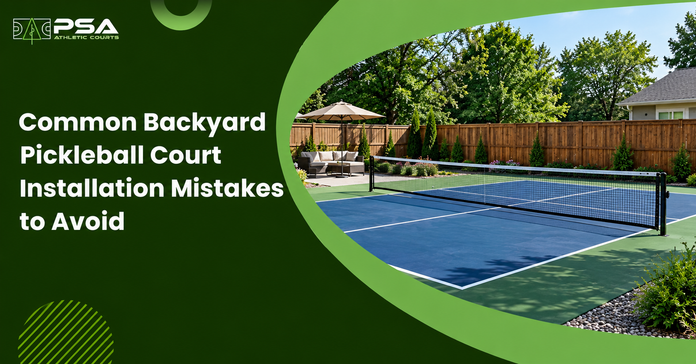

A Backyard Pickleball Court can create a convenient space for recreation, practice, and entertaining at home. However, mistakes during planning or construction can affect drainage, playing conditions, durability, and long-term maintenance. Understanding common problems before starting a pickleball court installation can help homeowners create a safer and more functional playing area.
1. Choosing the Wrong Court Location
Selecting a location based only on available backyard space can create problems later. Consider sunlight, drainage, nearby trees, property boundaries, and access to the court. Excessive shade can contribute to moisture retention, while trees may drop leaves, branches, or sap onto the playing surface.
The surrounding area should also provide enough clearance for players to move safely beyond the court lines.
2. Ignoring Backyard Pickleball Court Dimensions
One of the most common planning mistakes is failing to account for the complete playing area. Official pickleball court dimensions are 20 feet wide by 44 feet long, but the total space needed for a pickleball court backyard project should include additional room around the playing surface.
Planning the court layout carefully helps provide adequate movement space and prevents the finished court from feeling cramped.
3. Building on an Unstable Base
A pickleball court requires a properly prepared foundation. Installing surfacing over an uneven, weak, or poorly compacted base can lead to cracks, settlement, low areas, and premature surface deterioration.
Before surfacing begins, the site should be properly graded and prepared for the intended court system. Addressing foundation issues early can help improve the performance and lifespan of a residential court.
4. Failing to Plan for Drainage
Water is a major concern for outdoor courts. Without proper grading and drainage, rainwater can collect on the surface and contribute to staining, surface damage, or freeze-thaw problems.
A Backyard Pickleball Court should be designed so water can move away from the playing area efficiently. Drainage planning is particularly important for residential projects exposed to heavy seasonal precipitation and changing weather conditions.
5. Using the Wrong Court Surface
Not every outdoor surface system is appropriate for every residential application. Choosing materials without considering the existing base, climate, expected use, and maintenance requirements can affect traction, ball response, and durability.
A professional residential pickleball court installation should account for these factors when selecting the appropriate surfacing system.
6. Poorly Planning Court Orientation
Court orientation can influence visibility and player comfort. If possible, consider the direction of the sun when positioning the court. Direct sunlight at certain times of day can make it difficult for players to track the ball.
Reviewing sun exposure before construction can help create a more comfortable playing environment throughout the day.
7. Skipping Professional Site Preparation
Trying to reduce preparation work can create costly performance issues later. Proper grading, base preparation, surface application, line layout, and finishing all contribute to the quality of the completed court.
Working with an experienced pickleball court designer during the pickleball court installation process can help homeowners address site-specific challenges and create a well-planned, durable court.
Plan Your Backyard Pickleball Court Carefully
Avoiding these common mistakes can make a pickleball court backyard project more practical, durable, and enjoyable. From backyard pickleball court dimensions and drainage to surface selection and site preparation, each decision contributes to the finished playing environment. Careful planning and professional installation can help homeowners create a court designed for reliable long-term use.