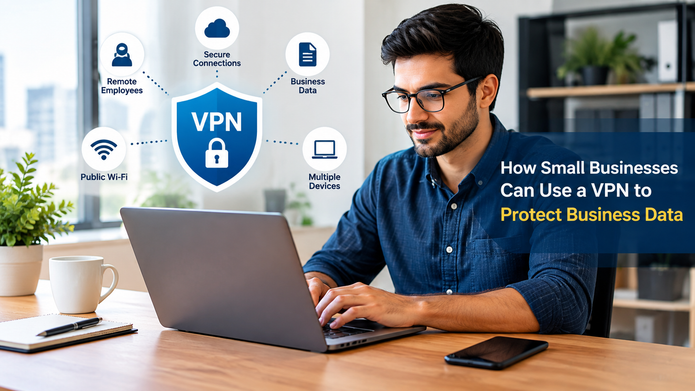

For a small business, protecting sensitive information is no longer something that can wait until the company becomes larger. Customer details, employee records, financial documents, login credentials, and internal communications can all be exposed when employees connect through unsafe networks. This is where a small business VPN can become a practical part of a company’s cybersecurity strategy.
A VPN, or virtual private network, creates an encrypted connection between a device and the internet. Instead of sending information through a connection that may be vulnerable to interception, a VPN helps protect data as it moves between the user’s device and the VPN server.
Why Business Data Needs Extra Protection
Small businesses often work with the same types of information that larger companies handle, but they may have fewer resources available for cybersecurity. A business could have employees working from home, traveling for meetings, or using laptops at cafés and airports.
Public Wi-Fi is particularly concerning because employees cannot always know how secure a network really is. If business activity takes place over an unprotected connection, sensitive information may face greater exposure.
A VPN can add another layer of protection by encrypting internet traffic. This is especially useful when employees need to access business services while connected to networks outside the office.
How a VPN Helps Small Businesses
The biggest advantage of using a VPN is the added security it can provide for internet connections. When employees connect through a VPN, their traffic is encrypted between the device and the VPN service.
This can be valuable for businesses that allow remote work. Employees can connect to company resources, communicate with colleagues, and handle business tasks without relying entirely on the security of whatever network they happen to be using.
A VPN can also help businesses establish more consistent security practices. Instead of leaving employees to decide whether a particular Wi-Fi network is safe, a company can make VPN use part of its remote-work security policy.
Protecting Remote Employees
Remote work has changed how many small businesses operate. An employee might start the day at home, attend a meeting from a coworking space, and finish work while traveling.
This flexibility is useful, but it also creates additional security considerations. Employees are no longer protected by the same network environment they might have in a traditional office.
A small business vpn can help provide a more secure connection regardless of where employees are working. Businesses can establish clear guidelines requiring employees to use the VPN when handling sensitive information or connecting through unfamiliar networks.
However, a VPN should not be treated as a complete cybersecurity solution. Strong passwords, multi-factor authentication, software updates, endpoint protection, and employee security training remain important.
Choosing the Right VPN for a Small Business
Not every VPN service is designed with business requirements in mind. Before choosing one, small businesses should consider factors such as the number of employees, supported devices, administrative controls, privacy policies, connection performance, and ease of deployment.
A good business VPN should be straightforward enough that employees can use it without constantly needing technical assistance. If the software is difficult to configure or slows down everyday work significantly, employees may be less likely to use it consistently.
Businesses should also consider whether the service can grow with them. A VPN that works well for a five-person team may need to support more users as the company expands.
VPNs and Public Wi-Fi
Public Wi-Fi can be convenient, but convenience should not come at the expense of business security. Hotels, airports, cafés, and other public locations may provide internet access without giving users much visibility into how the network is managed.
Employees who regularly work outside the office can use a VPN to create an encrypted connection when accessing the internet through these networks. This makes a VPN particularly useful for businesses with traveling employees or distributed teams.
For organizations looking for a dedicated solution, a small business VPN can provide a structured way to improve connection security across employees and devices.
A VPN Is One Part of a Larger Security Strategy
Although VPN technology can strengthen network security, businesses should avoid relying on it alone. A secure business environment requires several layers of protection working together.
Employees should use unique and strong passwords and enable multi-factor authentication wherever possible. Company devices should receive regular operating system and application updates, while security software should be kept current.
It is equally important to teach employees how to recognize phishing emails, suspicious downloads, fake login pages, and other common threats. Even the strongest technical controls cannot completely protect a business if employees are regularly tricked into giving away sensitive information.
Making VPN Use Part of Everyday Work
For a VPN to provide meaningful value, employees need to use it consistently. Businesses can make this easier by creating a simple security policy that explains when the VPN should be enabled and which company resources require additional protection.
Companies can also configure approved devices and provide employees with clear instructions for connecting. Regular reviews can help identify problems and determine whether the existing VPN still meets the company’s needs.
The goal is not to make security unnecessarily complicated. Instead, businesses should build practical security measures into everyday workflows so employees can work safely without constantly thinking about technical details.
Final Thoughts
A VPN can be a useful security layer for small businesses, particularly those with remote workers, traveling employees, or teams that frequently use different internet connections. By encrypting internet traffic and providing employees with a more secure way to connect, VPN technology can help reduce some of the risks associated with modern business communication.
Still, a VPN works best as part of a broader cybersecurity strategy. When combined with multi-factor authentication, strong passwords, updated devices, employee training, and sensible access controls, it can help small businesses create a stronger foundation for protecting valuable business data.