
Key Takeaways
- Mixed-use neighborhoods can put homes, services, workspaces, parks, and gathering places closer together.
- Walkability depends on safe crossings, shade, lighting, accessible routes, and useful destinations, not sidewalks alone.
- Austin projects benefit when they respond to heat, stormwater, transit access, neighborhood character, and local demand.
- Successful districts plan for daily use over time, including maintenance, tenant changes, and evolving household needs.
A neighborhood should do more than hold buildings. In Austin, a resident may want to walk from an apartment to a coffee shop, pick up groceries, meet a friend in a shaded plaza, or reach a nearby park without turning every small errand into a drive. Mixed-use planning brings compatible activities closer together, making more of those choices possible. For developers, the work starts with understanding how people will actually use a place. Austin real estate development group Den Property Group outlines an approach centered on developer partnerships, market intelligence, design input, marketing, and sales support from concept through closing. With experience in multifamily and mixed-use projects across Austin and other Texas markets, the firm offers a relevant perspective on aligning a project’s product mix, amenities, and story with buyer demand and neighborhood context.
What Mixed-Use Development Looks Like in Practice
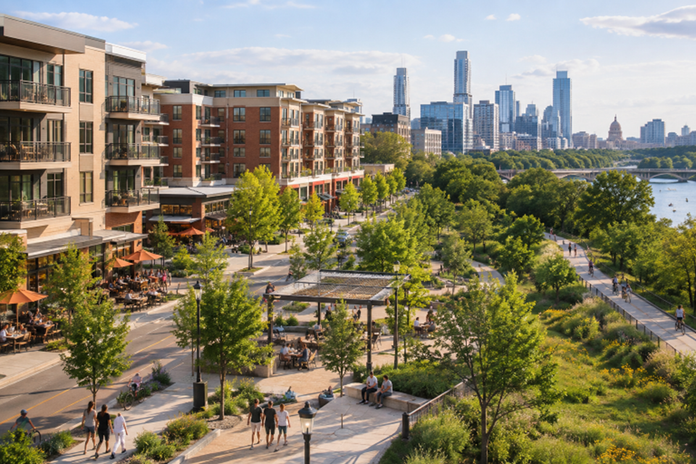
Mixed-use development simply means placing more than one type of activity within a connected district or building. It does not require every block to contain every use. A practical mix might include apartments above restaurants, townhomes beside a greenway, offices near housing, or a former shopping center remade with streets, public spaces, and new homes. In Austin, the right combination varies widely. A transit-adjacent infill site may support compact housing and neighborhood-serving retail. At the same time, an outer-area project may need stronger trail links, family-oriented homes, flexible commercial space, and carefully planned vehicle access. The purpose is not to eliminate cars from every trip. It is to provide more useful options for daily life.
Why Walkability Starts With Daily Needs
People are more likely to walk when the trip has a clear purpose, and the route feels direct, comfortable, and safe. Groceries, casual dining, childcare, fitness, pharmacies, parks, and local services can all make a district more useful when they are placed within reach of nearby homes. Shops also need enough residents, workers, and visitors nearby to sustain regular activity. Connected streets, shorter blocks, visible crossings, and continuous sidewalks make a meaningful difference. So do curb ramps, room for strollers and wheelchairs, safe places to pause, and routes that do not force pedestrians through large parking fields. Research on transit-oriented development describes these neighborhoods as dense, mixed-use, walkable places located near public transportation, reinforcing the value of connecting housing and daily destinations to reliable mobility choices.
The Health Value of Streets, Parks, and Green Space
In Central Texas, a sidewalk can be technically complete but still feel difficult to use during hot weather. Shade trees, covered seating, drinking water, lighting, landscaping, and inviting storefronts can turn a necessary route into one people choose. A resident carrying a small grocery bag may walk to a neighborhood market when the path is shaded and the crossings are clear, but drive when the same trip involves exposed pavement and uncomfortable intersections. Green space should be treated as part of the neighborhood network, not leftover land. Parks, pocket greens, trails, courtyards, and plazas can support play, exercise, outdoor dining, informal meetings, and community events. The connection between walkable surroundings, access to amenities, greenery, and well-being is also explored in urban design and wellness research, which highlights how the built environment can shape everyday experience.
Five Design Choices That Help Austin Districts Feel Connected
- Useful ground-floor spaces: Put retail, services, lobbies, and community rooms along active pedestrian routes. Empty frontage and blank walls weaken the walking experience.
- Comfortable streets: Combine trees, shade structures, lighting, benches, accessible sidewalks, and well-marked crossings to address both heat and safety.
- Flexible public areas: Design plazas and greens for quiet daily use as well as markets, music, food service, and neighborhood gatherings.
- Mixed housing options: Where feasible, include different home sizes and formats so the district can serve more than one household type.
- Strong connections: Link new buildings to existing streets, trails, schools, transit stops, parks, and nearby businesses rather than creating an isolated enclave.
How Local Research Should Shape the Project
Strong mixed-use plans are tailored, not copied. Before finalizing a concept, project teams should study local household patterns, nearby employment, competing retail, school access, transit routes, traffic conditions, and public infrastructure. They should also identify practical gaps, such as a lack of everyday food options, gathering places, healthcare access, or flexible workspace.
Questions Worth Asking Early
- Who is likely to live, work, shop, or spend time here at different hours of the day?
- Which uses can realistically support one another?
- Where will deliveries, waste collection, parking, bikes, and ride-share activity occur?
- How will trees, drainage, durable materials, and building systems respond to Austin’s heat and intense rainfall?
- Have nearby residents, businesses, and public agencies had a meaningful opportunity to identify concerns and opportunities?
Resilience Means Planning for Change
A resilient neighborhood can adapt without losing its usefulness. Retail bays with practical proportions and service access can accommodate changing tenants. Housing designed for varied household needs can remain relevant longer. Durable landscaping, stormwater management, efficient buildings, and dependable utilities help a district perform through changing conditions. Resilience is also social and financial. A neighborhood with homes, daytime activity, evening destinations, and public spaces may remain active beyond standard office hours. That activity should be balanced with attention to noise, deliveries, lighting, privacy, and the needs of existing neighbors.
Common Mistakes That Weaken Mixed-Use Projects
- Adding retail space without realistic foot traffic, visibility, or local demand.
- Building attractive structures that are difficult to reach on foot or by transit.
- Separating destinations with oversized parking areas and indirect pedestrian routes.
- Creating plazas without maintenance, shade, seating, or a clear purpose.
- Offering only one housing type despite varied local needs.
- Relying on renderings instead of testing deliveries, crossings, heat exposure, and everyday circulation.
A Practical Review Checklist
- Can residents reach several daily needs without driving?
- Are walking routes continuous, shaded, lit, and accessible?
- Does every public space have a purpose, maintenance plan, and practical amenities?
- Does the project connect to its surrounding street and trail network?
- Can homes, businesses, and shared spaces support activity at different times of day?
- Can the district adapt if household needs or tenant demand change?
Build Places People Can Keep Using
The strongest mixed-use neighborhoods in Austin are measured by daily performance, not opening-day appearance. They make routine trips easier, give local businesses a reason to invest, create room for public life, and remain flexible as the city changes. When projects focus on comfort, connections, climate readiness, and real local needs, they can help create places people return to because they work.
Conclusion
Successful mixed-use development in Austin starts with understanding how people will use a neighborhood every day. Housing, services, businesses, parks, and public spaces should connect in ways that make routine trips more convenient and walking more comfortable. That means planning beyond sidewalks to include shade, safe crossings, accessible routes, useful destinations, and spaces that can adapt over time. Developers should also consider local demand, heat, stormwater, transit access, and the needs of surrounding communities. By focusing on practical connections, long-term maintenance, and flexible uses, project teams can create districts that remain useful beyond opening day and support changing household and neighborhood needs.