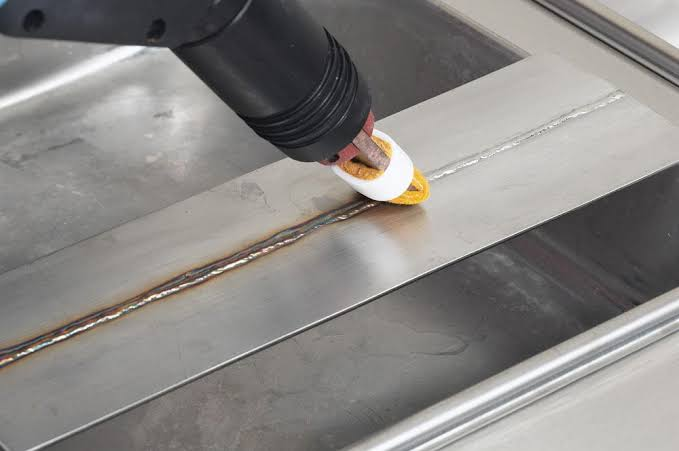

Why Surface Finish Matters
Stainless steel performance depends on both the alloy and the condition of its surface. Two parts made from the same grade can behave differently when one has deep scratches, grinding damage, trapped deposits, or embedded contamination. For applications that need accurate shaft stock, https://www.specialtysteel.com/product/316-316l-stainless-steel-turned-ground-polished/ illustrates the type of turned, ground, and polished material commonly selected for demanding industrial work.
Surface condition influences how easily a component can be cleaned, how it contacts seals or mating parts, and how likely deposits are to remain after service. Stainless steel forms a protective chromium-rich passive film in normal oxygen-containing environments, but the alloy, the exposure conditions, fabrication quality, and maintenance practices all still matter.
Common Stainless Steel Finish Types
Finish terminology is often used loosely, so buyers and fabricators should define the required process and measurable result. A machined finish comes from cutting operations such as turning or milling. A ground finish uses abrasives to improve dimensions, straightness, or consistency. Polishing reduces visible marks and can refine the surface, while brushing creates a controlled directional grain that is often chosen for appearance.
Electropolishing removes a very thin surface layer through an electrochemical process and is often used where a refined, easy-to-clean surface is needed. Passivation is different. It is a post-fabrication chemical treatment intended to remove free iron contamination and support the stainless steel’s protective surface condition. A bright polished surface may still need cleaning or passivation, and a passivated part is not defined by appearance alone.
The Link Between Finish And Corrosion
Stainless steel is corrosion-resistant, not corrosion-proof. Localized corrosion can begin where moisture, chlorides, chemicals, residue, or debris remain on the surface. Crevices, rough weld areas, and scratches can make cleaning harder and can create locations where aggressive process fluids stay in contact with the metal longer than intended.
Grinding deserves particular attention in chloride-containing service. Research on rough grinding and stainless steel corrosion reported that scratches intersecting manganese sulfide inclusions increased pitting vulnerability in saltwater testing of Type 304 stainless steel. The practical lesson is not that grinding should be avoided, but that abrasive selection, grinding pressure, heat control, cleanup, and post-processing should be specified deliberately.
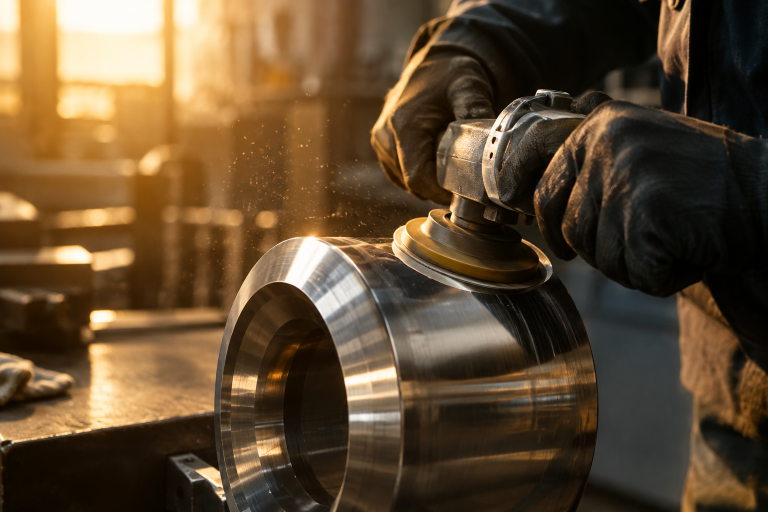
Contamination is another avoidable issue. Abrasives, brushes, fixtures, or work areas previously used on carbon steel can transfer iron-bearing particles to stainless steel. Those particles can rust, stain the surface, and complicate failure analysis. Dedicated stainless-only tools and clean handling practices are especially important for exposed, sanitary, and corrosion-critical equipment.
How Surface Roughness Affects Performance
Surface roughness is a measurable characteristic, not merely a visual judgment. The right roughness depends on the part’s role. A rougher surface may retain residue more readily in a washdown system, while a controlled finish on a rotating shaft can support seal performance and reduce uneven contact. Dimensional tolerances also matter because aggressive polishing or grinding can change fit, roundness, and straightness.
The smoothest possible finish is therefore not always best. Decorative panels may prioritize uniform grain direction. Sliding parts may need a finish compatible with lubrication and mating materials. Components exposed to salt spray need attention to scratches, drainage, deposits, and crevice-prone geometry as much as they need an attractive surface.
Choosing A Finish By Application
Food And Sanitary Equipment
Prioritize cleanability, accessible geometry, and surfaces without deep grooves, burrs, or damaged weld areas. The finish should support the actual cleaning process, including the chemicals, temperature, water pressure, and inspection method used in service.
Chemical Processing Equipment
Match the alloy and finish to the specific process fluid, concentration, temperature, and exposure time. Chlorides, acidic solutions, stagnant zones, and crevices can require tighter surface-control and maintenance practices.
Marine And Outdoor Equipment
Salt deposits and trapped moisture can challenge even corrosion-resistant alloys. Favor designs that drain, allow cleaning, and avoid damage during installation. Routine removal of deposits is often as important as the original finish.
Medical, Laboratory, And Precision Motion Equipment
Medical and laboratory components may require repeatable surface quality, contamination control, passivation records, and documented inspection. Rotating or sliding components also need consistent dimensions, appropriate roughness, and a finish that works with seals, bearings, or contact surfaces.
Inspection And Quality Checks
Finish verification should match application risk. A basic architectural part may need visual confirmation, while a critical process or motion component may need recorded measurements. A practical inspection plan can include:
- Reviewing the drawing, finish callout, and acceptance criteria.
- Confirming dimensions after grinding or polishing.
- Measuring roughness when a numerical requirement is specified.
- Checking for pits, scratches, burrs, heat tint, discoloration, and embedded debris.
- Confirming cleaning, passivation, or electropolishing when required.
- Recording results for traceability when the application demands it.
Common Finishing Mistakes
- Using tools or abrasives that previously contacted carbon steel.
- Grinding aggressively enough to create excessive heat or deep directional scratches.
- Assuming a bright surface proves that the part is clean or corrosion-resistant.
- Skipping cleaning after fabrication, welding, machining, or polishing.
- Specifying a cosmetic finish without considering tolerance, seal contact, drainage, or service chemistry.
- Failing to protect finished parts from damage and contamination during storage or shipment.
A Simple Selection Checklist
- What liquids, salts, chemicals, moisture, and cleaners will contact the part?
- Will it touch food, pharmaceuticals, skin, or another controlled product?
- Will it rotate, slide, seal, carry load, or require close dimensional control?
- Is a roughness range, grain direction, or appearance standard required?
- Will welding, machining, repair, or field installation occur after finishing?
- How will the surface be cleaned, protected, and inspected throughout its service life?
Current Research And Industry Context
Surface engineering continues to evolve through mechanical, chemical, electrochemical, and laser-based methods. Even so, the basic principles remain reliable: select a suitable alloy, control fabrication damage, prevent contamination, and specify only the finish needed for the application. A general overview of stainless steel and its passive oxide film can help explain why surface condition and alloy selection must be considered together.
Final Takeaway
Surface finish is a functional design decision, not just a cosmetic preference. The right approach can support easier cleaning, better corrosion control, reliable motion, and longer component life. The best specification is the one that matches the stainless grade, operating environment, tolerance requirements, maintenance plan, and inspection needs of the finished part.