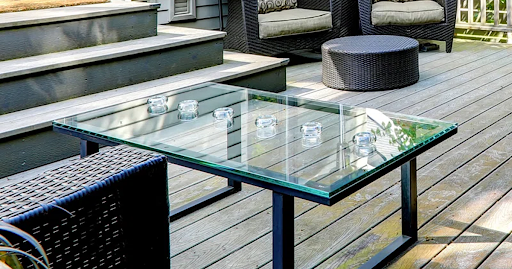

A well-made table can last for decades, but its surface often shows wear long before the furniture itself reaches the end of its useful life. Dining plates, laptops, decorative objects, spills, pet activity, and everyday cleaning can gradually leave behind scratches, stains, water rings, or heat marks. A transparent protective layer of glass table top protector can help preserve the original surface without completely changing the appearance of the furniture.
Glass is particularly useful because it combines surface protection with a clean, unobtrusive appearance. Unlike fabric tablecloths or opaque mats, clear glass allows the original wood grain, stone pattern, paint finish, or decorative design to remain visible.
The key, however, is choosing the right type of glass and using it correctly. Thickness, edge treatment, shape, support, and glass type all affect how well a protective tabletop performs.
Why Protecting a Table Surface Matters
Tabletops experience more mechanical and environmental stress than many other furniture surfaces. A dining table may encounter dishes and utensils every day, while a desk can be exposed to computer equipment, stationery, coffee cups, and repeated cleaning.
Wooden surfaces are especially vulnerable to moisture and abrasion. Water rings can penetrate some finishes, while dragging objects across the surface can create fine scratches. Painted and lacquered finishes can also lose their appearance over time.
A protective glass surface creates a physical barrier between the furniture and many of these everyday hazards. The underlying table still needs reasonable care, but accidental spills or minor abrasion are less likely to directly affect the original finish.
This approach can be particularly useful for antique, vintage, custom-made, or sentimental furniture where preserving the existing surface is more important than periodically refinishing it.
How Glass Protects Against Everyday Damage
A properly fabricated glass cover can help protect furniture from several common sources of wear.
Scratches and Abrasion
Glass can take the daily contact that would otherwise affect a wood or painted surface. Plates, decorative objects, office accessories, and other items can be moved across the protective surface without directly contacting the furniture underneath.
That does not mean glass itself is impossible to scratch. Abrasive particles trapped underneath objects or between the glass and table can cause damage. Keeping both surfaces clean is therefore important.
Spills and Stains
Glass is nonporous, so ordinary liquids do not soak into it in the same way they can penetrate unfinished or porous materials. This makes cleanup relatively straightforward.
For furniture with a valuable or difficult-to-replace finish, that barrier can be especially useful. A spill can generally be wiped from the glass before it reaches the underlying surface.
Heat And Every Day Dining
Glass can tolerate normal household use, but it should not automatically be treated as a heat-proof surface. Very hot cookware, heating elements, or sudden temperature changes can create thermal stress.
For dining applications, trivets or heat-resistant pads remain sensible when placing extremely hot objects on the surface. Protection is about reducing everyday risk, not eliminating the need for basic care.
Tempered Glass vs. Annealed Glass
One of the most important decisions is the type of glass used. Annealed glass is standard glass that has not undergone a thermal tempering process. If it breaks, it can fracture into large, sharp pieces.
Tempered glass is heat-treated to increase its mechanical strength. It is commonly used where improved safety and durability are important. When properly tempered glass breaks, it generally fragments into smaller pieces rather than producing the large shards associated with ordinary annealed glass.
Industry sources and glass fabricators commonly describe tempered glass as several times stronger than comparable annealed glass. For example, current tabletop specifications in the U.S. market frequently position tempered glass as the preferred option for furniture applications.
However, stronger does not mean indestructible. Tempered glass can still break from impact, edge damage, manufacturing defects, or severe thermal stress. It should never be drilled, cut, or modified after tempering because those processes can compromise the glass.
Choosing the Right Thickness
Thickness should be selected according to the purpose of the glass rather than simply choosing the thickest option available. For a protective layer placed over an existing table, relatively thinner glass may be appropriate when the underlying furniture provides continuous support. Commercially available tabletop protectors commonly include thicknesses such as 1/4 inch, while thicker glass may be used where the glass itself is intended to function as a structural tabletop.
A standalone replacement tabletop has different requirements from a protective cover resting on a fully supported surface. A thicker panel can provide greater rigidity, but it also adds weight.
The size and shape of the panel matter as well. A large rectangular sheet has different handling and support considerations than a small round tabletop. For unusual dimensions, professional fabrication is preferable to guessing based solely on thickness.
Flat-Polished, Pencil-Polished, or Beveled Edges?
The edge is more than a cosmetic detail. A raw glass edge can be sharp and unsuitable for normal furniture use. Polishing removes the sharpness and creates a smoother finished perimeter.
A flat-polished edge provides a clean, contemporary appearance. A pencil-polished edge has a rounded profile that can feel softer to the touch. A beveled edge introduces an angled transition around the perimeter and can create a more decorative appearance.
Current U.S. tabletop listings show all three approaches, including flat-polished and beveled options.
The best choice depends on the furniture design. A minimalist desk may suit a simple polished edge, while a traditional dining table may benefit from a more decorative bevel.
Getting the Shape and Measurements Right
Accurate measurement is critical because a protective glass panel does not have much room for error. For a rectangular table, measure the length and width at several points rather than assuming the furniture is perfectly square. Older furniture can have slight variations caused by construction, movement, or previous repairs.
For round tables, measure the diameter across multiple directions. For oval, racetrack, kidney, or irregular shapes, creating a physical template can be more reliable than estimating dimensions.
Custom glass fabrication can accommodate nonstandard shapes, but the measurements still need to be accurate. Some U.S. glass suppliers advertise custom cutting for round, rectangular, oval, and other shapes.
Should Glass Sit Directly on the Furniture?
Not always. Small clear bumpers or pads can create a slight separation between the glass and the furniture. They can also help prevent direct glass-to-surface contact and reduce movement.
The support system should be appropriate for the size and weight of the panel. A large glass sheet should not be allowed to shift freely on an unstable or uneven base.
For valuable furniture, it is worth considering how the glass will interact with the finish underneath. Dust, grit, or moisture trapped between surfaces can create problems over time, so periodic inspection and cleaning are important.
Glass vs. Plastic Table Protectors
Consumers often compare glass with clear PVC, vinyl, acrylic, or other plastic protectors. Each material has different characteristics. Plastic protectors are generally lightweight and flexible. They can be convenient for temporary applications and may be easier to roll, store, or reposition. Current U.S. marketplace listings include vinyl and PVC table covers marketed specifically for scratch and spill protection.
Glass, by comparison, provides a rigid, flat surface that tends to maintain its appearance without the soft or flexible characteristics associated with plastic. It also allows the furniture underneath to remain visually prominent.
The right choice depends on priorities. If portability and flexibility matter most, a plastic protector may be practical. If rigidity, clarity, and a furniture-like finished appearance are more important, glass may be better suited.
Cleaning and Maintenance
Keeping the protective surface clean is straightforward, but technique still matters. Use a soft microfiber cloth and a suitable glass cleaner or mild soap solution. Avoid abrasive powders, rough scouring pads, or anything that could introduce fine scratches.
It is also important to clean underneath the panel occasionally. Small particles trapped between glass and furniture can act like abrasive material when the panel moves.
Do not drag a heavy glass panel across the furniture when cleaning. Lift it safely with appropriate assistance, particularly for large dining tables or oversized desk surfaces.
When a Glass Protector Makes the Most Sense
A protective glass surface is particularly useful when the furniture underneath is valuable, difficult to refinish, or exposed to frequent activity. Dining tables are an obvious example because they encounter food, drinks, utensils, and repeated daily use. Desks can benefit from protection against office equipment and frequent handling. Coffee tables are exposed to cups, books, decorations, and occasional spills.
Glass can also be useful over decorative furniture where the goal is to preserve the original appearance rather than conceal it. The transparent surface protects while keeping the underlying design visible.
Common Mistakes to Avoid
The biggest mistake is assuming that any piece of glass will work as a tabletop protector. Glass needs to be properly sized, appropriately finished, and suitable for the intended application. Using an incorrectly sized panel can create instability. Choosing a thickness without considering the support conditions can add unnecessary weight or fail to provide the desired rigidity.
Another mistake is ignoring the edges. Even when the central surface is appropriate, an unfinished edge can create a handling hazard. Finally, don’t confuse scratch resistance with scratch-proof performance. Glass is durable, but abrasive particles, hard objects, and improper cleaning can still damage its surface.
Is a Glass Table Top Protector Worth It?
For furniture that is expensive, sentimental, antique, or frequently used, the value comes from preventing damage before it occurs. Refinishing a damaged tabletop can be considerably more complicated than maintaining a removable protective surface.
The strongest case is not simply aesthetic. It is about extending the useful life of the furniture while preserving the original surface.
The decision becomes more straightforward when you consider the table’s material, daily use, dimensions, and replacement or refinishing cost. A carefully measured, properly finished tempered panel can provide a durable barrier while maintaining the furniture’s original visual character.
Ultimately, the best protection is not necessarily the thickest or most expensive option. It is the one correctly matched to the furniture, the intended use, the support conditions, and the level of everyday wear. That combination is what determines whether a protective glass surface remains useful for years rather than becoming another maintenance problem.