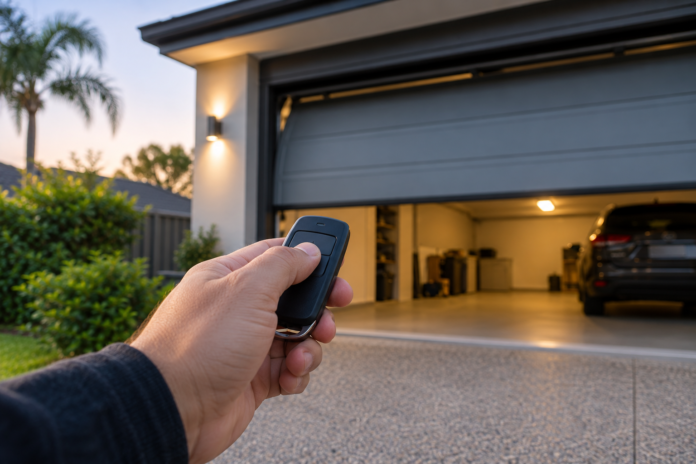

Most garage door remotes feel simple: press a button, the door moves. Behind that button press is a small radio transmitter, a receiver in the opener, and a security system designed to prevent other devices from triggering your door. When something in that chain breaks down, the symptom is usually the same, nothing happens or it works only sometimes.
Because replacement and compatibility can be surprisingly specific, it helps to treat garage door remotes gold coast as a practical home-maintenance category rather than a one-size-fits-all accessory. A quick understanding of how remotes talk to openers makes troubleshooting faster and reduces the chances of buying the wrong replacement.
The Basics: Remote, Receiver, and the “Signal Handshake”
A garage remote sends a short radio signal when you press the button. The opener’s receiver listens for that signal and checks whether it matches what it is programmed to accept. If it matches, the receiver triggers the motor unit to open or close the door.
This “handshake” has three core pieces:
- The remote transmitter (your handheld device)
- The receiver (often built into the opener, sometimes separate)
- The code system (how the receiver decides the remote is authorized)
Even if the remote looks fine on the outside, any one of these elements can be the reason it fails.
Rolling Codes vs Fixed Codes: Why Security Matters
Older systems often used fixed codes, meaning the remote sent the same code every time. That made them easier to set up, but also easier to copy if someone had the right equipment. Many modern openers use rolling codes, where the remote and opener change the code each time in a synchronized way.
Why this matters for troubleshooting:
- Fixed-code remotes can fail due to switch settings changing or corrosion on internal contacts.
- Rolling-code remotes can fail if they lose synchronization or if the opener’s memory has been reset.
It also matters for replacement. A remote that looks similar may not work if it uses a different code type, even if it is the same brand.
The Most Common Cause: Batteries and Contact Wear
Remote batteries are the obvious suspect, but battery problems are not always “dead or alive.” Low power often shows up as:
- Shorter range than usual
- Intermittent operation
- Works only after multiple presses
If replacing the battery doesn’t help, the next likely culprit is button contact wear. Over time, the rubber pad and internal contacts can degrade, especially in humid conditions or if the remote lives in a hot car. A remote that feels “mushy,” sticks, or only responds when pressed hard can be failing mechanically, not electronically.
Range Problems: Interference Is More Common Than People Think
If your remote works only when you are close to the garage, interference is a frequent cause. Range can be reduced by:
- Metal structures or dense walls between you and the opener
- A damaged or repositioned opener antenna
- LED lighting that emits radio-frequency noise (some bulbs are notorious)
- Devices operating on nearby frequencies
A quick diagnostic trick is to test the remote with garage lights turned off and then on again. If range suddenly improves with the lights off, interference is a strong possibility.
Programming and Pairing: The “Learn” Button Explained
Most newer openers have a learn (or program) button on the motor unit. Pairing typically involves pressing that button, then pressing the remote button within a short time window. If the remote is compatible, the receiver stores its identity and accepts it going forward.
Pairing failures often happen because:
- The remote is not compatible with that opener model or frequency
- The opener’s memory is full (some units have limits)
- The timing sequence is off
- The receiver is faulty or has a weak connection
If multiple remotes stop working at once, that points away from “bad remote” and toward the opener’s receiver, memory reset, or power-related issues.
When the Opener Is the Problem
Sometimes the remote is doing its job, but the opener is not listening properly. Signs that the opener may be the issue:
- No response from any remote or keypad
- Intermittent operation across multiple devices
- The wall button works but remotes do not (or vice versa)
Possible causes include a failing logic board, receiver degradation, or wiring issues. These are not always visible, which is why basic troubleshooting should include testing more than one access method if you have it (second remote, keypad, wall switch).
A Simple Troubleshooting Checklist You Can Use Anytime
When a remote stops working, run this sequence:
- Replace the battery and confirm it is inserted correctly.
- Check whether the problem is range-only or total failure.
- Test with garage lights off to rule out interference.
- Re-pair the remote using the opener’s learn button.
- If you have another remote, test it to isolate whether the issue is the remote or the opener.
- If multiple devices fail, focus on the opener receiver or logic board.
This approach saves time because each step narrows the problem rather than guessing.