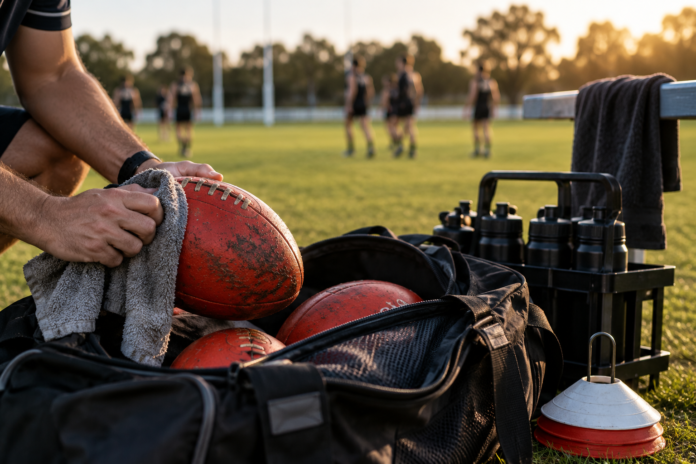

For many Australian football clubs, equipment has to work hard across a long season. Footballs are used in training, warm-ups, school programs, junior clinics and match preparation. Because of this, proper care can make a noticeable difference to performance and lifespan. Clubs investing in footy balls can get better value from their equipment by following simple storage, cleaning and handling habits.
Keep Footballs at the Right Pressure
Air pressure affects almost every part of how a football performs. If a ball is overinflated, it can feel too hard, bounce sharply and become uncomfortable to mark. If it is underinflated, it may not kick cleanly or travel the expected distance.
Regular pressure checks are useful throughout the season. This is especially important before match days, grading games and structured skills sessions where consistency matters.
Store Balls Away From Heat and Moisture
Storage conditions can shorten or extend the life of a football. Leaving balls in direct sunlight, hot cars or damp sheds may affect the outer material and shape over time.
A cool, dry storage area is usually best. Balls should also be kept away from sharp equipment, chemicals and heavy objects that could press against them. Good storage habits help maintain a more reliable feel across the season.
Clean Dirt and Mud After Use
Football is often played in wet, muddy or dusty conditions. While this is part of the game, dirt left on the surface can reduce grip and affect handling.
After wet or muddy sessions, balls should be wiped down and allowed to dry naturally. Harsh cleaning products are generally unnecessary and may damage the surface. A simple clean cloth is often enough for regular maintenance.
Separate Training and Match Equipment
Community clubs can benefit from separating training footballs from match footballs. Training balls are exposed to repeated drills, rough ground contact and heavy use. Match balls need to remain in strong condition for game-day consistency.
Labelling or grouping balls by purpose can help coaches and volunteers manage equipment more easily. It also reduces the chance of match balls being worn down during routine training.
Rotate Balls During Training
Using the same few footballs every session can lead to uneven wear. Some balls may become softer, smoother or more misshapen than others.
Rotating footballs during training spreads the workload across the full set. This is a simple habit that helps preserve quality and ensures players practise with a range of balls in similar condition.
Inspect Balls Throughout the Season
Small problems can become bigger if they are ignored. Clubs should check footballs for surface damage, loss of shape, poor grip or air leakage.
Regular inspections allow equipment managers to remove unsuitable balls from important drills or match preparation. Older balls may still be useful for warm-ups or basic activities, even if they are no longer ideal for competitive use.
Good Equipment Habits Help Players
Football care is not only about saving money. It also affects training standards. Players develop better skills when they practise with equipment that behaves consistently and suits the session.
By maintaining pressure, cleaning after use and storing footballs properly, clubs can create a better environment for learning and performance. Over a full season, these small habits can make a meaningful difference.