
Here is the thing most people do not realize. Dust mites themselves are not really the problem. It is what they leave behind. Their fecal particles and body fragments, tiny bits measuring between 10 and 40 microns, are what trigger those miserable allergic reactions. And a standard vacuum? It might pick up the visible dust, but it often blasts those microscopic allergens right back into the air through the exhaust. So you are basically stirring up the exact thing you are trying to get rid of.
That is where a true HEPA filter vacuum for dust mites changes everything.
What True HEPA Actually Means, and Why the Label Matters
You have probably seen HEPA slapped on every other vacuum box at the store. But here is the catch. Not all HEPA claims are equal. A true HEPA filter is tested to capture 99.97% of particles as small as 0.3 microns. To put that in perspective, dust mite allergens fall well within that range, along with pet dander, pollen, and mold spores.
But this is a big one. The filter alone is not enough. I learned this the hard way after buying what I thought was a decent HEPA filter vacuum for dust mites. It was a cheap stick model with the right label on the box, but it still left me sneezing. The problem? The vacuum body was not sealed. Air was leaking out through gaps in the housing before it even reached the filter. It is like pouring water through a coffee filter with holes punched in the sides. Completely useless.
Look for language like sealed HEPA system or complete seal technology on the spec sheet. Some models even carry the Asthma and Allergy Foundation of America certification, which tests the whole machine, not just the filter. That is the kind of detail that actually matters.
Bagged vs. Bagless: The Emptying Problem
This one surprised me. I always assumed bagless was the modern, convenient choice. Empty the canister, rinse it out, done. Except every time you pop that canister open, you get a little cloud of fine dust floating back into the room. For someone with allergies, that is basically a trigger bomb.
Bagged vacuums, especially ones with self-sealing bags, keep all that trapped debris locked away. Yes, you have to buy replacement bags. But compared to the cost of allergy medication and lost sleep? It is a trade-off I wish I had made sooner.
Technique Matters More Than You Think
Even the best HEPA vacuum will underperform if you rush through the job. I used to zip across the carpet in thirty seconds and call it clean. Now I move slowly, about one foot per second, and make overlapping passes. I also vacuum in multiple directions because carpet fibers lean one way, and allergens hide on the sides you are not hitting.
Do not skip the soft stuff either. Your mattress, sofa cushions, curtains. These are dust mite hotspots. Use the upholstery attachment. Go over your mattress at least once a week, especially if you are not using an allergen-proof encasement yet. It takes five extra minutes and the difference is noticeable within days.
A Few Honest Tips From Someone Who Learned the Hard Way
First, replace your HEPA filter on schedule. A clogged filter kills suction and lets allergens bypass the system entirely. Most manufacturers say every 6 to 12 months, but if you have pets or live somewhere humid, check it more often.
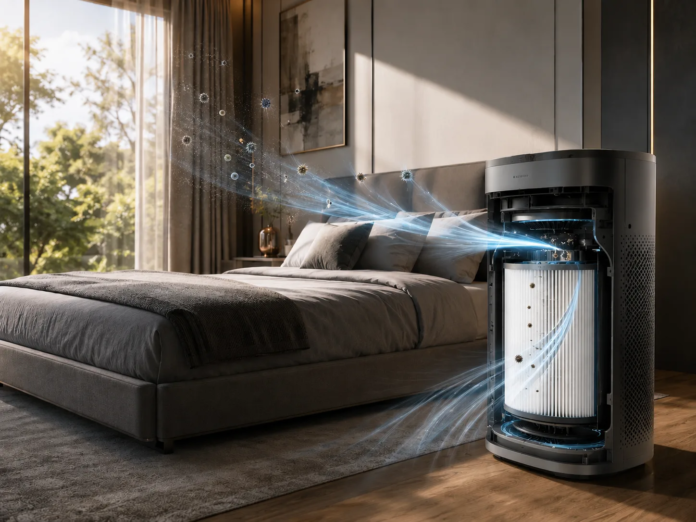
Second, do not vacuum right before bed. Even a sealed HEPA system stirs up some particles. Open a window for twenty minutes afterward, or run a HEPA air purifier in the room while you clean.
Third, and this is important. A vacuum is not a cure-all. It is one piece of the puzzle. Pair it with dust mite-proof bedding covers, weekly hot washes for your sheets above 130 degrees Fahrenheit, and keep indoor humidity under 50%. Dust mites thrive in moisture. A dehumidifier in the bedroom was the single best investment I made after the vacuum itself.
End
If you are dealing with dust mite allergies and still using a basic vacuum, you are fighting a losing battle. Investing in a proper HEPA filter vacuum for dust mites with a sealed system is not a luxury. It is the baseline for actually removing allergens instead of redistributing them. It took me too long to figure that out, and I am still annoyed at all the mornings I spent blaming pollen season for what was actually happening inside my own mattress.
Your vacuum should work with your body, not against it. Once you switch to the right tool and the right routine, the difference is not subtle. You will feel it