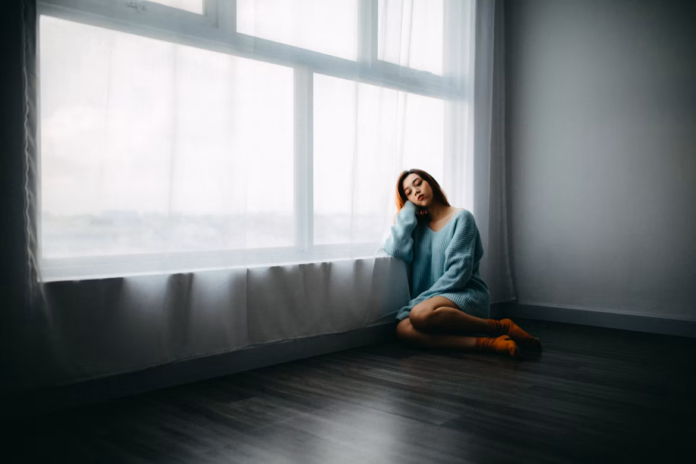

The two words get used interchangeably and they describe opposite experiences. One is chosen, the other suffers. One restores, the other depletes. The confusion is not harmless, because people who need solitude avoid it, having been told it is a symptom.
| Solitude | Loneliness | |
| Chosen or imposed | Chosen | Imposed |
| Effect on energy | Restores | Drains |
| Attention | Points inward | Points at the door |
| Time perception | Passes quickly | Drags |
| Afterward | Steadier | Hungrier for contact |
The distinction is not academic. Most people who are exhausted are not short of company. They are short of time spent unaccounted for.
An Evening With No Notifications
Try describing the last evening you spent alone without mentioning a screen. For most of us it is difficult, because the two have become inseparable.
This is the quiet substitution that happens. Solitude gets replaced by solitude plus a feed. The body is alone. The attention is not. And attention is the part that matters, because the restorative value of being alone comes from where the mind goes when nothing is pulling at it.
A few small conditions that make unshared time actually function as solitude:
- A boundary with a shape. A room, a chair, an hour. Abstract alone-time evaporates.
- Nothing with a badge. No counters. No streaks.
- One object, not a menu. Choice is the enemy of rest.
- No performance. Nothing you will later describe to anyone.
Solitude and Avoidance Are Different Again
There is a second confusion worth naming, because it catches people who have already understood the first one.
Solitude is the chosen time that you come back from. Avoidance is time spent away from something you are not dealing with. They can look identical from the outside, and only one of them restores you.
| Signal | Solitude | Avoidance |
| How it starts | You decided | Something else decided |
| How you feel midway | Settled | Restless |
| What you are thinking about | Very little | One specific thing |
| Afterward | Ready to re-enter | Still avoiding |
The test is simple. If a single topic keeps reappearing no matter what you do with the hour, the hour is not solitude. It is a waiting room. That is worth knowing, but it is not a reason to skip the time alone. It is a reason to use it differently.
What to Say When Someone Worries About You Being Alone
If you start protecting your evenings, someone will eventually ask whether you are all right. The question is usually well meant, and the answer people reach for is a defence of the whole practice, delivered at length. That rarely lands.
Shorter answers work better, and they work because they are true.
| What you are told | What is worth saying |
| “You should get out more.” | “I do. This is the part of the day I keep.” |
| “Isn’t that lonely?” | “Lonely is different. This is closer to quiet.” |
| “You’re always disappearing.” | “I’m here more when I’ve had it.” |
| “That seems antisocial.” | “It isn’t against anyone. It’s just not for anyone.” |
The last one is the most useful framing, because it removes the implication that solitude is a judgement about other people. It is simply time that is not addressed to an audience.
There is also a practical reason to keep the answer short. A long justification turns an hour of rest into a position you have to maintain, and nothing defended this hard feels restful. Two sentences, then change the subject.
What a Companion Object Actually Does
The phrase sounds like a contradiction. A companion is someone. An object is a thing. But the usefulness of an object in a private hour has nothing to do with pretending it is a person.
What it actually provides is a reason for the hour to have an edge. Without one, the evening has no shape and the phone fills the vacuum. This is the whole case for a women’s intimate wellness object that lives in a drawer and has no opinion about your day. It marks the time as yours without asking anything of you.
Three things a good one does:
- It creates a beginning. A physical action that says the day is closed.
- It requires no talking. No check-in, no summary, no explaining yourself.
- It stays where it belongs. Not on your wrist, not in your pocket, not in the room where you work.
The Room Where Nothing Is Urgent
If you can, pick a room or a corner where no task is permitted. No laptop, no paperwork, no unfolded laundry within sight.
This sounds trivial and it is not. Homes are organised around what needs doing. A space with no task in it reads to the nervous system as a place where nothing is late, and that is rarer than it should be.
| Space | What it usually asks of you |
| Kitchen | Tidy me, feed me |
| Desk | Finish something |
| Sofa | Watch something |
| Bed, task-free | Nothing |
The last line is the only one with no verb attached. That is the point.
Giving Your Attention Back
Attention is the currency of the evening, and it is spent the way money is, mostly without noticing and mostly on things chosen for you.
Reclaiming it is not about discipline. It is about removing the competition.
This is where a personal wellness companion earns a place on the nightstand rather than another app on the phone. It is the only thing within reach that has no feed, no inbox and no audience.
What changes when the competition is gone:
- Falling asleep stops being a task you fail at.
- Boredom arrives, and shortly after, sleep does.
- The hour stops being something you get through.
- You notice you were tired long before you admitted it.
Being alone was never the problem. Being alone with nothing pulling at you is the thing most people have not experienced in years, and it takes less than it sounds like. A closed door, a dark room, and one object that asks nothing of you.