
Pickup trucks have long occupied a unique position in the automotive market. They can be work vehicles, family transportation, recreational machines, and daily commuters—all at the same time.
That versatility has helped create an equally diverse aftermarket. Truck owners can choose from suspension upgrades, lighting systems, wheels, storage solutions, protection products, and countless cosmetic modifications.
But one of the more interesting shifts in truck customization is not about making vehicles look more aggressive. It is about making them easier to use.
For many owners, practical upgrades are becoming the foundation of customization. Rather than changing a truck simply for appearance, buyers increasingly think about accessibility, cargo management, protection, and how the vehicle fits into everyday life.
That creates an important opportunity for the automotive aftermarket.
Utility Is Becoming Part of the Customization Decision
The traditional image of a modified pickup often involves oversized tires, lifted suspension, or bold exterior styling. Those products remain an important part of truck culture, but customization does not always need to be dramatic.
A relatively small modification can significantly change how convenient a truck is to own.
Consider vehicle access.
Modern pickups can sit relatively high off the ground, particularly when equipped with larger tires or off-road packages. Getting in and out may therefore become less convenient for children, older passengers, or anyone frequently entering and exiting the vehicle.
Products such as running boards address that problem directly. They can provide an additional stepping surface between the ground and the cabin while also becoming part of the truck’s exterior design.
The purchase decision is therefore not purely aesthetic. It is connected to how the owner actually interacts with the vehicle.
That distinction matters.
When an aftermarket product solves a recurring problem, owners have a clearer reason to purchase it. Instead of asking, “Will this make my truck look different?” the question becomes, “Will this make my truck easier to use?”
For aftermarket companies, products tied to repeatable everyday needs can create a compelling category.
Pickup Beds Create Their Own Aftermarket Economy
The pickup bed is one of the defining features of a truck, but its open design also creates a practical challenge.
Drivers may use the bed for tools during the week, sports equipment on the weekend, luggage on road trips, or supplies for home projects. Leaving those items exposed is not always ideal.
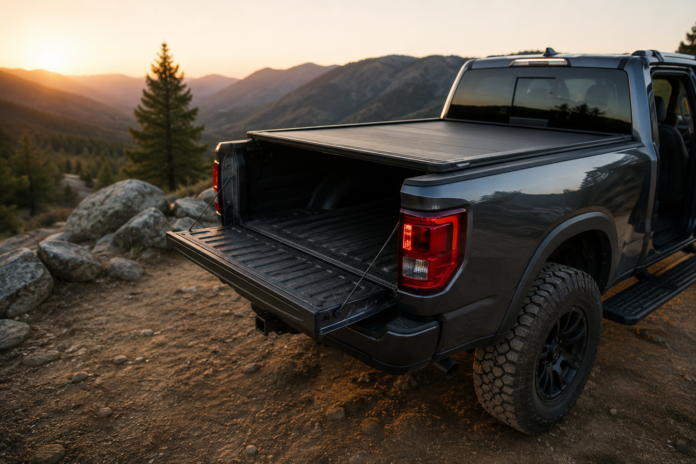
That has created a large ecosystem of bed-related accessories, including liners, storage systems, racks, organizers, and tonneau covers.
A tonneau cover is a useful example of how aftermarket demand often develops.
The truck already provides cargo capacity. The accessory does not fundamentally change what the vehicle is. Instead, it helps the owner adapt an existing feature to a wider range of situations.
For someone who regularly carries equipment, groceries, luggage, or work supplies, covering the bed can make the space more practical for everyday use.
This is an important characteristic of successful aftermarket categories: they often emerge from the gap between what a vehicle can technically do and how conveniently an owner can use it.
The Truck Is Becoming a Platform
A pickup is rarely purchased for one purpose alone.
A contractor might use the same vehicle for work and family travel. An outdoor enthusiast might commute during the week and carry recreational equipment on weekends. A suburban owner might use the bed primarily for home improvement projects, furniture, and occasional road trips.
As the number of use cases increases, the number of potential aftermarket needs increases with it.
That is why the truck-accessory market should not necessarily be viewed as a collection of unrelated products. It can instead be seen as an ecosystem built around adapting one vehicle platform to different lifestyles.
An owner who begins by improving cabin access may later think about bed protection, storage, lighting, towing equipment, or exterior protection.
The common thread is personalization through function.
In that sense, the automotive aftermarket shares characteristics with other consumer categories built around expandable platforms. The initial purchase establishes the base product, while accessories allow customers to adapt that product over time.
E-Commerce Has Changed the Buying Process
The way consumers discover automotive accessories has also changed.
Historically, a truck owner might have relied heavily on a local accessory shop, dealership, mechanic, or catalog. Those channels remain relevant, but online research now plays a much larger role in the purchase journey.
Before buying an accessory, shoppers can compare product types, installation requirements, materials, compatibility, reviews, and pricing across multiple sellers.
That creates both an opportunity and a challenge for aftermarket businesses.
The opportunity is reach. A specialist retailer is no longer limited to customers living near a physical store.
The challenge is complexity.
Automotive accessories are rarely universal. Model year, cab configuration, bed length, trim level, and other vehicle specifications can determine whether a product fits.
As a result, the digital customer experience becomes particularly important.
Clear vehicle compatibility information, understandable product descriptions, installation guidance, and logical category navigation can reduce uncertainty for buyers who cannot physically inspect a product before ordering.
For retailers, simply having products online is not enough. Helping customers confidently determine which product fits their vehicle can become part of the value proposition.
Practical Products Can Be Easier to Explain
Another advantage of utility-focused accessories is that their value proposition tends to be straightforward.
A running board helps provide a step into the vehicle.
A bed cover helps make an open cargo area more protected and usable.
A floor liner protects the interior.
A storage box organizes equipment.
A towing accessory supports a specific hauling requirement.
That clarity can be valuable in an increasingly crowded online marketplace.
Consumers encounter thousands of products across search engines, marketplaces, social platforms, and specialized retailers. Products with obvious use cases can be easier to understand than modifications whose value depends primarily on personal taste.
This does not mean aesthetics are unimportant. Truck owners often care deeply about how accessories complement the vehicle.
Instead, the strongest products can combine both dimensions: they serve a practical purpose while also contributing to the vehicle’s appearance.
Customization Is Becoming More Personal
The broader lesson for the automotive aftermarket is that customization does not necessarily mean transformation.
Many owners do not want to turn their truck into something completely different. They simply want it to work better for the way they live.
That might mean easier entry for family members, more convenient cargo storage, better organization for work equipment, or additional protection during frequent use.
Each of those needs creates an aftermarket opportunity.
For manufacturers and retailers, understanding those use cases may be just as important as introducing new product designs.
The question is not simply what accessories can be added to a pickup truck.
It is what problems truck owners repeatedly encounter—and which products solve those problems with the least friction.
The Opportunity Is in Everyday Use
The future of pickup customization may be shaped as much by practicality as by visual identity.
Bold builds and highly modified trucks will continue to attract attention, but much of the aftermarket operates in a quieter part of the ownership experience: helping drivers make vehicles more convenient, adaptable, and useful.
That is where products such as access steps, bed covers, storage systems, protection accessories, and other functional upgrades fit into a larger business story.
Pickup trucks are already designed to be versatile.
The aftermarket opportunity comes from helping owners decide exactly what that versatility should look like for them.