
You might be noticing a little blood in the sink when you brush, or your gums look puffier than they used to, and a small part of you wonders if it is serious or if you are overthinking it and whether you should see a periodontist in King of Prussia, PA. Then you search for gum disease and suddenly you are reading about tooth loss and surgery, which can feel frightening and overwhelming.end
That fear is understandable. Gum problems often start quietly, and by the time you notice symptoms, you may feel as if you have already missed your chance to fix them. The good news is that gum disease develops in stages, and each stage has its own warning signs and treatment options. In simple terms, gingivitis is the early, reversible stage. Periodontitis is the more advanced stage that can damage the bone and threaten your teeth if it is not treated.
So, the short version is this. If your gums are just inflamed and bleed easily, there is a strong chance you are in the gingivitis stage and can turn things around with better care and professional cleanings. If your gums are pulling away from your teeth, you notice bad breath that will not go away, or your teeth feel loose, you may have moved into periodontitis and need a periodontist to help stabilize things and protect your smile.
How does gum disease even start in the first place?
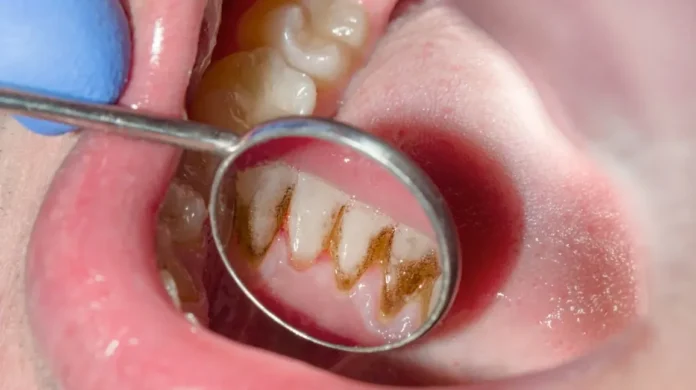
It often begins with something very ordinary. You are busy, you rush through brushing, you skip flossing here and there, and plaque quietly builds up along the gumline. Plaque is a sticky film of bacteria. When it is not removed well, it hardens into tartar, which irritates the gums.
In this early stage, called gingivitis, your gums may look red, feel tender, and bleed when you brush or floss. Many people shrug this off. They assume a little bleeding is normal. It is not. It is your body’s way of saying something is off. According to public health sources such as the Centers for Disease Control and Prevention, nearly half of adults have some form of gum disease, so if you are seeing these signs, you are far from alone.
If gingivitis is not addressed, that constant irritation to the gums and supporting tissues can move deeper. The gums begin to detach slightly from the teeth, forming pockets where more bacteria can collect. This is where gingivitis can shift into periodontal disease, also called periodontitis.
So, where does that leave you if you are already worried you waited too long?
What is the real difference between gingivitis and periodontitis?
Think of gingivitis as surface-level inflammation of the gums, and periodontitis as a deeper infection involving the bone and supporting structures of your teeth. Both are serious, but they are not the same.
With gingivitis, the main issue is puffy, red, or bleeding gums. At this point, there is no permanent damage to the bone or the connective fibers that hold your teeth in place. With consistent brushing, flossing, and professional cleanings, gingivitis can usually be reversed. The body is surprisingly good at healing when the irritation is removed.
With advanced gum disease, or periodontitis, the stakes are higher. The infection has moved below the gumline. The bone that anchors your teeth can start to break down. Gums can recede, teeth can look longer, and in more severe cases, teeth can feel loose or even shift. The National Institute of Dental and Craniofacial Research explains that untreated periodontitis is one of the main causes of tooth loss in adults.
This can create more than dental stress. There is the emotional impact of worrying about your smile, the cost of potential treatment, and the quiet fear of needing dentures or implants one day. It is a lot to carry.
The solution is not to blame yourself. The solution is to understand where you are on the spectrum and get the right help. Gingivitis is usually managed by a general dentist and good home care. Periodontitis is where a periodontist, a specialist in gum and bone health, often becomes important.
How do gingivitis and periodontitis compare in everyday life?
It can help to see the differences side by side, so you can better recognize what you might be facing right now.
| Feature | Gingivitis | Periodontitis |
| Main area affected | Gum tissue only | Gums, supporting bone, and connective fibers |
| Common signs | Red, swollen gums, bleeding when brushing or flossing, mild tenderness | Gum recession, persistent bad breath, deep pockets, loose or shifting teeth |
| Pain level | Often mild or no pain | May be tender, aching, or sometimes still painless until advanced |
| Reversibility | Usually reversible with improved care and cleanings | Bone loss is permanent, but disease can be controlled with treatment |
| Typical treatment | Routine professional cleaning, better brushing and flossing, possible mouthrinse | Deep cleaning (scaling and root planing), ongoing maintenance, possible surgery |
| Who usually treats it | General dentist and hygienist | General dentist plus periodontist for moderate to severe cases |
Imagine two different people. One notices bleeding when flossing, gets worried, and schedules a cleaning. The hygienist removes the tartar, reviews brushing and flossing, and within a few weeks the gums look pink and healthy again. That is gingivitis responding well to care.
Another person ignores the same early signs for years. Eventually their gums recede, they notice a bad taste in their mouth, and one day a tooth feels slightly loose. Their dentist measures deep pockets around the teeth and refers them to a periodontist. Treatment is still possible, but it is more involved and may require ongoing maintenance visits. That is periodontitis.
So the question becomes, what can you do right now, whether you are in the early stage or something more advanced.
What practical steps can you take today to protect your gums?
You do not need to become a dental expert. You just need a clear starting point. These steps can help you move from worry to action.
1. Pay close attention to your symptoms and do a quick self-check
Stand in front of a mirror in good light and gently lift your lips.
- Do your gums look red or swollen, or are they a healthy pink
- Do they bleed when you brush or floss
- Do any teeth look longer than they used to, which can signal gum recession
- Do you notice persistent bad breath or a bad taste, even after brushing
If you answer yes to any of these, it is a sign that your gums need more attention. Bleeding in particular is not something to ignore.
2. Strengthen your daily home care, even before your next appointment
Small changes, done consistently, can make a real difference.
- Brush twice a day for two full minutes with a soft toothbrush and fluoride toothpaste
- Angle the bristles gently toward the gumline where plaque tends to collect
- Floss once a day to clean between teeth, where your brush cannot reach
- If your dentist has suggested it, use an antibacterial mouthrinse
- Avoid tobacco, which strongly increases the risk and severity of gum disease
These habits help with gingivitis and also support any treatment you may need for periodontitis.
3. Schedule a professional evaluation and ask direct questions
No online guide can replace an in person exam. A dentist or periodontist can measure pocket depths around your teeth, check for bone loss on X rays, and give you a clear diagnosis. If cost is a concern, resources like this Medicaid periodontal fact sheet can help you understand possible coverage options in some programs.
When you see a provider, consider asking:
- Is this gingivitis or periodontitis
- Is there any bone loss yet
- What treatment do you recommend now, and what happens if I wait
- How often should I come for cleanings or maintenance
A good dentist or periodontist will walk you through your options and help you prioritize what matters most for your health and your budget.
Where do you go from here if you are feeling worried about gum disease?
If you are reading about gum disease stages explained and comparing gingivitis vs periodontitis, it usually means something has already caught your attention. That awareness is not a failure. It is the first step toward protecting your teeth and your overall health.
You do not have to figure this out alone. With early gingivitis, improved home care and regular cleanings can often turn things around. With periodontitis, a periodontist can help control the infection, protect the bone that supports your teeth, and create a long term plan so you are not always wondering what might go wrong next.
The most important move is the next one. Notice your symptoms, strengthen your daily habits, and schedule a professional evaluation. From there, you and your dental team can decide what is right for you, one clear step at a time.