
You might be feeling caught between two worlds right now. On one hand, you want straighter teeth and a smile you are proud of. On the other hand, you do not want a mouth full of metal or a long, awkward treatment that makes you hide your smile even more. A dentist in Villa Rica can help you explore options that fit your lifestyle and goals. That push and pull can feel exhausting.end
Maybe you have caught yourself covering your mouth in photos, or smiling with your lips closed in meetings, or worrying that people are noticing that one crooked tooth instead of listening to what you are saying. You want change, but you do not want to feel like a teenager in braces all over again.
This is where clear aligners like Tidal aligners for confident smiles can make a real difference. They are designed to straighten your teeth while still letting you feel like yourself in daily life. You can speak, work, and laugh without feeling like your treatment is the first thing people see. In short, they aim to improve your smile without stealing your confidence in the process.
So how do they actually help you maintain confidence while you are in treatment, not just after it is over? That is what you deserve to understand clearly and calmly.
Why does your smile affect your confidence so deeply?
Think about how often your smile shows up in your day. Meeting someone new. Joining a video call. Greeting your child after school. Even if you do not notice it, your smile is part of almost every social moment. If you feel uneasy about how your teeth look, that hesitation can seep into everything else.
The problem is not only cosmetic. When you are self conscious about your teeth, you might avoid speaking up at work, turning your head in photos, or laughing freely. Over time, that can chip away at how you see yourself. You might start thinking, “I will feel better once my teeth are fixed,” and put parts of your life on hold until then.
Because of this tension, you might wonder if orthodontic treatment will help or actually make things worse for a while. Traditional braces can be very effective, but they are also visible, and for many adults and teens, that visibility is a real concern.
What makes Tidal aligners feel different from traditional braces?
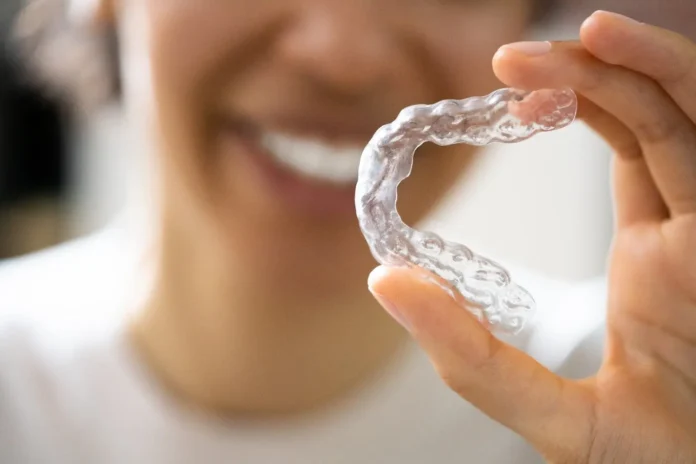
Clear aligners are designed with both appearance and comfort in mind. Instead of brackets and wires, you wear a series of custom made, clear trays that fit over your teeth. They gently guide your teeth into better alignment over time.
Here is where the confidence piece comes in. The trays are made from transparent plastic, so most people will not notice them in a quick conversation or a photo. You can remove them briefly to eat, brush, and floss. That means your usual routines do not have to change much, and you do not have to navigate food stuck in brackets or wires when you are out with others.
At the same time, it is important to be realistic. Clear aligners are a medical device, not a fashion accessory. Research from the National Institute of Dental and Craniofacial Research has shown that clear plastic aligners can affect the surface of teeth, especially if they are worn too long, if oral hygiene is poor, or if treatment is not properly supervised. You can read more about this evolving research in the NIDCR discussion of clear plastic aligners and tooth health.
So where does that leave you? It means aligners can support your confidence during treatment, but they should always be planned and monitored by a qualified orthodontic professional, not treated as a quick cosmetic shortcut.
What are the emotional and practical challenges during aligner treatment?
When you start any orthodontic treatment, including clear aligners, there is usually a moment of doubt. You might put in the first tray and think, “Will people see this?” or “Will I talk funny?” or “What if this does not work?” That uncertainty is normal.
For many people, the first few days bring mild pressure and some awareness of how the trays feel on the teeth. You might speak a little more slowly while your tongue adjusts. You might feel more aware of your mouth in meetings or social situations. This is the “agitation” part of the process, when the desire for change meets the reality of treatment.
Here are a few common worries and how they usually play out in real life.
Imagine a college student who has always hated their crowded front teeth. They start aligners right before a new semester and worry everyone will notice. In the first week, they practice speaking at home and drink more water because their mouth feels dry. By week two, their friends barely notice the trays, and the student starts to relax. Their confidence grows not only because their teeth are shifting, but because they see they can handle the process.
Or picture a working parent who spends a lot of time on video calls. They are afraid clients will see something “off” in their smile. The first few calls feel awkward. Then they realize no one has commented. They begin to trust that the aligners are actually more discreet than they feared.
In both cases, confidence returns as the aligners become part of the background of daily life instead of the focus. The key is that treatment is guided by a professional who understands how teeth move and how to balance cosmetic goals with long term oral health.
The American Association of Orthodontists emphasizes that only trained orthodontic specialists should oversee tooth movement, including aligners. They explain why professional monitoring, X rays, and in person checks matter for safe and predictable treatment. You can learn more about professionally supervised aligner care from the AAO’s overview of clear aligner treatment.
How do aligners compare with other paths to a confident smile?
When you are trying to decide what feels right, it can help to see the differences side by side. Here is a simple comparison of three common paths to straighter teeth and a more confident smile.
| Treatment Option | Visibility in Daily Life | Impact on Confidence During Treatment | Oral Hygiene | Professional Supervision |
| Clear aligners (like Tidal) | Low. Trays are clear and usually hard to see in casual conversation. | Often supportive. Many people feel comfortable smiling and speaking, though there is an adjustment period. | Good. Trays are removable, so brushing and flossing stay close to normal. | High, when done through a dentist or orthodontist with regular checkups. |
| Traditional metal braces | High. Brackets and wires are clearly visible. | Mixed. Some feel self conscious, others do not mind the look, especially younger patients. | More effort. Extra tools are needed to clean around brackets and wires. | High. Frequent in office adjustments and monitoring. |
| DIY or mail order aligners without regular in person care | Low. Aligners are also clear. | Uncertain. Confidence may be affected if results are slow, uneven, or uncomfortable. | Variable. Instructions may be less personalized, and problems can be missed. | Low to moderate. Often limited remote checks, which can miss early warning signs. |
This comparison highlights an important point. The way you feel during treatment is about more than how the device looks. It is also about whether you feel safe, informed, and supported. A trusted family dentist or orthodontist who knows your mouth and your goals can adjust treatment so you are not just chasing straight teeth, but also protecting your long term comfort and health.
What practical choices help you stay confident while wearing aligners?
You do not have to wait for the “after” photos to feel better about your smile. Small, practical choices can support your confidence even while your teeth are still moving.
1. Treat your aligners like part of your appearance, not a secret flaw
Instead of thinking, “I hope no one notices,” try reframing the story in your mind. You are choosing clear aligners as a quiet, responsible way to care for yourself. That is something to respect, not hide.
In practice, this might mean:
- Keeping your aligners clean so they stay clear and fresh.
- Removing them briefly for important photos or a key presentation, if your dentist agrees that is safe and you keep within your daily wear time.
- Having a simple, calm answer ready if someone asks about them, such as, “I am straightening my teeth with clear aligners. They are easy to live with.”
2. Protect your teeth while you straighten them
Confidence is fragile if you are worried about side effects. Aligners work by applying gentle pressure, but your teeth and gums still need protection.
You can support both your smile and your self trust by:
- Following your wear schedule closely. Do not rush to the next tray or over wear one out of impatience.
- Brushing and flossing before you put aligners back in, especially after meals or sugary drinks.
- Sticking to water while aligners are in, unless your dentist gives you other specific guidance.
- Keeping every checkup, even if things “seem fine,” so your dentist can spot early signs of irritation or trouble.
When you know you are doing your part and your provider is doing theirs, it becomes easier to relax and smile through the process.
3. Keep your bigger “why” in view, not just the mirror
On days when your teeth feel a little sore or you are tired of popping trays in and out, it can help to remember why you started. Maybe you want to feel at ease in family photos. Maybe you want your child to see you taking care of yourself. Maybe you want to speak up more at work without worrying about your teeth.
Writing that reason down and keeping it somewhere you see often can shift your mindset from “I have to wear these aligners” to “I choose this because my future self matters.” That simple shift supports your confidence now, not just when treatment is over.
How can a trusted provider guide you through confident treatment?
Clear aligners are a tool. What makes them powerful is the way they are planned and monitored. A compassionate family dentist or orthodontist will look at more than a digital model of your teeth. They will look at your bite, your jaw, your enamel, your gums, and your daily life.
That kind of care turns aligner treatment into a partnership rather than a product. You bring your goals, your worries, and your schedule. They bring their training, their experience, and their ability to see problems before you feel them.
This is why “aligner treatment” on its own is not enough. You want professional clear aligner care, where your questions are welcome, your progress is checked, and your plan can be adjusted if something does not feel right.
With that support, clear aligners as a general orthodontic service can do more than straighten teeth. They can help you move through treatment with your confidence intact, so you are not waiting for permission to smile. You are already smiling, even as your teeth are still shifting.
You do not have to choose between caring for your smile and feeling like yourself. With thoughtful planning, honest guidance, and steady support, Tidal aligners can help you protect both your teeth and your confidence, one quiet tray at a time.