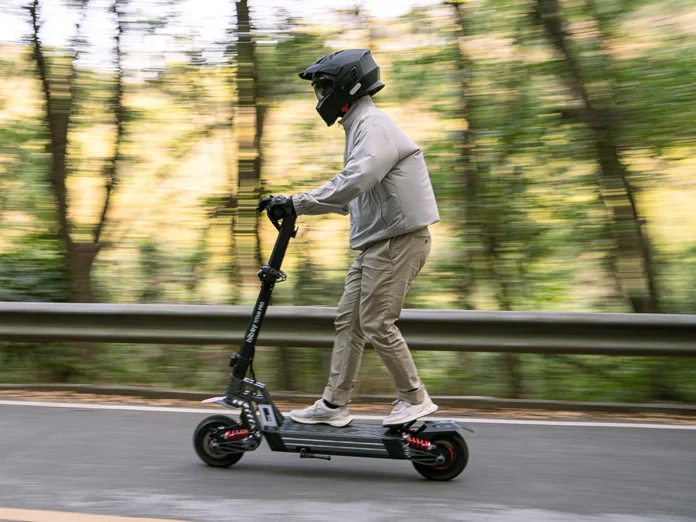

When shopping for an electric scooter, one of the biggest decisions you’ll face is choosing between a single motor and a dual motor model. While battery capacity, tire size, and suspension all affect ride quality, the number of motors plays a major role in determining acceleration, climbing ability, traction, and overall riding experience.
For many commuters, a single motor scooter provides more than enough performance. But if you frequently ride steep hills, carry heavier loads, or want faster acceleration and greater confidence on challenging terrain, a dual motor scooter can be a worthwhile upgrade.
In this guide, we’ll compare dual motor and single motor electric scooters, explain their pros and cons, and help you decide which option best fits your riding style.
What Is a Single Motor Electric Scooter?
A single motor electric scooter uses one electric motor, typically integrated into either the front or rear wheel, to power the scooter.
This is the most common setup for commuter scooters because it balances performance, efficiency, and affordability.
Advantages of Single Motor Scooters
- Lower purchase price
- Better energy efficiency
- Longer battery life under similar riding conditions
- Lighter overall weight
- Simpler maintenance
- Ideal for daily commuting
Potential Drawbacks
- Slower acceleration
- Reduced climbing ability
- Less traction on loose or slippery surfaces
- Performance drops more noticeably when carrying heavier riders
For flat urban environments, these limitations rarely become significant.
What Is a Dual Motor Electric Scooter?
A dual motor scooter uses a motor in both the front and rear wheels. Instead of relying on one wheel for propulsion, power is distributed to both wheels simultaneously.
This significantly increases total power and torque while improving traction and stability during acceleration.
Dual motor scooters are commonly designed for:
- Performance enthusiasts
- Long-distance riders
- Off-road adventures
- Steep hill climbing
- Heavier riders
- Riders who frequently encounter rough terrain
Dual Motor vs Single Motor: Feature Comparison
| Feature | Single Motor | Dual Motor |
| Acceleration | Smooth | Much quicker |
| Hill Climbing | Moderate | Excellent |
| Traction | Good | Superior |
| Top Speed | Moderate | Higher |
| Battery Consumption | Lower | Higher |
| Weight | Lighter | Heavier |
| Purchase Price | More affordable | Higher investment |
| Maintenance | Simpler | More components |
| Best For | Daily commuting | Performance & demanding terrain |
1. Acceleration
Acceleration is where dual motor scooters create the biggest difference.
A single motor sends all available power through one wheel, which naturally limits how quickly the scooter can build speed.
With two motors sharing the workload, dual motor scooters produce much stronger torque from a standstill.
Benefits include:
- Faster starts at traffic lights
- Easier overtaking
- Better response on inclines
- More confident merging into bike lanes or mixed traffic
For riders who value responsive performance, dual motors offer a noticeably more dynamic riding experience.
2. Hill Climbing Performance
Steep hills are one of the biggest challenges for electric scooters.
Single motor scooters often lose speed as the incline increases because one motor must handle the entire load.
Dual motor scooters distribute power between both wheels, making climbs easier and reducing strain on each individual motor.
For riders living in hilly cities like San Francisco, Seattle, or Vancouver, this can make a significant difference in everyday usability.
3. Traction and Stability
When riding on:
- Wet pavement
- Loose gravel
- Dirt paths
- Uneven surfaces
traction becomes increasingly important.
Because both wheels provide power, dual motor scooters maintain better grip during acceleration.
This improves:
- Stability
- Rider confidence
- Off-road capability
- Control during challenging conditions
4. Top Speed
Although top speed depends on controller settings, battery voltage, and local regulations, dual motor scooters generally achieve higher maximum speeds because of their greater combined power.
However, speed alone shouldn’t be the deciding factor.
For many riders, the real benefit is maintaining speed more consistently on hills and under heavier loads rather than simply reaching a higher top speed.
5. Battery Consumption
More power requires more energy.
Running two motors simultaneously typically results in higher battery consumption than a comparable single motor scooter.
That said, many premium dual motor scooters also include larger battery packs to help offset the additional energy demand.
Actual riding range will still depend on factors such as:
- Rider weight
- Speed
- Terrain
- Temperature
- Riding mode
- Wind conditions
6. Weight and Portability
Single motor scooters are generally:
- Easier to carry upstairs
- Simpler to load into vehicles
- Better suited for apartment living
- More convenient for mixed commuting
Dual motor scooters usually weigh more due to:
- Additional motor
- Larger battery
- Reinforced frame
- Stronger suspension
If portability is your top priority, a single motor model may be the better choice.
7. Price
Budget is often the deciding factor.
Single motor scooters usually provide excellent value for riders who simply need reliable transportation.
Dual motor scooters cost more because they include:
- Additional motor
- Higher-capacity electronics
- Larger batteries
- Reinforced construction
- Higher-performance braking and suspension systems
For riders who won’t regularly use the extra power, a single motor scooter is often the more economical option.
Who Should Choose a Single Motor Scooter?
A single motor scooter is ideal if you:
- Commute primarily on flat city streets
- Ride shorter daily distances
- Want a lightweight scooter
- Need easier portability
- Prefer lower maintenance
- Are shopping on a tighter budget
For most everyday commuters, a quality single motor scooter delivers all the performance needed for daily transportation.
Who Should Choose a Dual Motor Scooter?
A dual motor scooter is worth considering if you:
- Live in a hilly area
- Frequently ride long distances
- Enjoy higher-performance riding
- Carry heavier loads
- Ride on dirt roads or gravel trails
- Want stronger acceleration and better traction
For these riders, the additional power can noticeably improve the overall riding experience.
A Great Example of a Dual Motor Scooter
One example is the Hiboy TITAN Pro, which is available with an optional Dual BOSCH in-hub motor configuration.
The dual motor version delivers up to 2,400W combined peak power, providing impressive torque for rapid acceleration and confident hill climbing. It reaches a top speed of 33 MPH and can tackle inclines of up to 35%, making it suitable for riders who split their time between city streets and more demanding off-road trails.
What’s particularly appealing is the flexibility. Riders who don’t need maximum performance can also choose one of the standard motor configurations, while those seeking extra power can opt for the dual BOSCH setup.
Frequently Asked Questions
Are dual motor scooters faster?
Generally, yes. Dual motor scooters typically offer quicker acceleration and higher top speeds than comparable single motor models, although actual performance varies by motor power, battery, and controller settings.
Is a dual motor scooter worth it?
If you regularly encounter steep hills, rough terrain, or want stronger acceleration, a dual motor scooter can be well worth the investment. For flat urban commuting, many riders will find that a single motor scooter provides ample performance at a lower cost.
Do dual motor scooters use more battery?
Yes. Operating two motors generally consumes more energy. However, many dual motor models are equipped with larger batteries to help maintain practical riding ranges.
Are dual motor scooters safer?
Dual motors don’t automatically make a scooter safer, but they can improve traction and stability during acceleration, especially on loose or uneven surfaces. Safe riding still depends on rider skill, road conditions, speed, and proper protective gear.
Final Thoughts
Neither option is universally better, it depends on how and where you ride.
If your daily trips involve relatively flat roads, moderate distances, and a need for portability, a single motor scooter offers an efficient, affordable, and practical solution.
If you frequently face steep hills, rough terrain, or simply enjoy stronger acceleration and greater riding confidence, a dual motor scooter provides a noticeable performance advantage. Models like the Hiboy TITAN Pro demonstrate how a dual motor setup can deliver impressive power, improved hill-climbing capability, and enhanced versatility for riders who demand more from their electric scooter.
Ultimately, the best choice is the one that matches your riding environment, performance expectations, and budget.