

Key Takeaways
- Debt and equity are fundamental components of real estate financing, each with unique characteristics.
- The capital stack illustrates the hierarchy of financing sources, influencing risk and return profiles.
- Recent trends show a shift towards debt financing due to changing market conditions.
- Innovative financing structures are emerging to address challenges in capital sourcing.
Table of Contents
- Understanding Debt and Equity in Real Estate
- The Capital Stack Explained
- Recent Trends in Real Estate Financing
- Case Studies of Financing Structures
- Navigating Financing Challenges
- Conclusion
Understanding how debt and equity work together is essential for anyone seeking to succeed in real estate development. They serve as the foundation for raising capital, each coming with its own implications in terms of risk, control, and potential rewards. For developers and investors, identifying the right balance between these financing tools can make the difference between a stalled vision and a thriving asset. Exploring flexible construction finance options for residential projects can help projects secure the optimal funding mix from the earliest stages, accommodating different risk appetites and timelines.
Traditionally, the combination of borrowed funds and invested capital has allowed projects of varying sizes to move forward despite intensifying competition and shifting market dynamics. Whether you’re building multifamily towers or transforming existing properties, structuring your financing correctly affects profitability and project feasibility. Each project is unique, and so is its capital stack, which must be tailored to market realities, investor goals, and regulatory conditions. Developers must weigh the cost of capital carefully, navigate lender expectations, and remain agile as trends in the market shift.
Recent years have underscored the need for creative financing approaches, as lenders have tightened standards and investors search for attractive, risk-adjusted returns. Meanwhile, innovative strategies have emerged that blend traditional loans with equity, preferred positions, or alternative lending sources. Staying up to date about the opportunities and challenges in real estate financing is increasingly important for industry professionals.
Beyond commercial projects, the residential sector continues to see changes driven by evolving borrower expectations, interest rate movements, and urbanization trends. Adapting to these shifts calls for thorough knowledge of both debt and equity, knowing when to leverage each and how best to layer them within the capital stack. Resourceful developers employ a toolkit that may include not only well-known lenders and investors but also tax credits, governmental programs, and private partnerships.
Understanding Debt and Equity in Real Estate
In real estate development, most projects require a blend of two core funding mechanisms. Debt represents capital that is borrowed, usually from banks or private lenders, and must be repaid over a specified period, generally with interest. The obligation to repay principal and interest means that debt holders take priority over equity investors when it comes to returns and repayments. By contrast, equity reflects an ownership stake in the project. Equity investors accept a higher risk level because their returns depend on the project’s success, but they are also positioned to earn higher profits if the project performs well.
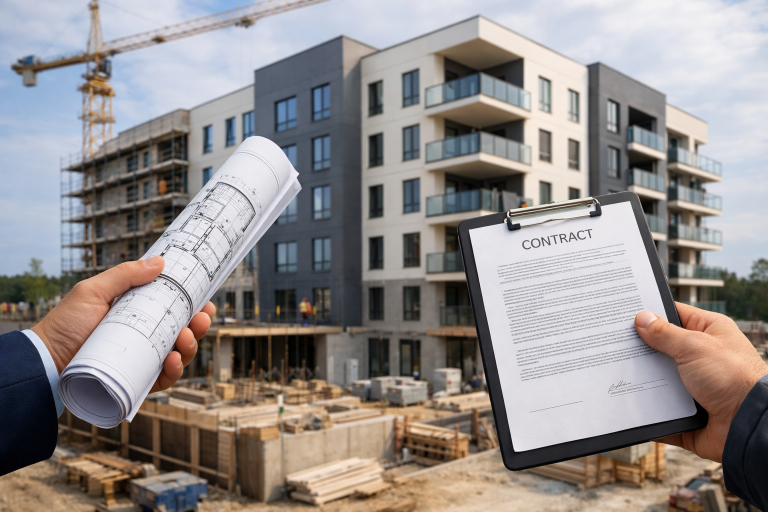
The division between debt and equity often determines the decision-making structure and risk allocation in a development. Debt is typically less expensive in terms of cost of capital, but it puts pressure on cash flow due to fixed payments. Equity, while harder to secure at attractive rates, offers more flexibility and resilience during downturns. Both are necessary for most projects in today’s increasingly complex development environment. Additional guidance on the tradeoffs between these structures can be found on Investopedia’s real estate finance guide.
The Capital Stack Explained
The “capital stack” defines the order in which external capital participates in financing a real estate project, and how cash flows and returns are distributed. Each layer in the capital stack has its own risk and reward profile:
- Senior Debt: The most secure position, senior debt is the first to be repaid and secured by the property itself.
- Mezzanine Debt: Subordinate to senior debt but ahead of equity, this funding bridges the gap when senior loans do not cover the entire capital need. It is more expensive than senior debt but may be necessary for larger projects.
- Preferred Equity: This layer has priority in distributions before common equity but sits behind all types of debt. Preferred equity investors get paid out before project profits reach the general equity holders.
- Common Equity: Usually comprised of the developer’s own money and capital from other primary investors, common equity enjoys the highest potential for reward but is also the last to be repaid and bears the highest risk.
Structuring the capital stack correctly is critical. A misstep can expose a project to financial shortfalls, strained investor relationships, or higher costs that undermine returns.
Recent Trends in Real Estate Financing
The pandemic years, rising interest rates, and shifting investor sentiment have prompted noticeable changes in real estate capital sourcing. Institutional investors are favoring fixed-income opportunities like senior and mezzanine loans. The appeal comes from the relative certainty of repayment schedules and priority in the capital stack, particularly while returns for equity investors have become compressed. This change has had ripple effects on how deals are structured, who participates, and which projects move forward.
Case Studies of Financing Structures
Examples from recent major deals highlight the diversity of approaches available in today’s market. Oak Row Equities, for instance, assembled a $210.5 million construction finance package for a high-end Miami multifamily tower. The financing combined senior and mezzanine loans, leveraging the strengths of each layer to lower the cost of capital and enhance flexibility. In Brooklyn, co-developers Charney Companies, Tavros, and Incoco Capital secured over a billion dollars in construction capitalization for a transformative mixed-use project, using a mix of substantial debt and diverse equity investors to spread risk and attract the needed funds for such a large project.
Navigating Financing Challenges
Securing the right financing remains a top challenge for developers, especially as lenders grow more cautious and capital costs rise. The complexity of large-scale or mixed-use projects means that traditional lenders may be hesitant to provide full funding, leading developers to seek out creative solutions. These can include leveraging public subsidies, tax credits, and forging joint ventures. Alternative lenders and new financial structures, from bridge loans to crowdfunding, have also entered the landscape, providing more options than ever before.
Conclusion
The interplay between debt and equity is foundational for any real estate development endeavor. Achieving the right balance will depend on project size, risk tolerance, market conditions, and long-term goals. Staying informed on current trends, understanding capital stack intricacies, and being willing to embrace innovative financing are vital to driving successful and profitable projects from inception to completion.