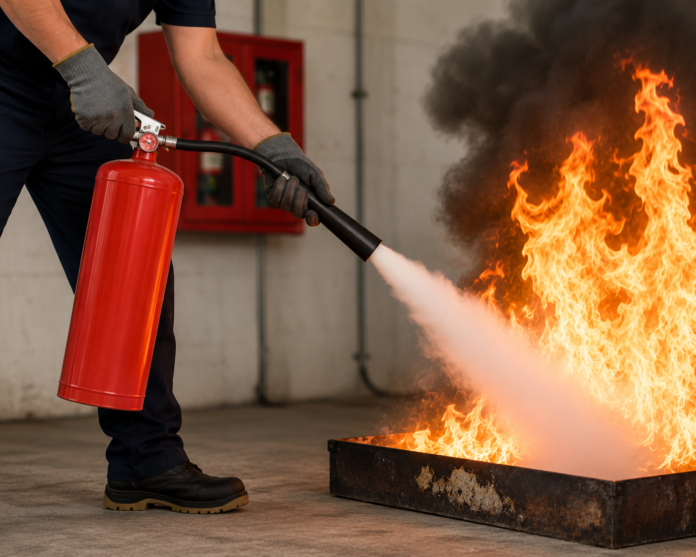

Imagine spotting a small fire and having only seconds to react. A fire extinguisher is hanging nearby, but is it the right one for the type of fire in front of you?
That question matters more than many people realize. Fire extinguishers are not all designed to fight the same hazards. Depending on the country and labeling system, colors, colored bands, symbols, and labels help identify what an extinguisher contains and the types of fires it can safely handle.
Understanding these differences can help you make a faster and safer decision during an emergency.
Why Fire Extinguisher Colors Matter
The color coding on a fire extinguisher provides a quick visual clue about the extinguishing agent inside. This is important because a method that works well on one fire may be ineffective or dangerous on another.
For example, water can be effective against ordinary combustible materials such as paper and wood, but it should not be used on energized electrical equipment. Likewise, cooking oil and grease fires require an extinguishing method specifically designed for high-temperature cooking hazards.
It is also important to remember that color standards vary by country. In the United States, extinguishers are commonly identified by fire-class labels, symbols, and the extinguishing agent listed on the cylinder rather than relying solely on body color.
Here are the common extinguisher types you may encounter.
Water Fire Extinguishers
Water extinguishers are designed primarily for Class A fires involving ordinary combustible materials, including:
- Wood
- Paper
- Cloth
- Cardboard
- Some plastics
Their main advantage is simplicity. Water cools burning materials and helps remove heat from the fire.
However, water extinguishers have important limitations. They should not be used on energized electrical equipment or fires involving flammable liquids and cooking oils unless the extinguisher is specifically rated for that hazard.
Always check the fire-class rating on the label before use.
Foam Fire Extinguishers
Foam extinguishers can be suitable for certain Class A and Class B fires, depending on their specific rating.
They are commonly associated with fires involving ordinary combustibles and some flammable liquids. Foam works by helping separate the fuel from oxygen while also providing a cooling effect.
One advantage is their versatility across more than one type of fire hazard. However, not every foam extinguisher has the same approvals, so users should always follow the classifications and instructions printed on the unit.
Dry Chemical Fire Extinguishers
Dry chemical extinguishers are among the most commonly encountered portable fire extinguishers in workplaces, commercial buildings, garages, and other properties.
Multipurpose ABC dry chemical models can handle:
Class A: Ordinary combustibles such as wood, paper, and cloth
Class B: Flammable liquids
Class C: Fires involving energized electrical equipment
Their biggest advantage is versatility. A single ABC extinguisher can protect against several common fire hazards, making it a practical choice for many environments.
Dry chemical agents can leave residue behind, however. That cleanup may be an important consideration around sensitive electronics, machinery, or valuable equipment.
Carbon Dioxide (CO2) Fire Extinguishers
CO2 extinguishers are generally intended for Class B fires and fires involving energized electrical equipment.
Carbon dioxide works without leaving the powdery residue associated with dry chemical agents. This makes CO2 particularly useful where cleanup and sensitive equipment are concerns.
Another benefit is that the agent does not leave residue after discharge.
However, CO2 extinguishers are not the best choice for every situation. They have limited effectiveness on deep-seated Class A fires, where materials may continue smoldering and reignite.
Wet Chemical Fire Extinguishers
Commercial kitchens present a very different fire risk from offices or warehouses.
Deep fryers and high-temperature cooking oils can create fires that are difficult to control with ordinary extinguishing agents. Wet chemical extinguishers are specifically designed for Class K cooking fires.
The agent helps cool the burning oil and forms a barrier over the surface, reducing the chance of re-ignition.
For restaurants, cafeterias, food trucks, and other commercial cooking environments, having the correct Class K protection is an essential part of kitchen fire safety.
What About Halon Fire Extinguishers?
Halon is a clean extinguishing agent historically valued for its effectiveness and its ability to suppress fire without leaving damaging residue.
Because of environmental concerns related to ozone depletion, the production of new Halon has been largely phased out under international environmental controls. However, recycled supplies and existing systems may still be found in certain specialized applications where regulations permit.
When an older Halon extinguisher or system is present, it should be handled and serviced by qualified professionals familiar with applicable regulations and approved alternatives.
Color Alone Should Never Be Your Only Guide
One of the biggest mistakes people can make is assuming that cylinder color alone tells them everything they need to know.
Standards differ between countries, manufacturers, and extinguisher types. In many locations, multiple extinguishers may have similar-looking red cylinders while containing completely different agents.
The safest approach is to check:
- Fire-class symbols and ratings
- The extinguishing agent listed on the label
- Operating instructions
- Condition of the extinguisher
- Inspection and maintenance information
Learning how to read a fire extinguisher label can be more valuable than memorizing colors alone.
Remember the PASS Acronym During an Emergency
Knowing which extinguisher to choose is only part of fire safety. You also need to understand how to operate it correctly.
The PASS acronym provides a simple way to remember the basic steps:
P – Pull the pin.
A – Aim the nozzle at the base of the fire.
S – Squeeze the operating handle.
S – Sweep from side to side at the base of the flames.
Only attempt to use a portable extinguisher when the fire is small and manageable, you have the correct extinguisher, and you have a safe escape route behind you. If the fire is spreading, producing heavy smoke, or cannot be controlled quickly, evacuate and contact emergency services.
Why Fire Extinguisher Inspection Tags Matter
Even the correct extinguisher will not provide reliable protection if it has not been properly inspected and maintained.
Fire extinguisher inspection tags provide a visible record related to inspection or maintenance activity. Depending on local requirements, they may show information such as service dates, technician or company details, and inspection records.
Property owners and facility managers should also visually check extinguishers regularly for obvious problems such as blocked access, physical damage, missing seals, corrosion, or abnormal pressure readings where a gauge is present.
Professional fire extinguisher inspection and maintenance should follow the applicable fire codes and manufacturer requirements.
The Right Extinguisher Is About More Than Color
Fire extinguisher colors can provide useful visual clues, but the fire classification and label ultimately tell you whether an extinguisher is appropriate for a particular hazard.
A workplace may need multipurpose ABC extinguishers, while a commercial kitchen may require Class K protection. Facilities with sensitive electrical equipment may have different needs again.
The most effective approach to fire safety is to identify the hazards in your environment, select properly rated equipment, keep extinguishers accessible, and maintain them according to required inspection and service schedules.
When an emergency happens, there may be little time to study a label for the first time. Learning the differences between types of fire extinguishers, their ratings, and their proper uses beforehand can make those critical seconds much easier to manage.