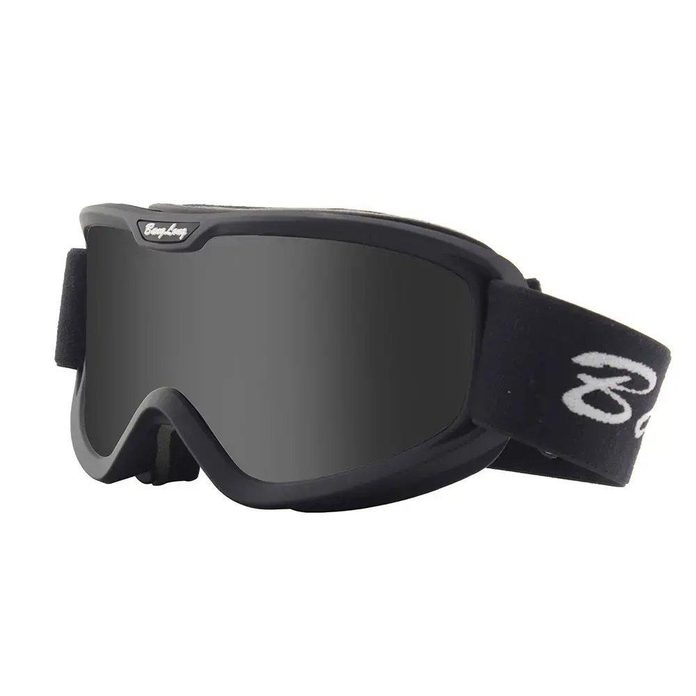

Buying custom ski goggles is different from grabbing a pair off the shelf, because you are choosing the fit, the lens, and the details to match your face and the way you ski. Done well, you get goggles that sit comfortably all day, keep the fog out, and give you a clear view in the conditions you actually ski in. Done badly, you get an expensive pair that pinches, fogs, and spends the season in a drawer.
The good news is that choosing well is mostly about knowing what to ask for. This guide walks through the decisions in the order that matters: fit first, then the lens, then the frame and the extras. Take your time over each one, and the custom part becomes an advantage instead of a gamble.
Start with fit, because nothing else matters without it
Fit is the first and most important decision. Goggles that gap at the nose let cold air in, and goggles that press on your temples will hurt within an hour. That is why custom ski goggles are worth the effort: they can be made to your face, but that only works if the measurements are right. If you are ordering online, follow the measuring guide carefully, and measure twice.
Check how the goggles sit with your helmet, too. The two should meet without a gap at the forehead, and the strap should hold the goggles in place without squeezing. If you wear glasses under your goggles, say so before ordering, because that changes the frame depth you need. A pair that fits your face and your helmet is the foundation for everything else.
Choose the lens for the light you ski in
The lens decides what you can see. On bright, sunny days you want a darker lens that cuts glare, and on flat, cloudy days you want a lighter lens that brings out the shape of the snow. Many skiers end up with two lenses, or a lens that can be swapped quickly, because one lens rarely suits both. Think about the conditions you ski in most, and choose for those, not for the one perfect day.
Lens colour is not just about fashion. Amber and rose tints help on overcast days by adding contrast, while grey and brown tints keep colours natural in bright sun. Anti-fog coating and ventilation matter just as much as the tint, because a lens you cannot see through is useless whatever its colour. Ask what coatings are included, and how they should be cleaned, before you order.
- Pick the lens for your usual conditions, not the perfect day
- Ask whether spare lenses are available for the same frame
- Check how the lens is cleaned so the coating lasts
Frame, foam, and strap: the parts you feel all day
The frame of custom ski goggles should be flexible enough to sit against your face without pressure points, and it should keep its shape in the cold. Foam is the part that touches your skin, so it needs to be soft, thick enough to seal, and able to dry out overnight. Cheap foam goes flat quickly and starts letting air in, which is when fogging begins. Good foam is one of the best reasons to go custom.
The strap should be wide, adjustable with gloves on, and grippy enough to stay on your helmet without sliding. If you ski in very cold weather, check that the buckles and adjusters can be worked with cold hands. These are small details, but you will notice them every time you put the goggles on, and they are the difference between gear you forget about and gear that annoys you.
Ordering custom: what to check before you pay
Before you confirm an order, check what can be changed and what cannot. Find out how long production takes, whether you can see a proof of any printed design, and what happens if the fit is wrong when they arrive. A maker who answers these questions clearly is a maker who has dealt with them before, and that is a good sign. Vague answers are a warning.
Also check the return and repair policy in writing. Custom work is often made to order, so returns may be limited, but a good maker will still fix a genuine fit problem or a defect. Ask about spare lenses and parts too, because goggles that cannot be repaired are goggles you will replace sooner than you should. A little checking now saves an argument later.
Choosing custom ski goggles is really about getting the basics right in your order: a fit that matches your face and helmet, a lens for the light you actually ski in, and a frame that stays comfortable all day. Get those three right, and the custom details on top are a bonus, not a risk.
Take the measurements carefully, ask the questions that matter, and do not rush the order. A pair chosen this way will do its job for seasons, and you will forget you are wearing them, which is the best thing you can say about any pair of goggles.