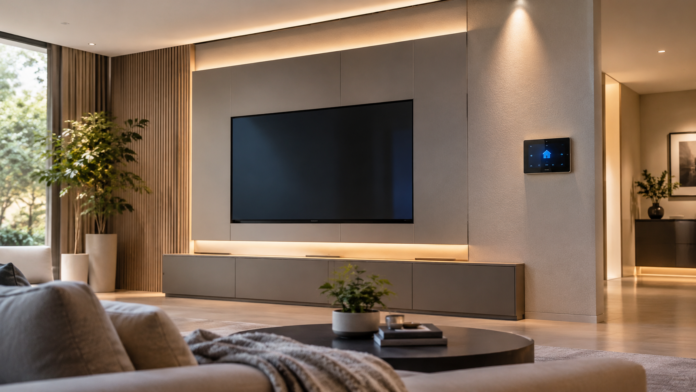

You can integrate modern automation into your living space without visual clutter by using architectural camouflage, centralized controls, and hidden infrastructure. Carefully curated, high-end interiors often suffer when tangled wires, glowing screens, and bulky hardware enter the picture. You want the convenience of a fully automated home, but you do not want your house to look like a commercial electronics showroom. Successfully blending technology with interior design bridges the gap between complex engineering and intuitive usability, giving you the best of both worlds.
What Is an “Invisible Smart Home”?
An invisible smart home is the practice of integrating high-performance audio, video, lighting, and climate control so seamlessly that the physical hardware virtually disappears into the home’s design. This approach hides unsightly electronic devices while providing complete, intuitive smart home functionality.
The global shift toward connected living is massive, with an estimated 411 million smart homes worldwide as of 2024. As smart technology becomes a standard feature in luxury properties, the demand for discreet design grows alongside it. Homeowners expect seamless connectivity, but they refuse to sacrifice the aesthetic beauty of their spaces to get it.
Achieving this level of architectural camouflage requires a holistic approach to your home’s infrastructure, rather than just buying off-the-shelf retail devices. By partnering with experts who specialize in bespoke integration, you can achieve extraordinary performance without the visual clutter.
True architectural camouflage blends function and form. Custom integrators adapt the technology to fit your room, rather than forcing you to arrange your furniture around a television screen or floor speakers. They use flush-mount fixtures, custom paint-matching, and hidden wiring to ensure the room’s aesthetic remains the true focal point.
How Do You Eliminate “Wall Acne” with Centralized Control?
Replacing disjointed switches with a single smart wall keypad or hidden sensor streamlines a room’s look. Centralized controls eliminate the visual clutter of multiple plastic dials, giving you intuitive control over your home’s lighting, climate, and shades from one unified interface.
“Wall acne” is the industry term for a wall littered with unsightly outlets, standard plastic switches, and bulky thermostats. When multiple contractors install different systems, you often end up with a chaotic row of mismatched plastic dials next to every door. This clutter instantly degrades a high-end interior.
You can fix this aesthetic problem by eliminating “wall acne” through centralized controls to let custom artwork and minimalist architecture shine. A single, elegant smart keypad replaces the need for six different standard switches. These premium keypads feature custom-engraved buttons that control lighting, climate, and window shades simultaneously through simple, intuitive programming.
If you prefer a completely bare wall, integrators can install hidden environmental sensors. These sensors trigger specific room settings automatically based on the time of day or occupancy, removing the need for manual switches entirely.
What Are the Best Ways to Hide Audio and Video Equipment?
The best way to hide audio and video equipment is to separate the user interface from the processing hardware. This strategy allows you to enjoy dedicated home theater quality or whole-home audio without looking at bulky black cable boxes or glowing screens.
Complexity is the enemy of enjoyment. The goal of a modern entertainment system is to make the technology invisible while keeping the user experience simple. You want to press a button and hear high-fidelity music or watch a movie, but you do not want to see the amplifiers, receivers, or wires making it happen. True bespoke AV design places the heavy-lifting hardware in a hidden location, leaving only the experience in the room.
Architectural and In-Wall Speakers
Architectural in-wall and in-ceiling speakers sit perfectly flush with the surrounding drywall and can be painted to match any surface. These custom audio solutions deliver high-fidelity, studio-grade sound without taking up valuable floor space or interrupting your carefully planned interior design.
Premium audio brands like Bowers & Wilkins or Sonos engineer specific speaker lines for concealed installation. Installers mount these units directly into the framing of your walls or ceilings, covering them with specialized, paintable grilles. The speakers blend completely into the background, leaving the visual focus on your furniture and artwork.
You do not have to compromise on audio quality just because the speakers are hidden. Expert integrators use precision-calibrated audio engineering to tune the hidden speakers to the exact acoustics of the room. They also install acoustic treatments into the walls and ceilings that absorb echoes and improve sound clarity without drawing attention to themselves.
Concealed and Retractable Displays
Motorized retractable displays hide flat-screen televisions and projectors completely out of sight when they are not in active use. Screens can descend from the ceiling, rise from custom cabinetry, or masquerade as framed artwork to keep your living space looking pristine.
A large black television screen creates a visual void in a well-designed living room. Motorized lifts solve this by hiding the television inside custom-built furniture or lowering it from a trapdoor in the ceiling at the touch of a button. When the movie ends, the television disappears entirely.
For dedicated media rooms or multi-use spaces, hidden 4K and HDR projectors offer a similar advantage. A motorized projection screen rolls down in front of a window or a bookshelf, instantly transforming a living space into a home theater. Other concealment methods include custom framing that disguises a flat screen as a traditional piece of artwork or a mirror, blending the technology perfectly into a gallery wall.
How Can Smart Lighting and Motorized Shades Elevate Interior Design?
Unified smart lighting and motorized shades actively enhance a home’s architectural beauty by perfectly balancing natural and artificial light. These automated systems highlight specific design features, furnishings, and artwork to create custom lighting scenes that elevate the room’s overall mood.
Automated lighting systems from premium ecosystems like Lutron or Savant give interior designers a dynamic tool to showcase their work at any time of day. Instead of turning on every light in a room to full brightness, a smart lighting system allows you to create specific scenes. A single button press can dim the overhead lights, highlight a sculpture, and illuminate pathways safely.
Motorized window treatments like PowerShades handle the natural light in the room. Integrators build these automated shades directly into the window framing. This completely conceals the roller tubes and eliminates the need for bulky, visible plug-in adapters or hanging pull cords. When the automated natural and artificial lighting systems work together, they protect your delicate furniture from UV damage and keep your interior looking its best.
Integrating Automated Lighting with Dedicated Media Environments
Controlling ambient light bleed and eliminating screen glare are foundational steps when designing high-contrast viewing spaces. Homeowners planning custom home theater installation in Fort Worth, TX frequently pair recessed architectural shades and dimmable Lutron lighting scenes directly with 4K/8K laser projection, Dolby Atmos surround sound, and acoustic wall treatments. Synchronizing blackout window shades with audio-video triggers through centralized Control4 or Savant automation allows a single command to lower the shades, dim the sconces, and calibrate projector luminance for reference-grade image clarity.
Why Is Hidden Infrastructure Critical for a Clean Aesthetic?
An invisible smart home relies on a secure, high-speed enterprise-grade network backbone and extensive pre-wiring to keep all hardware completely out of sight. Early structural planning ensures your smart devices communicate reliably without leaving visible cables draped across your floors.
Hiding your technology requires a robust physical foundation. A luxury smart home needs a powerful network to support dozens of connected devices, stream 4K video, and prevent internet dead zones. Running this network and all the necessary audio and video cables requires careful routing behind the drywall before the walls are finished.
Attempting to retrofit complex systems without proper infrastructure often leads to compromised aesthetics. Wireless devices still require power cords, and retrofitting large amplifiers or network switches into existing rooms creates the exact visual clutter you want to avoid. Planning your pre-wiring early ensures all AV routing and network infrastructure remains safely tucked behind your walls.
The Role of a Dedicated AV Closet
A dedicated AV closet or utility room acts as the hidden brains of your smart home system. Moving amplifiers, network access points, and smart hubs to an isolated, climate-controlled rack removes visible technology hardware entirely from your primary living areas.
Every smart home requires physical equipment to process signals, route internet traffic, and power speakers. A dedicated AV closet keeps these unsightly black boxes organized in a central, secure location.
Housing the hardware in one isolated location ensures reliable system communication and prevents the equipment from overheating. It also centralizes maintenance. If a technician needs to update a network switch or check an amplifier connection, they can do so in the utility room without ever setting foot into your primary living spaces or disrupting your daily routine.
Collaborating Early in the Design-Build Process
Homeowners must bring in professional AV integrators alongside their architects and interior designers at the very beginning of a project. Early collaboration balances technology performance, budget, and aesthetics before any walls are closed up or costly structural changes become necessary.
Integrated technology is now a non-negotiable luxury feature. Recent industry data shows that 61% of industry experts consider integrated technology a “must-have” feature for future home designs. Waiting until the house is framed to think about smart lighting or hidden audio severely limits your options and increases installation costs.
To achieve flawless architectural camouflage, follow a standard “Connect, Design, and Experience” workflow. An expert integrator evaluates the blueprints and collaborates on the design with your build team long before any drywall goes up. This teamwork ensures the home’s physical structure easily accommodates the necessary wiring, speaker depths, and motorized lifts required for your smart systems.
Conclusion
Integrating smart home automation does not mean you have to compromise on your high-end interior design. By using architectural camouflage, eliminating wall acne, and planning your infrastructure early, you can enjoy extraordinary technology that remains completely invisible. Hidden speakers, motorized displays, and centralized keypads replace visual clutter with sleek, intuitive control. If you want to see how hidden technology can transform your specific space, book a private, in-home demonstration or by-appointment consultation with a custom integration expert today.