
Cold snaps and humid summers around Newfane put heating and cooling systems under stress. Many “no heat,” “weak AC,” and uneven room temperature calls trace back to one root cause: airflow. Air must move freely from return grilles through the blower, across the heat exchanger or evaporator coil, and out the supply ducts to each room. Restrictions anywhere along that path can mimic bigger failures, drive up bills, and shorten equipment life. This article lays out an airflow-first diagnostic plan you can use before scheduling a visit, plus what to document so a technician can get straight to the point if you do need service.
- Start With the Filter, Vents, and Thermostat Placement
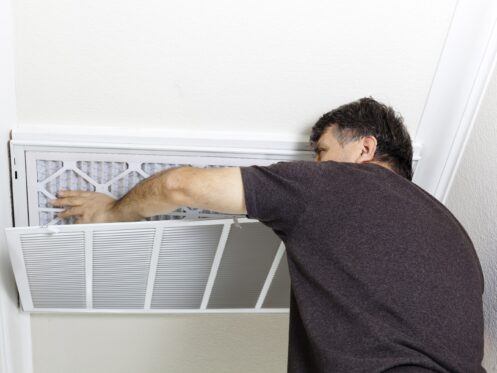
Check the air filter first. A clogged or overly dense high-MERV filter raises static pressure, which can starve a furnace or freeze a heat pump’s coil. If your thermostat has been struggling to hold temperature, a simple filter change can restore normal airflow within minutes. Walk room to room to confirm supply registers are open and not blocked by rugs or furniture. Then find return grilles and make sure boxes or storage bins are not leaned against them. If you prefer a professional inspection, start by reviewing service options at https://greatbisonhvac.com/, then ask about airflow testing and duct performance.
Thermostat location matters, too. A thermostat installed in a hallway with a draft from the front door can short-cycle a furnace or heat pump, making living areas uncomfortable. If a sunbeam hits the thermostat in the afternoon, the system may shut off prematurely, and bedrooms may feel stuffy by evening. Relocating the device or using a remote sensor can correct that cycling pattern and improve how evenly each room is conditioned.
- Read the Equipment’s Airflow Clues: Blower, Coil, and Ducts
Listen for changes in the air handler or furnace. An electronically commutated (ECM) blower motor will ramp up if it senses a restriction. If the motor sounds like it is working harder yet less air comes from registers, that points to high static pressure caused by a dirty filter, matted evaporator coil, crushed flex duct, or undersized returns. A permanent split capacitor (PSC) motor, by contrast, may simply move less air under the same restriction, which can trigger furnace limit switches or cause icing on a cooling coil.
Peek (without removing sealed panels) for surface clues. Frost or ice on the indoor evaporator coil or on refrigerant lines indicates low airflow or a refrigerant charge issue. Water around the furnace might mean a plugged condensate drain, which can trip a safety switch and stop cooling. In attics and basements, look for flex ducts with kinks, long unsupported runs, or loose boots at the registers. A return duct leak in a basement can pull dusty, unconditioned air into the system, coating the blower wheel and coil, and reducing cubic feet per minute (CFM) to the rooms that need it.
- What Your Measurements Say: Temperature Split and Static Pressure
Homeowners can safely take a few simple readings. With a basic kitchen thermometer, measure the supply air temperature at a nearby register and the return air temperature at a grille. In cooling mode, a very small temperature difference can indicate low refrigerant or excessive duct leakage, while an unusually large difference can signal restricted airflow across the evaporator coil. In heating mode, an abnormally high difference may mean the blower cannot move enough air, and the furnace is cycling on high-limit protection.
Professionals verify these suspicions with static pressure testing using a manometer and proper test ports, then compare results to the blower chart. High external static pressure starves airflow, which causes coils to ice and furnaces to overheat. One common trade-off emerges here: higher-MERV filters capture finer particles, but if the return ductwork is tight or undersized, the pressure drop across that filter can be too much for the blower. Many systems benefit from a deeper media cabinet, larger return grille, or additional return runs rather than a constant compromise between filtration and airflow.
- Heat Pumps in Cold Snaps: Defrost, Auxiliary Heat, and Outdoor Clearance
During freezing weather, a heat pump’s outdoor unit will gather frost. Occasional defrost cycles are normal. A thin, even layer of frost that melts away is expected; a solid block of ice is not. Clear snow and leaves from around the unit to keep the coil breathing. If the fan cannot pull outdoor air through the coil, the system will lean on electric auxiliary heat strips, and the thermostat may switch to emergency heat if airflow is critically low, pushing bills higher.
Indoor airflow plays a role here, too. A heat pump with a matted indoor coil or a clogged filter will run longer, which increases the chance of icing outside. If you see steam clouds during defrost and hear the outdoor fan pause briefly, that is likely a normal cycle. But if the unit stays encased in ice or the breaker trips, cut power to prevent damage and schedule service. Mention whether you recently changed the filter, whether certain rooms have weak airflow, and if the auxiliary heat indicator has been on for hours at a time.
- Two Everyday Scenarios and What They Reveal
Scenario one: After a day of reorganizing the basement, a homeowner stacks boxes in front of a large return grille. That evening, the upstairs feels warm even though the thermostat says the system is running. The blower is moving air, but starved returns are forcing the ECM motor to ramp up while supply flows to bedrooms fall off. Unblock the grille, replace the filter if it is loaded with dust, and airflow usually recovers without further intervention.
Scenario two: After a wind-driven snowfall, a heat pump’s outdoor unit is buried to the lower grille. Inside, the thermostat switches to auxiliary heat and the electric meter spins. Gently clear snow from around the cabinet and the top grille so the fan can move air across the coil. If the unit quickly ices over again, indoor airflow or refrigerant charge could be at fault. Avoid forcing “emergency heat” unless directed; it disables the heat pump completely and runs only the strips, which is the costliest heat source in most homes.
When a Pro Is Needed and What to Share to Speed the Visit
Call a technician if you see repeated furnace limit trips, breaker resets, water around the air handler, an iced coil, or if airflow stays weak after filter and vent checks. Share specifics: filter size and MERV rating, last change date, photos of any iced lines, which rooms have low CFM at the registers, and whether closing certain doors worsens conditions. If you suspect duct issues, ask about static pressure testing, blower wheel inspection, and duct sealing or balancing dampers. For chronic hot and cold rooms, a Manual J load calculation and Manual D duct review can uncover sizing or layout problems that routine maintenance will not solve.
One common mistake is closing several supply registers to “push air” elsewhere. This raises static pressure, can make the blower noisier, and often reduces total airflow. A better fix might be adding a return, sealing leaky joints with mastic, shortening kinked flex runs, or adjusting blower speed within manufacturer specs so CFM per ton matches the coil and duct system. After any duct modification, recheck temperature split and static pressure to confirm the change improved performance rather than just shifting a bottleneck.
Airflow-first troubleshooting makes HVAC issues less mysterious. By checking filters, grilles, thermostat placement, visible duct problems, and simple temperature differences, many comfort complaints can be explained or resolved before a service call. When a visit is needed, the notes you provide help a technician focus on likely restrictions and verify with measurements. In a climate that swings from chilly lake breezes to muggy afternoons, steady airflow protects equipment and comfort. Build a seasonal habit: clear the outdoor unit, change filters on schedule, and plan a pro check of static pressure and coil condition before peak weather returns.
<iframe src=”https://www.google.com/maps/embed?pb=!1m18!1m12!1m3!1d359779.41215881775!2d-78.72271295!3d43.18289804999999!2m3!1f0!2f0!3f0!3m2!1i1024!2i768!4f13.1!3m3!1m2!1s0x89d37b98e8d6ce19%3A0xed4dec494d58f964!2sGreat%20Bison%20Heating%20%26%20Cooling!5e1!3m2!1sen!2sph!4v1794229186581!5m2!1sen!2sph” width=”600″ height=”450″ style=”border:0;” allowfullscreen=”” loading=”lazy” referrerpolicy=”strict-origin-when-cross-origin”></iframe>