
Introduction
Custom leather patches have become an attractive option for apparel brands, hat manufacturers, embroidery shops, and promotional merchandise businesses. They offer a distinctive alternative to traditional embroidery and printed logos, particularly for customers who want a rugged, premium, or handcrafted appearance.
From personalised trucker hats to branded workwear and outdoor apparel, leather patches can help businesses create products that stand out in a crowded market. For local apparel decorators and promotional merchandise suppliers, there is an opportunity to add leather patch production to an existing service offering.
Instead of outsourcing every patch order, you can use a CO2 laser cutter to cut suitable leather materials into custom shapes, engrave logos, and produce personalised designs in-house. Here is how this can work and what you need to consider before entering the market.
1. Why Leather Patches Are Attractive to Apparel Businesses
Leather patches offer something different from conventional embroidered or printed logos. Their texture, appearance, and durability can give hats and other garments a more distinctive finish. They are particularly popular in product categories such as:
- Trucker hats and baseball caps.
- Workwear and outdoor clothing.
- Hunting and fishing apparel.
- Western-style hats and accessories.
- Branded merchandise for small businesses.
- Personalised gifts and promotional products.
For an embroidery shop, leather patches can also provide an additional product option for customers who already purchase embroidered hats.
Instead of competing with embroidery, you can offer another decoration method for customers seeking a different aesthetic.
2. Produce Custom Shapes Without Expensive Dies
One advantage of laser cutting is that you can create custom patch shapes without investing in dedicated cutting dies. Traditional die-cutting requires a physical cutting tool for each particular shape. This can become expensive when customers request unusual outlines or small production runs. With a laser engraver, the shape is prepared digitally.
You can create:
- Rectangular patches with rounded corners.
- Circular and oval patches.
- Shield-shaped logos.
- Custom outlines based on company branding.
- Decorative shapes for outdoor and lifestyle brands.
This makes it easier to offer smaller quantities and accommodate customers with unique designs.
For example, a local hunting apparel brand might request 30 patches featuring its logo in a custom shield shape. You can prepare the artwork, cut the patches from suitable leatherette, and engrave the design without ordering specialised cutting dies.
3. Engrave More Detailed Logos and Personalised Designs
Leather patches are not limited to simple text. A CO2 laser can reproduce suitable logos, lettering, decorative borders, and detailed artwork on compatible leather materials. This gives apparel businesses more flexibility when working with different customers.
You could produce:
- Company logos.
- Brand names and slogans.
- Individual names.
- Product collection identifiers.
- Custom artwork for limited-edition releases.
You can also offer personalisation as an additional service.
For example, a hat retailer might sell a standard range of caps but allow customers to add their initials or a short message to the leather patch.
That gives customers another reason to purchase directly from the retailer rather than choosing a generic product elsewhere.
4. Work with Both Genuine Leather and Leatherette
Material selection is important because genuine leather and synthetic leatherette behave differently during laser processing.
- Genuine leather can be engraved and cut using a suitable CO2 laser. However, different tanning processes, thicknesses, dyes, and finishes can affect the results. You should test samples before accepting large production orders.
- Laser-compatible leatherette is another option. It is available in different colours and finishes and can provide a more consistent appearance across larger batches.
However, not every synthetic leather is suitable for laser processing. PVC-based materials must be avoided because laser processing can release hazardous and corrosive gases. Always obtain confirmation from the material manufacturer that the product is laser-safe.
5. Expand Beyond Hats into Other Products
Although hats are an important application, you should not limit your business to one product category. The same production setup can support other leather patch applications.
Consider:
- Personalised leather labels for bags.
- Branded patches for jackets.
- Leather labels for handmade products.
- Custom patches for backpacks.
- Promotional accessories for outdoor brands.
- Personalised leather keyrings.
This is particularly useful for embroidery shops and apparel printers because you can sell additional products to customers who already purchase your existing services. You can also approach small clothing manufacturers and handmade product businesses that need relatively small quantities of branded labels.
6. Make Production More Efficient with Batch Processing
If you receive regular patch orders, the way you arrange production can have a significant impact on your costs.
Rather than processing each patch separately, arrange several designs on one sheet of suitable material.
For example, you might prepare 30 identical patches or several different designs within one production layout.
This helps reduce material waste and repeated machine setup.
You can also develop templates for popular patch dimensions, making it easier to prepare artwork for repeat customers.
For larger orders, standardise the engraving position, material thickness, and cutting settings to maintain consistency across the batch.
Which Laser Engraver Should You Consider
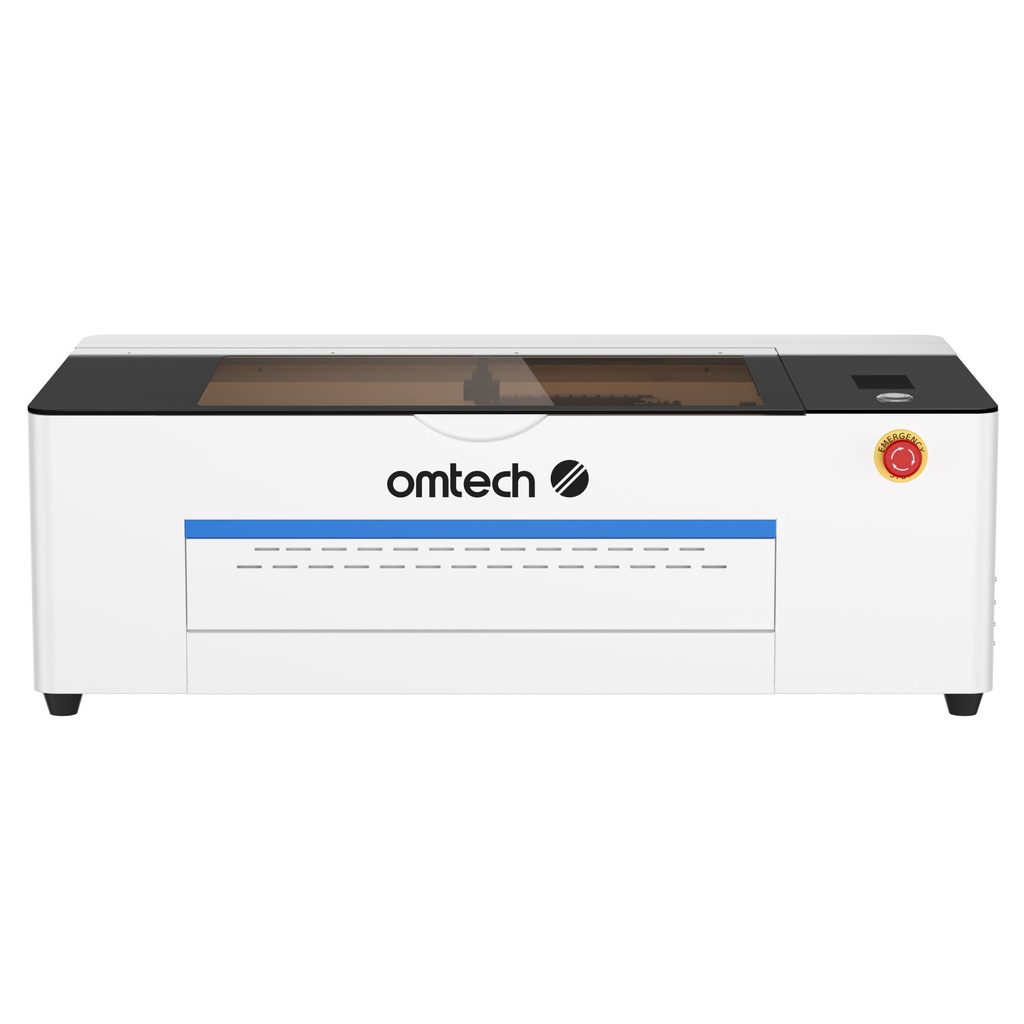
The OMTech Polar S 55W CO2 laser cutter is worth considering for apparel decorators and businesses looking to bring custom leather patch production in-house. The machine combines engraving and cutting capabilities in a desktop format.
Some of its relevant features include:
- 55W CO2 laser: Suitable for engraving and cutting compatible genuine leather and laser-safe leatherette.
- 600 × 305 mm working area: Provides room to arrange multiple patches in one production layout.
- Up to 1,000 mm/s maximum X-axis engraving speed: Supports efficient movement between suitable engraving details.
- 16MP smart camera: Helps position designs and arrange workpieces.
- Autofocus: Simplifies focusing when changing between materials.
- Honeycomb and slat beds: Support different engraving and cutting applications.
- Front-to-back pass-through: Provides additional flexibility when working with longer compatible materials.
For businesses that already own embroidery or printing equipment, the Polar S can complement existing production methods rather than replace them.
You can offer embroidered products, printed garments, and laser-engraved leather patches through the same business.
How to Sell More Leather Patch Products
Owning the equipment is only one part of building a successful leather patch business.
You also need to reach customers who already have a reason to purchase these products.
Approach Local Apparel Brands
Independent clothing brands frequently need custom labels and distinctive branding. Offer samples showing different materials, shapes, and engraving styles.
Partner with Embroidery Shops
Some embroidery businesses may prefer to outsource their patch production. You can offer to manufacture patches for them while they handle garment decoration and customer relationships.
Create Ready-Made Patch Collections
Develop standard patch designs for outdoor apparel, workwear, and lifestyle brands. Customers can then select an existing design or request custom artwork.
Offer Small-Batch Orders
One of the advantages of digital laser cutting is that you can accommodate customers who need smaller quantities. This can help you serve independent brands that cannot justify ordering hundreds of patches.
Final Thoughts
Leather patches offer an interesting opportunity for apparel printers, embroidery shops, and promotional product businesses looking to expand their services.
They combine distinctive visual appeal with practical applications across hats, jackets, bags, and other products.
A CO2 laser engraver allows you to cut custom shapes, reproduce suitable artwork, and produce personalised patches without investing in specialised cutting dies.
With the OMTech Polar S 55W, businesses can explore this market while also gaining the ability to produce other personalised leather, acrylic, and wooden products.
The strongest opportunity is to position leather patches as an additional service for customers you already have, while developing relationships with independent apparel brands that need flexible, small-batch production.
Frequently Asked Questions
1. Can a CO2 laser engrave leather patches?
Yes. A CO2 laser can engrave and cut suitable genuine leather and laser-compatible leatherette. Material testing is important because different finishes and compositions produce different results.
2. Is laser engraving better than embroidery for leather patches?
They serve different purposes. Laser engraving is useful for detailed logos, lettering, and custom shapes, while embroidery provides a stitched appearance. Offering both gives customers more choices.
3. Can I make leather patches for trucker hats?
Yes. Suitable leather or leatherette can be cut into custom shapes and engraved with logos before being attached to hats using an appropriate sewing or bonding method.
4. Can a laser engraver cut synthetic leather?
It can cut certain laser-compatible synthetic leather materials. However, PVC-based leatherette must never be laser processed because it can release dangerous gases.
5. Can I produce leather patches in bulk?
Yes. You can arrange multiple patches on one sheet and process them in batches. Consistent material selection, artwork preparation, and laser settings are important for maintaining quality.
READ ALSO: How Do Laser Settings Affect the Quality of Stainless Steel Engraving?